When an Obstruction Lets You Leave the Ditch Bottom
Riding your ATV or UTV in South Dakota can be an absolute blast, especially when you're cruising down those endless gravel roads or exploring the beautiful backcountry. But let's be real, the rules around ditch riding can feel like a minefield. You're trying your best to follow the law, stick to the ditch bottom, and stay out of trouble, but then you encounter something completely unexpected in your path. What do you do? This guide is here to clear up that confusion, explaining exactly when an obstruction legally allows you to leave the ditch bottom, and how to do it safely and responsibly.
Understanding South Dakota's Ditch Riding Landscape
First things first, let's get a handle on the basic lay of the land for ATV and UTV use in South Dakota, especially when it comes to riding along roadways. The general rule is pretty straightforward, but often misunderstood: if you're riding an off-road vehicle (ORV) along a public roadway, you need to stay in the ditch bottom. This isn't just a suggestion; it's a legal requirement designed to keep you safe from traffic and minimize impact on the road surface itself.
Think of the ditch bottom as your designated lane. It's typically the lowest part of the right-of-way, usually adjacent to the paved or gravel surface, and it's where law enforcement expects you to be. The intent here is clear: reduce conflicts with vehicular traffic on the road and keep riders away from private property lines that often start just beyond the ditch. South Dakota's laws are pretty specific about this, trying to balance the freedom to ride with the need for public safety and property rights. For a deeper dive into these foundational rules, check out [South Dakota Ditch Riding Rules Explained]. It’s easy to feel frustrated when these rules seem to limit your ride, but they are in place for everyone’s safety.
Now, what about that "right-of-way" I mentioned? It’s the entire strip of land dedicated to the road, encompassing the actual driving surface, the shoulders, and yes, the ditches on either side. When you're in the ditch bottom, you're technically still within the public right-of-way, but in a specific, less-trafficked zone. Understanding this distinction is crucial because it helps clarify why simply moving onto the shoulder for convenience isn't usually an option. The law wants you as far away from moving traffic as reasonably possible, which usually means hugging that ditch.
It’s also important to remember that while ditch riding is generally allowed statewide, local counties do have the power to opt out of the practice, banning it entirely within their jurisdiction. So, before you head out, it's always smart to double-check local regulations. You don't want to accidentally wander into a "no ditch riding" zone. If you're wondering about how counties can make these decisions, the article [Why South Dakota Counties May Only Opt Out] provides excellent insight.
Identifying Legal Obstructions to Your Ditch Ride
Now, for the million-dollar question: what actually counts as an "obstruction" that allows you to temporarily leave the ditch bottom? It’s a common scenario. You’re riding along, enjoying the scenery, and suddenly, your path is blocked. The law isn't designed to trap you in an impossible situation; it provides for reasonable exceptions. But what's reasonable?
An obstruction isn't just anything that slows you down or makes your ride a little less comfortable. It has to be something that genuinely prevents you from proceeding safely and legally within the ditch bottom itself. This is where many riders get confused, thinking a patch of mud or a small puddle might qualify. It generally doesn't. The key is true impediment.
Physical Blockages That Force a Detour
Let's talk about the tangible things that might appear in your path. These are often the most straightforward examples of a legal obstruction.
Imagine you're cruising a ditch bottom in the Black Hills, maybe near Spearfish, and you round a bend only to find a massive fallen tree completely spanning the ditch. You can't go over it, under it, or around it within the ditch itself. That's a clear physical blockage. Other examples might include:
- Deep Washouts or Ravines: Heavy rains can carve out significant trenches, making a section of the ditch impassable or extremely dangerous. If the washout is too deep to cross safely, it’s an obstruction.
- Large Boulders or Rockfalls: Especially in the more rugged terrain, rocks can dislodge and completely block a ditch. If you can’t navigate around it safely within the ditch, you have to find an alternative.
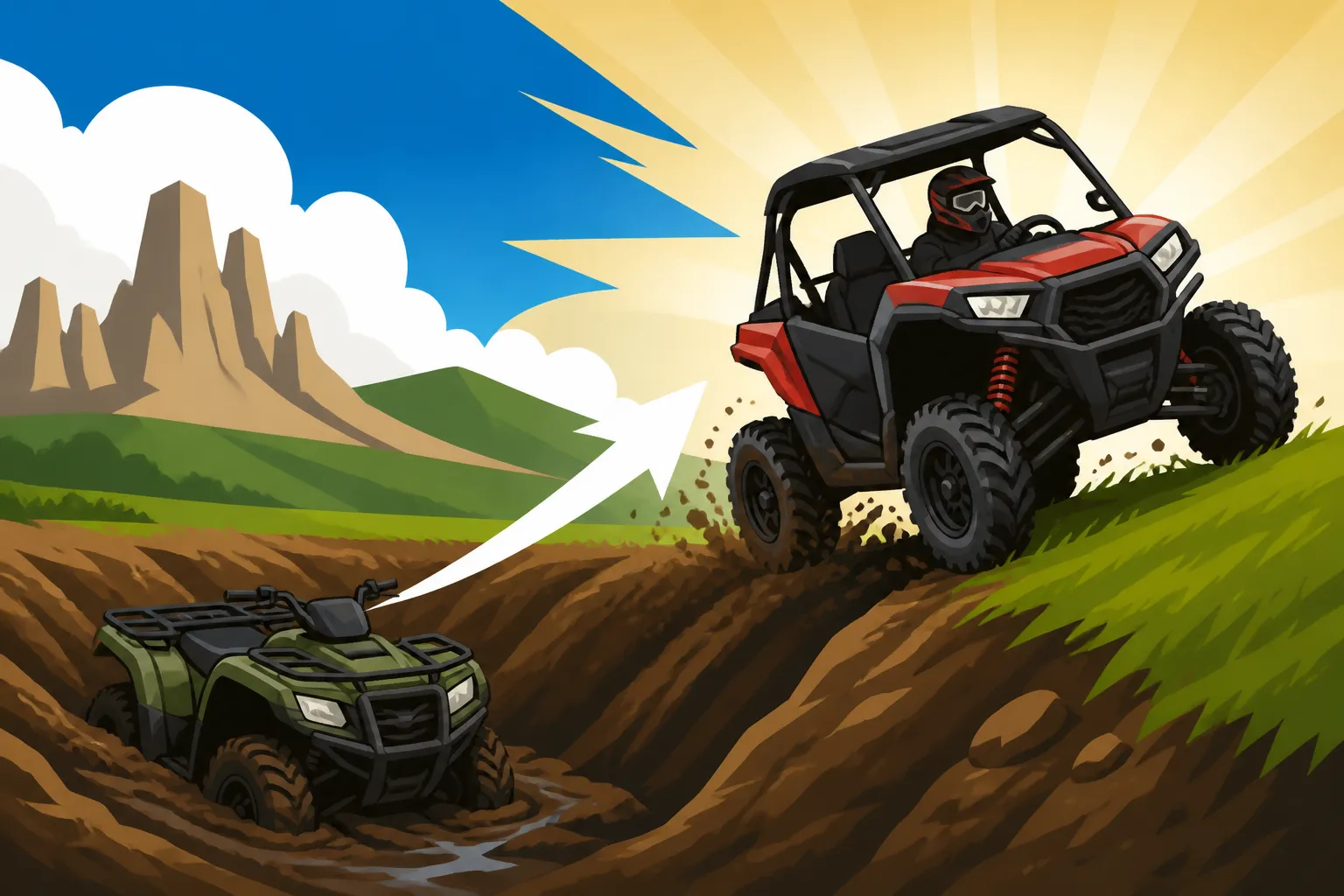
- Significant Mud Bogs or Standing Water: Not just a little splash, but a section of mud so deep and thick that your machine would sink, get irretrievably stuck, or even be damaged attempting to cross. Similarly, standing water that conceals hidden dangers like large rocks or deep holes can be an obstruction. If you've ever tried to power through mud that's deeper than your tires, you know the feeling. Sometimes, a tricky obstruction might mean you need to recover within the ditch before you can safely navigate around it, and that's where gear like a SuperATV winch can be a lifesaver, pulling yourself out of a muddy bog in the ditch bottom so you can continue your ride safely.
- Fencing or Farm Equipment: Occasionally, a fence might have fallen into the ditch, or farm machinery might be temporarily parked there. If it completely blocks your path, it's an obstruction. Remember that farm vehicles have specific exemptions; you can learn more about this in [How Farm Vehicles Are Exempt From Ditch Rules].
In these scenarios, the emphasis is on the word "safely." If attempting to navigate through or over the obstruction would risk injury, damage to your machine, or getting hopelessly stuck, then the law provides a narrow allowance to deviate.
Safety Hazards Beyond Simple Blockages
Sometimes, an obstruction isn't a solid object but a condition that makes proceeding inherently unsafe.
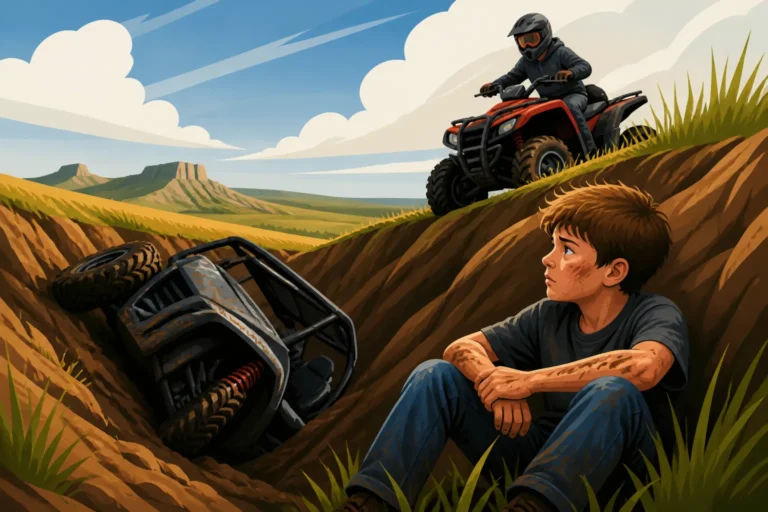
Consider a ditch bottom that abruptly drops off into a steep, unnavigable ravine, or one with a series of severe, unexpected undulations that could easily cause a rollover. These aren't solid blockages, but they present a clear and present danger that prevents safe passage. Other safety hazards might include:
- Blind Curves with Hidden Dangers: If the ditch path is winding and immediately after a blind curve, there's a drop-off or other significant hazard you can't see, it might necessitate a temporary deviation to ensure you can assess the path ahead.
- Construction Zones: Active construction within the right-of-way, where equipment is moving or the ditch is being excavated, can certainly qualify as an obstruction due to the inherent dangers.
- Extreme Erosion: Beyond just a washout, if the ditch bottom has eroded to the point where it's dangerously narrow, unstable, or undercut, it becomes a safety hazard.
The common thread here is the impossibility of safe passage. It's not about making your ride more convenient or avoiding a bit of rough terrain. It's about legitimate threats to your safety or the integrity of your machine that cannot be reasonably overcome within the confines of the ditch.
What Doesn't Count as an Obstruction
Just as important as knowing what does count is understanding what doesn't. Because if you deviate without a valid reason, you could be facing a citation.
- Minor Puddles or Mud: Unless it's truly deep and impassable, a typical puddle or muddy patch isn't an obstruction. These machines are designed for off-road conditions, and getting a little dirty is part of the fun.
- Rough Terrain: A bumpy, rocky, or uneven ditch bottom is generally just part of ditch riding. It's not a reason to move onto the smoother shoulder or roadway.
- Wanting to Go Faster: The speed limit in a ditch is generally quite low, and the ditch bottom is not a race track. Wanting to avoid the ditch to pick up speed on the shoulder or road is a definite no-no.
- Seeing a Shortcut: Spotting an easier, straighter path outside the ditch is not a legal justification to leave it.
- Dust or Poor Visibility from Other Traffic: While inconvenient and sometimes frustrating, dust kicked up by a passing car or low visibility from environmental factors like fog aren't typically considered obstructions that allow you to leave the ditch. You're expected to slow down and use appropriate lighting.
The line can sometimes feel blurry, but a good rule of thumb is: if a reasonable person could still safely navigate through the ditch, even if it's slow or a bit uncomfortable, then it's likely not a legal obstruction. If you're ever in doubt, err on the side of caution and stay in the ditch. The article [Riding the Bottom of a Highway Ditch] further reinforces the general expectation for riders.
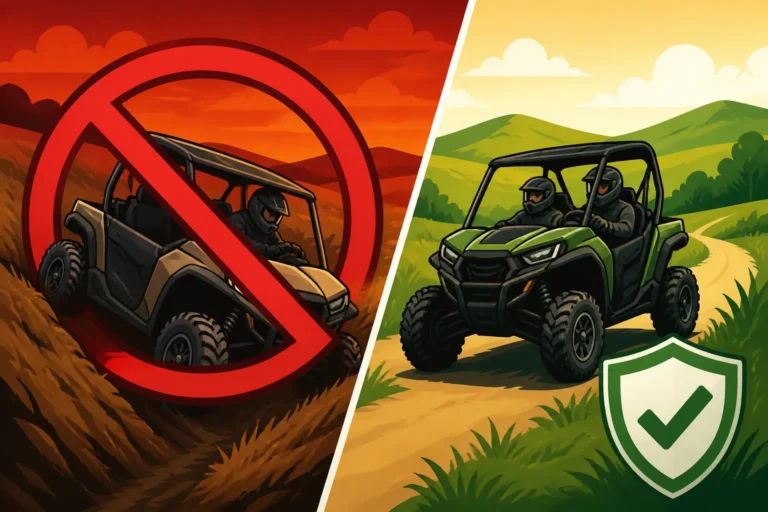
Here's a quick comparison of valid versus invalid reasons to temporarily leave the ditch bottom:
| Valid Reason (Obstruction) | Invalid Reason (Convenience/Minor Annoyance) |
|---|---|
| Large fallen tree completely blocking path | Small puddle or muddy spot |
| Deep, impassable washout or ravine | Bumpy, rocky, or uneven ditch surface |
| Significant mud bog or standing water concealing hazards | Wanting to go faster or find a smoother path |
| Major rockfall blocking the entire ditch | Spotting a shortcut outside the ditch |
| Active construction zone within the ditch | Dust from a passing vehicle |
| Dangerously eroded or undercut ditch walls | General discomfort or a desire for easier riding |
The "Minimal Deviation" Principle and Safe Practices
Okay, so you've encountered a legitimate obstruction. You can't just swerve onto the highway or cut across someone's yard. South Dakota law, and common sense, dictates that any deviation must be "minimal" and, most importantly, safe.
The idea behind minimal deviation is simple: get around the obstruction by the shortest, safest path, and return to the ditch bottom as soon as it's safe to do so. This isn't an invitation to explore the adjacent shoulder for a mile or two. It's a temporary maneuver born out of necessity.
How to Safely Navigate Around an Obstruction
When you're faced with a valid obstruction, here's how to handle it responsibly:
- Slow Down and Assess: Your first reaction should always be to reduce your speed. This gives you time to fully evaluate the obstruction and the surrounding area. Is there a clear path around it? Is it truly impassable within the ditch?
- Look for the Shortest, Safest Path: Scan the immediate area for the easiest and quickest way to bypass the obstruction. This usually means moving slightly up the bank of the ditch, or onto the very edge of the shoulder, for the bare minimum distance required.
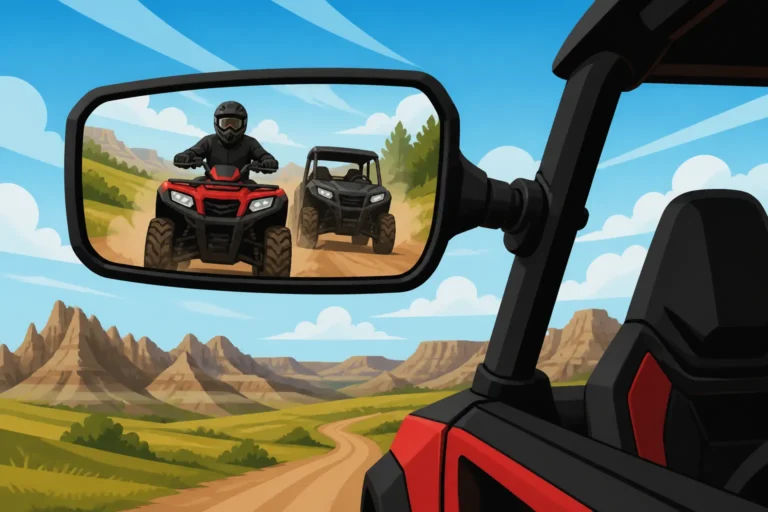
- Check for Traffic: Before you make any move out of the ditch, you must look for oncoming and trailing vehicle traffic. A quick glance in your mirrors and over your shoulder can prevent a serious accident. If traffic is present, wait until there's a safe gap. Remember, you're the one in the unusual position.
- Signal Your Intent (If Possible): While ORVs don't typically have turn signals, if you're riding with others, hand signals can communicate your intentions. At the very least, a slow, deliberate movement will show other riders and drivers you're not making an erratic move.
- Maintain Control and Return Swiftly: Execute your bypass maneuver smoothly and maintain full control of your machine. As soon as you're past the obstruction and it's safe, steer your ATV or UTV back into the ditch bottom. Don't linger on the shoulder. For more on navigating shoulders, consider [When the Shoulder Becomes Legal] though the rules for ORVs are much stricter than for other vehicles. It's important to differentiate between temporary deviation and extended shoulder use.
This entire process should be brief and deliberate. You're not looking for a scenic detour; you're solving an immediate problem with the least possible impact on traffic or private property. If you're interested in the nuances of ditch riding on the actual back-slope, [Riding the Back-Slope of a Ditch] offers more information, but remember, the primary goal is always the ditch bottom.
Consequences of Unjustified Deviation
So, what happens if a law enforcement officer observes you leaving the ditch bottom without a valid obstruction? You could be looking at a citation. Operating an ORV outside the legal parameters for ditch riding can fall under various traffic violations.
A common consequence is a Class 2 Misdemeanor, which can carry significant fines. It's not a simple slap on the wrist. An officer might issue a warning, especially if you're polite and cooperative, but they are well within their rights to ticket you. The article [What a Class 2 Misdemeanor Costs a Rider] can give you a better idea of the potential financial impact.
Beyond fines, there's the issue of liability. If you're involved in an accident while illegally riding outside the ditch bottom, your liability could be significantly increased. Insurance might even balk at covering damages if you were operating outside the law. It's a risk simply not worth taking for a little convenience.
Remember, the presence of an obstruction is a defense for leaving the ditch, not a blanket permission slip. You'll need to be able to articulate why you had to deviate. This is where preparation and understanding the rules truly pay off. For a broader understanding of potential penalties, [South Dakota Fines for Illegal ATV Road Use] is a good resource.
What to Do If You're Stopped by Law Enforcement
It's never fun to see those flashing lights in your rearview mirror, but knowing how to react can make a big difference in the outcome. If you're stopped by a South Dakota State Trooper, a County Sheriff, or any other law enforcement officer while riding your ATV or UTV, especially if you've had to deviate from the ditch bottom, here's how to handle the situation.
Being Prepared and Polite
Your attitude and preparation are key.
- Pull Over Safely: As soon as you realize you're being stopped, find a safe spot to pull your machine over. Turn off your engine and keep your hands visible.
- Be Respectful and Cooperative: The officer is just doing their job. A polite and cooperative attitude goes a long way. Greet them respectfully.
- Have Your Paperwork Ready: This is critical. Have your driver's license, any required ORV title or registration (if applicable), and your South Dakota Motorized Trail Permit (if you're on a trail network that requires one) easily accessible. An officer will absolutely be checking for this. The article [What a Trooper Checks Roadside] highlights key things they're looking for, including your [Showing a Plate and a Decal] if you have one.
- Explain Your Actions Calmly: If you were indeed forced to leave the ditch bottom due to an obstruction, calmly and clearly explain what you encountered. Describe the obstruction (e.g., "There was a large fallen tree completely blocking the ditch ahead") and why you felt it was unsafe to proceed. Explain that you took the shortest, safest path around and immediately returned to the ditch.
- Avoid Arguing or Becoming Defensive: Even if you feel you were in the right, arguing with an officer at the roadside is rarely productive. State your case clearly and respectfully. If you receive a citation and believe it was unwarranted, you'll have the opportunity to appeal it later. [Appealing a Black Hills ATV Citation] provides guidance on this process.
Documenting the Obstruction (If Safe to Do So)
While not always practical or safe in the moment, if you can, documenting the obstruction can be helpful.
- Mental Note of Location: At the very least, try to remember the exact location (road name, mile marker, or distinctive landmarks) where you encountered the obstruction. This information can be crucial if you need to explain your actions later or appeal a ticket.
- Photographic Evidence (Cautiously): If you're riding with a passenger, or if you can safely pull over after navigating the obstruction and take a quick photo with your phone, this can provide concrete evidence. However, never do this if it compromises your safety, the safety of others, or involves trespassing. The primary goal is to address the immediate hazard, not to gather evidence for a future dispute.
Ultimately, navigating South Dakota's ditch riding rules, especially when facing an obstruction, comes down to common sense, safety, and a clear understanding of the law. Stay vigilant, ride responsibly, and know when you have a legitimate reason to temporarily deviate from that ditch bottom.
Disclaimer
This article is for general informational purposes only and does not constitute professional advice. Laws, prices and regulations vary by location and change over time. Consult a qualified professional for guidance on your specific situation.