Why No County Can Close a Highway Crossing
It’s a common frustration among ATV and UTV riders in South Dakota: you’ve found a great stretch of ditch to ride, you know the county rules, but then you hit a highway, and suddenly you’re unsure. Are you allowed to cross? Can a local county simply close off all crossings, trapping you on one side? This guide is here to clarify exactly why, under South Dakota law, no county can unilaterally close a highway crossing for off-road vehicles.
Understanding South Dakota's Ditch Riding Rules and Their Limitations
Riding your ATV or UTV in the ditches of South Dakota can be an incredible way to explore the state's vast landscapes, from the rolling prairies to the edges of the Black Hills. Many riders cherish this freedom, but it often comes with a tangled web of local rules and state statutes that can make your head spin. You might have heard whispers, or even seen signs, that suggest some counties have "banned" ditch riding, and that can certainly throw a wrench into your plans.
The General Rule: Ditch Riding is Permitted Until Opt-Out
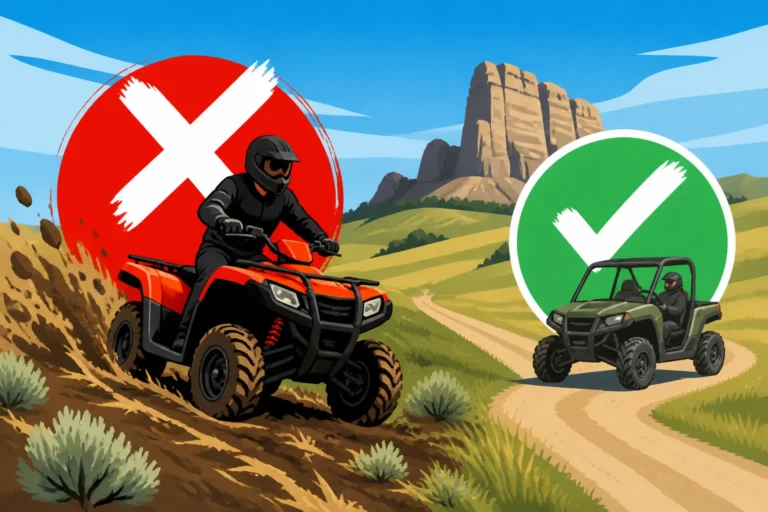
Here’s the deal: in South Dakota, the default position is that ditch riding is generally allowed. It’s not something you have to petition for; it's a privilege that exists unless a local government takes specific action to prohibit it. The state provides a framework for counties to opt out of ditch riding, allowing them to close certain rights-of-way to ATVs and UTVs. This means that if you're riding through, say, Minnehaha County, and they've officially opted out, those ditches are a no-go zone. However, this "opt-out" power isn't a blank check for counties to do whatever they want with all aspects of road use for off-road vehicles. Understanding [South Dakota's Ditch Riding Rule] is essential before you head out.
The logic behind this opt-out system is to balance the recreational desires of riders with the safety concerns and local preferences of communities. A county might decide, for various reasons, that ditch riding is too dangerous in certain areas, or perhaps they have environmental concerns, or simply a high volume of traffic that makes it impractical. They have to follow specific procedures to enact these bans, which often includes public hearings and official postings of [Regulatory Signs a South Dakota County Must Post]. But even with these local controls in place, there's a limit to their authority, especially when it comes to connecting one side of a road to another.
Why Local Control Has Its Boundaries
While counties have the power to regulate ditch riding within their borders, state law draws a clear line in the sand regarding highway crossings. Imagine planning a route that takes you several miles along a ditch, only to find yourself abruptly stopped by a busy highway, with no legal way to continue. This scenario would effectively cut off access and fragment riding opportunities, creating significant inconvenience for riders who are otherwise following the rules. This is precisely why the state legislature stepped in to ensure that critical access points remain open.
The ability for a county to opt out of ditch riding is a significant power, and it can certainly change the way you plan your rides. If a county has exercised this option, you might find yourself needing to trailer your machine more frequently or adjust your routes to avoid restricted areas. However, this power to prohibit riding along a ditch does not extend to prohibiting the act of crossing a highway. The distinction is crucial, and it’s a point that often trips up both riders and sometimes even local law enforcement who might not be fully aware of the nuances of the state statute. This is a point of clarity that ensures riders aren't unduly penalized for simply trying to navigate the existing road network.
The Specifics of Highway Crossings
When you're out on the trails or riding the ditches in South Dakota, encountering a highway is inevitable. The rules for crossing these major arteries are distinct from the general rules for ditch riding, and they are protected by state statute to ensure continuity of travel for off-road vehicles. This is a common area of confusion, but the law is quite clear.
Why a Crossing Is Different from Ditch Riding
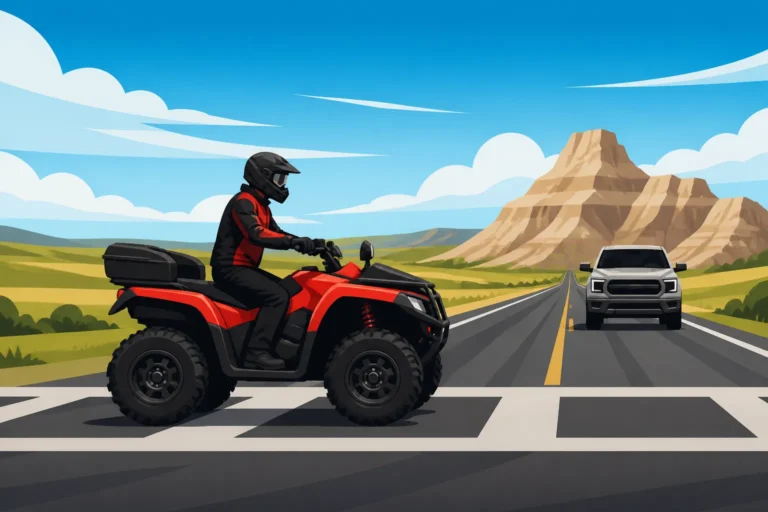
Think of it this way: ditch riding involves traveling parallel to a road, within the right-of-way, but typically not on the paved surface itself. A highway crossing, on the other hand, is a momentary act of moving perpendicular to the flow of traffic, from one side of the highway to the other. You're not trying to drive on the highway, but rather to get across it. This distinction is vital in South Dakota law. The state recognizes that for many riders, especially those exploring longer routes or connecting different trails, the ability to cross highways is not just a convenience, but a necessity for practical travel. Without the ability to cross, entire areas could become isolated for ATV and UTV users, rendering much of the public land inaccessible without trailering. This is why [South Dakota Rules for Crossing a Highway] exist as a separate category.
Furthermore, the state views the crossing of a highway as a matter of statewide access and connectivity, rather than a purely local issue of nuisance or safety that can be managed by individual counties. While counties can enact local ordinances that restrict where you can ride in their ditches, they cannot create an ordinance that would effectively strand you on one side of a major road. The intent here is to prevent a patchwork of disconnected riding areas that would make the state difficult, if not impossible, to navigate for ATV and UTV enthusiasts.
State Law Supersedes Local Ordinances for Crossings
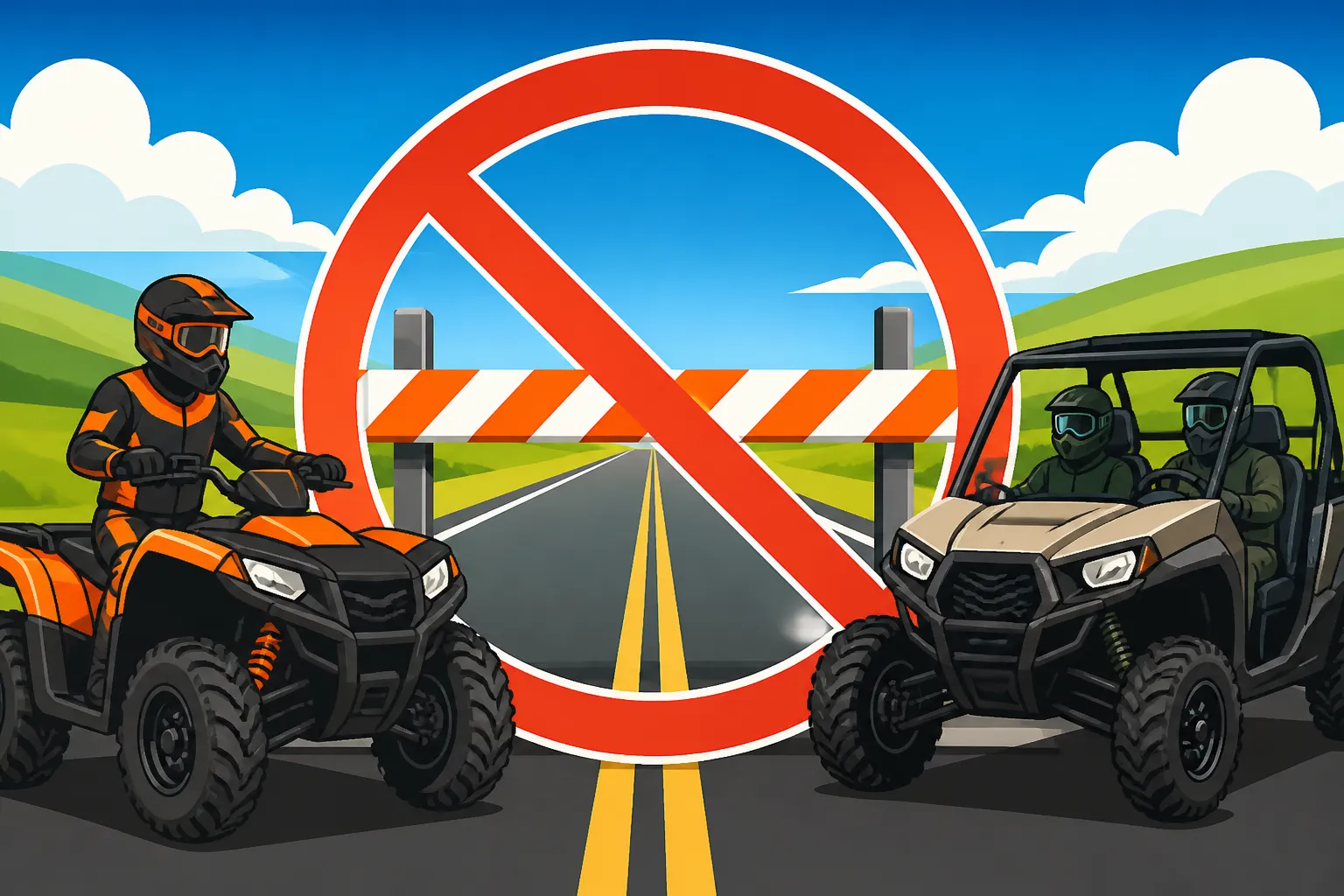
Here's the definitive point: South Dakota state law explicitly allows for the crossing of highways by ATVs and UTVs, provided certain conditions are met. This state statute overrides any county or local ordinance that attempts to prohibit such crossings. A county might prohibit ditch riding along a particular stretch of road, but they cannot legally post a sign saying "No ATV Crossing." The state legislature understood the importance of maintaining a viable network for off-road vehicle use, and therefore, they retained the authority over highway crossings at the state level.
This means if you encounter a situation where a local official or a sign suggests that highway crossings are banned, you have the backing of state law. It's not about defying local authority, but understanding the legal boundaries of that authority. While the county can tell you where you can't ride in their ditches, they cannot tell you where you cannot cross a state or federal highway. This is a critical legal protection for riders and ensures that local regulations don't inadvertently create dead ends in the larger ATV and UTV trail system. Knowing this can save you a lot of headache and potential legal trouble, and it underscores the need for riders to be informed about the specific laws that govern their activities.
Practical Implications for Riders
Understanding the letter of the law is one thing, but putting it into practice out on the prairie or in the Black Hills is another. Knowing you can cross a highway is great, but knowing how to do it safely and legally, and what to expect, is what really matters for an enjoyable ride.
What to Expect When You Encounter a Crossing
When you approach a highway you need to cross, your focus should immediately shift to safety and compliance. Even though you are legally permitted to cross, you are entering a space where high-speed vehicle traffic is the norm. The law typically requires you to stop, yield to all oncoming traffic, and proceed directly across the highway when safe to do so. You're not allowed to travel down the highway, nor are you permitted to ride on the shoulder for an extended distance, unless that shoulder itself is part of a designated ditch riding area (which is rare on major highways). [South Dakota Rules for Riding a Highway Shoulder] are very specific and usually do not allow for extended travel.
You should always assume that drivers on the highway might not expect an ATV or UTV to cross, so extra vigilance is paramount. This means making eye contact if possible, signaling your intentions, and waiting for a clear break in traffic. Be prepared to accelerate smoothly but quickly to minimize your time on the paved surface. It's not uncommon to encounter enforcement officers near busy crossings, so ensuring you are following all other rules, such as those regarding vehicle equipment, is crucial. If you're using aftermarket parts from a company like SuperATV to enhance your machine, make sure they align with state regulations for road-legal equipment.
Equipping Your Machine for Safe Highway Crossings
While South Dakota might not require you to register your ORV like a car for all uses, once you venture onto any public right-of-way, including crossing a highway, certain equipment becomes mandatory. This is for your safety and the safety of others. Typically, this includes a functioning horn, headlights and taillights that are on and visible, and at least one rearview mirror. Many riders choose to upgrade their lighting with brighter LED options from brands like SuperATV to ensure maximum visibility, especially during dawn, dusk, or adverse weather conditions.
Here's a quick checklist of essential equipment for highway crossings:
| Equipment Type | Requirement | Importance |
|---|---|---|
| Headlights | Must be working and on during crossing | Crucial for visibility to oncoming traffic, especially in low light |
| Brake Lights | Must be working and illuminate when braking | Signals your deceleration to traffic behind you |
| Horn | Must be functional and audible | For warning other drivers of your presence in emergencies |
| Rearview Mirror | At least one, mounted to provide clear rear view | Essential for checking traffic before and during a crossing |
| Eye Protection | Goggles or a face shield for the rider | Protects from debris and ensures clear vision |
These requirements, such as [Headlights and Brake Lights in South Dakota] and [South Dakota Horn Requirement], are not just suggestions; they are legal necessities. Failing to have proper equipment can result in a citation and compromise your safety. Beyond the legal minimum, think about other safety gear like helmets (required for riders under 18, but highly recommended for all), brightly colored clothing, and perhaps even a flag for increased visibility, especially if you're riding a UTV that might sit lower than a typical truck. Checking your [South Dakota Equipment List for Road Use] before every ride that involves public roads or crossings is a smart move.
What a Trooper Checks Roadside
Encountering law enforcement while riding your ATV or UTV on a public roadway can be a bit intimidating, but if you're prepared and compliant, it should be a quick and uneventful interaction. Troopers and county sheriffs are primarily looking for safety and adherence to state statutes, especially around highway crossings. They know the laws, and they know the common pitfalls riders fall into.
The Inspection Checklist for Public Road Use
When a South Dakota trooper pulls you over during or after a highway crossing, they're not just making a random stop. They're typically checking a few key things to ensure you're operating your machine legally and safely. First and foremost, they'll be looking at your identification and your machine's documentation. Have your driver's license (or other valid photo ID if you meet the specific exemption rules for [South Dakota Driver's License Rules for ATVs]) ready, along with proof of ownership for your ATV or UTV. If you're a nonresident, they'll also be checking for a valid nonresident ORV permit, if applicable.
Beyond identification, the physical state of your machine will be under scrutiny. They'll quickly run through a checklist of mandatory equipment for road use. This includes working [Headlights and Brake Lights in South Dakota], an audible [South Dakota Horn Requirement], and at least one functioning [South Dakota Mirror Requirement]. If you've outfitted your machine with aftermarket parts, such as an upgraded side mirror or lighting system from SuperATV, ensure they are properly installed and functional. They'll also typically check for a spark arrestor on your exhaust, which is crucial for preventing wildfires, especially in dry conditions. Finally, they'll confirm that your vehicle isn't excessively wide or modified beyond legal limits for the specific type of road you're on.
Avoiding Citations and Staying Safe
The best way to avoid a citation is simply to be compliant with all state laws regarding ATV and UTV use on public roads and during highway crossings. Ignorance of the law is rarely an excuse that holds up. If a trooper stops you, be polite, cooperative, and have your documents readily accessible. Don't make sudden movements or argue. Clearly explain your intentions (e.g., "I was crossing the highway to get to another section of ditch").
It's also important to remember that while counties cannot prohibit highway crossings, they can still issue citations for unsafe operation, such as failing to yield, excessive speed, or riding under the influence. The state laws that allow you to cross also come with responsibilities. For instance, if you're operating a machine that falls under the "motorcycle" classification for plating purposes (generally over 200cc for ATVs), you might need a motorcycle endorsement on your driver's license if you're going to be driving it on any paved roads, even briefly for a crossing. If you're unsure about specific requirements, especially regarding driver's licenses or specific equipment, it's always best to check the current regulations before you ride. Understanding topics like [South Dakota Fines for Illegal ATV Road Use] can help emphasize the importance of compliance. By staying informed and operating your machine responsibly, you can enjoy the vast riding opportunities South Dakota offers without unnecessary legal troubles.
Disclaimer
This article is for general informational purposes only and does not constitute professional advice. Laws, prices and regulations vary by location and change over time. Consult a qualified professional for guidance on your specific situation.