Can You Ride an Unopened South Dakota Section Line?
It's a common dilemma for ATV and UTV enthusiasts across South Dakota: you see those tempting, often grassy tracks stretching across the prairie, wondering if those "section lines" are fair game for a ride. The truth is, the rules aren't always crystal clear, and making an assumption can land you in hot water with landowners or local law enforcement. This guide is here to untangle the complexities of riding your off-road vehicle on unopened South Dakota section lines, helping you understand the legalities and practice responsible recreation.
Understanding South Dakota's Section Lines and Their Legal Status
Before you even think about putting tires on a section line, it's crucial to understand what they are and the distinct legal statuses they can hold in South Dakota. Many riders hear "public right-of-way" and immediately assume unrestricted access, but that's a common misconception that can lead to unexpected trouble.
What is a Section Line in South Dakota?
To truly grasp the concept of a South Dakota section line, you need a quick mental trip back to the Public Land Survey System. Imagine a giant grid laid across much of the western United States. South Dakota, with its vast stretches of prairie and rolling hills, is crisscrossed by this system. A "section" is essentially a square mile of land, usually 640 acres. The lines that create this grid – dividing townships into sections and sections into quarter-sections – are what we refer to as section lines. Historically, these lines were designated as public rights-of-way for roads, intended to provide access to all parcels of land. They might be marked by old fences, a slight depression in the landscape, or simply exist as invisible lines on a map. These lines run north-south and east-west, providing potential access points every mile.
"Unopened" vs. "Open" Section Lines: The Critical Difference
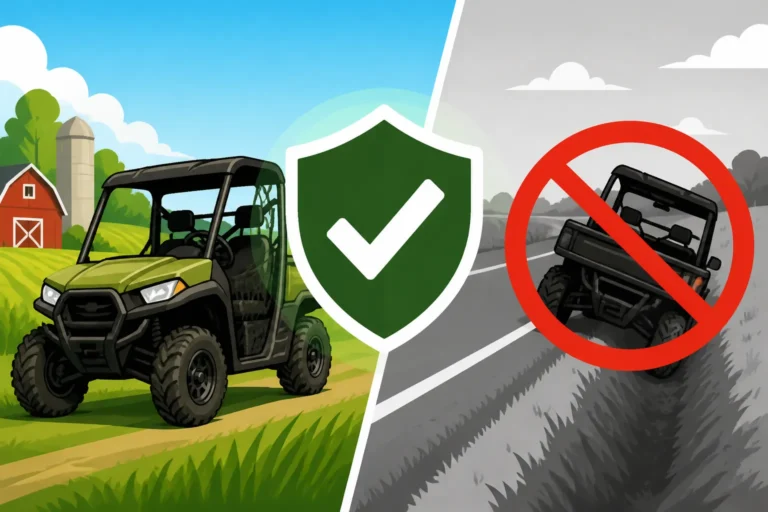
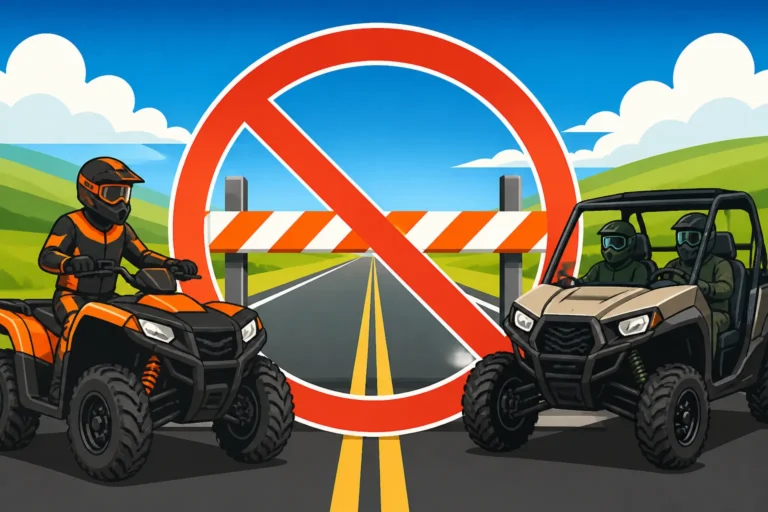
This is where the rubber meets the road, quite literally. An "open" section line is one that has been developed and maintained as a public road or highway by a county or township. These are clearly identifiable, graveled, or paved routes that everyone recognizes as public roads. You know what you're getting with an open section line; they're essentially part of the county road system.
An "unopened" section line, however, is a different beast entirely. It's a section line that was designated as a public right-of-way under the original survey system, but it has never been formally developed or maintained as a road. Think of it as a legal right-of-way that exists on paper but hasn't been physically brought to life as a public thoroughfare. It might look like nothing more than a grassy strip, a prairie two-track, or even just a fence line running through a farmer's field. The critical distinction is that while the right to establish a public road exists, the road itself does not. This nuance is where a lot of the confusion and potential for misunderstanding arises for off-road riders.
The Public's Right-of-Way on Section Lines
The historical context is important here: when the land was originally surveyed and parceled out, a 66-foot-wide right-of-way was typically reserved along all section lines for future public roads. This was intended to ensure that all landowners would eventually have access to their property. So, yes, there is an inherent public right-of-way associated with every section line in South Dakota. However, this right-of-way is not automatically a public road or trail open to all vehicles. The key is whether that right-of-way has been "opened" and maintained by the proper authorities. For an unopened section line, while the public has a right to the space for potential future road development, it doesn't automatically grant an individual the right to drive an ATV or UTV across it, especially if it traverses private land and hasn't been designated for motorized use. This is a critical point that many riders miss, leading to unintentional trespass.
| Feature | Opened Section Line | Unopened Section Line |
|---|---|---|
| Physical Status | Developed as a road (paved, graveled, maintained) | Undeveloped (grassy strip, two-track, field, fence line) |
| Vehicle Access | Generally open to all legal road vehicles | Restricted; depends on county and landowner permission |
| Maintenance | Maintained by county or township | Not maintained as a public thoroughfare |
| Public Perception | Clearly public road | Often perceived as private or unclear |
| Legal Basis | Public road by dedication and acceptance/maintenance | Public right-of-way exists, but not necessarily a public road |
The Legalities of ATV and UTV Use on Unopened Section Lines
Now that we've defined what we're talking about, let's dive into the legal maze that often leaves riders scratching their heads. It's not as simple as "yes" or "no," and misunderstanding the intricacies can have real consequences.
General Rules for Off-Road Vehicles on Public Lands
When it comes to off-road vehicles (ORVs) like ATVs and UTVs, South Dakota has specific regulations that govern their use on public lands. Generally, ORVs are allowed on designated trails and areas specifically marked for their use, such as those within the Black Hills National Forest or state-managed OHV parks like Oahe Downstream OHV Area. However, this doesn't automatically extend to every strip of public right-of-way. The crucial point is "designated." If a section line hasn't been designated or accepted by a county as a public road for motorized vehicles, it falls into a gray area where general ORV rules for designated public land might not apply. You can find more comprehensive information on [What South Dakota Counts as an Off-Road Vehicle]. The baseline rule is: if it's not explicitly allowed, assume it's not. This conservative approach helps you avoid accidental violations.
When an Unopened Section Line Becomes Rideable
This is the tricky part. An unopened section line doesn't automatically become rideable just because it exists as a public right-of-way. For it to be legally traversable by an ATV or UTV, two main conditions usually need to be met, and these can vary significantly by county:
- County Designation/Acceptance: A county board of commissioners must take action to "open" and maintain that specific section line for public travel, even if it's just for minimal maintenance. Some counties may have ordinances or policies that clarify how section lines, even those not fully developed, are to be treated regarding vehicle access. This means a section line in one county might be treated differently than one in another.
- Landowner Permission (often paramount): Even if a county considers an unopened section line a public right-of-way, if it crosses private property and is not physically maintained or clearly marked as a public route, you absolutely need permission from the adjacent landowner. South Dakota law is clear about trespass: entering private property without permission is illegal. For many landowners, a grassy or unmaintained section line is functionally part of their property, and they graze cattle, plant crops, or simply value their privacy there. Ignoring this can lead to serious friction and legal issues. This is especially true if the section line is fenced on both sides, making it appear as if it's part of the private enclosure.
The Importance of Landowner Permission
Let's be frank: this is often the biggest hurdle and the most important piece of advice you'll get. Even if a section line theoretically exists as a public right-of-way, if it hasn't been physically opened or maintained as a road, and it's passing through someone's private land, you need to get their explicit permission. Many South Dakota landowners are incredibly gracious, but they expect respect for their property. Driving an ATV across their pasture or through their crop field, even if you believe it's a section line, without asking first, is a surefire way to upset them.
Imagine a rancher who sees dust rising from a line through his grazing pasture, or a farmer who finds tire tracks across a newly planted field. To them, you're trespassing. It's always best to err on the side of caution. Knock on the door, introduce yourself, explain where you'd like to ride, and politely ask for permission. A simple conversation can save you a lot of headache and maintain good relationships in rural communities. Always remember, [South Dakota Landowner Permission Rules] are paramount.
Navigating Unopened Section Lines: Practical Tips and Etiquette
So, you've done your homework, checked with the county, and perhaps even secured permission from a friendly landowner. Now what? Riding an unopened section line isn't the same as cruising a maintained forest trail. It requires a different set of preparations and a strong sense of responsibility.
Equipment and Preparedness for Unopened Routes
Unopened section lines are, by their very nature, unimproved. This means you could encounter anything from tall grass and mud to rocks, unseen ruts, or even small creek crossings. Your machine needs to be up to the task. Robust tires are a must; those designed for varied terrain will serve you far better than street-oriented treads. A winch can be a lifesaver if you get stuck in a muddy section or high-centered on a hidden rise. Carrying basic recovery gear like a tow strap, shovel, and tire repair kit is just smart planning.
Consider also underbody protection for your ATV or UTV. Skid plates are not just for extreme rock crawling; they can protect vital components from unseen debris or sharp rocks hidden in tall grass. Companies like SuperATV offer a wide range of durable aftermarket parts, from heavy-duty A-arms to complete skid plate kits, designed to withstand the abuse that unimproved terrain can dish out. Having a reliable GPS unit with detailed maps can also be invaluable, helping you stay precisely on the section line and avoid accidentally straying onto private property. Don't forget water, snacks, and a first-aid kit, as you'll likely be far from immediate assistance.
Respecting Property and the Environment
When riding any undeveloped land, especially section lines that border or cross private property, respect is key. If you encounter a fence, assume it's there for a reason – usually to contain livestock or mark property boundaries. If there's a gate, open it, pass through, and always close it behind you. Leaving a gate open can lead to livestock escaping, crops being damaged, and a very unhappy landowner. Stay strictly within the defined (or imagined) 66-foot right-of-way. Even if the land on either side looks enticing, it's private.
Be mindful of the environmental impact. Avoid riding in overly wet conditions that could cause deep ruts and erosion. Pack out everything you pack in; leave no trash behind. Watch out for wildlife, especially during nesting seasons or when young animals are present. Your goal should be to leave no trace that you were ever there, except for a faint tire track that will quickly disappear. This kind of responsible behavior helps maintain good relations with landowners and ensures continued access where it is granted. Always familiarize yourself with [Riding Private Ground in South Dakota].
Staying Safe and Legal
Beyond the legalities of the section line itself, remember all other South Dakota ORV laws apply. This includes helmet laws for younger riders, proper lighting if riding at dusk or dawn, and any specific equipment required for your machine. Even if you have permission to ride an unopened section line, local ordinances might still restrict certain activities or times of day. Always check with the county treasurer's office or sheriff's department for specific regulations in the area you plan to ride. It's far better to ask a few questions beforehand than to face a fine or a confrontation in the field. Remember, riding responsibly is paramount to ensuring that future generations can also enjoy the beauty of South Dakota's open spaces. Your safety, and the impression you leave, really matters.
Avoiding Common Pitfalls and Ensuring a Smooth Ride
Navigating the nuances of unopened section lines can be fraught with potential missteps. Being proactive and informed will save you a lot of trouble and ensure your riding experiences are positive.
Identifying True Public Section Lines
One of the biggest challenges for riders is visually distinguishing between an actual public section line right-of-way and a private two-track or pasture road. On a map, they might all look the same, but on the ground, the difference can be subtle. True section lines follow cardinal directions (north-south or east-west) in a relatively straight path, though they might deviate slightly for terrain or past survey errors. Private tracks, on the other hand, often meander, follow contours, or lead directly to farm buildings or pastures.
The best way to be certain is to consult county plat maps, which are typically available at the county register of deeds or treasurer's office. These maps will clearly delineate section lines. Overlaying these maps with GPS data on your device can help you stay on course. Never rely solely on what "looks" like a public access point; verify it. Otherwise, you might inadvertently find yourself violating [South Dakota Trespass Rules for Riders].
Local Ordinances and County Variations
As mentioned earlier, the treatment of unopened section lines can vary from one county to the next in South Dakota. While the underlying state law reserves the 66-foot right-of-way, it's often up to individual counties to determine how (or if) those unopened rights-of-way are managed for public access. Some counties might have formal policies or ordinances regarding ORV use on such lines, while others might have a tacit understanding based on long-standing local custom.
Before you plan a ride, especially in an unfamiliar county, it's always wise to contact the county sheriff's office or the county highway department. Ask specific questions about ORV use on unopened section lines within their jurisdiction. Their guidance will be the most authoritative source for that particular area. This proactive step is crucial, as the rules for [Riding a South Dakota Gravel Road] might not apply to a grassy section line.
The Best Practices for Responsible Riding
To ensure that riding on section lines remains an option, and that you maintain good relationships with landowners and local communities, adopt these best practices:
- Always Seek Permission: If there's any doubt about public access or if the section line appears to cross or be adjacent to private land, ask the landowner first. A respectful request goes a long way.
- Stay on the Line: Stick to the legal width of the section line (typically 66 feet). Do not venture off the right-of-way onto adjacent private property.
- Leave Gates as You Find Them: If a gate is open, leave it open. If it's closed, close it after passing through. Never cut fences.
- Minimize Your Impact: Avoid making deep ruts, especially in wet conditions. Do not disturb crops or livestock. Pack out all trash.
- Be Prepared: Carry essential tools, recovery gear, first aid, and navigation aids. Equip your machine with durable components, perhaps from a trusted brand like SuperATV, to handle the unkempt terrain.
- Know Your Limits: Don't attempt to traverse areas that are clearly impassable or dangerous.
- Respect Wildlife: Be aware of animals, particularly during sensitive times like calving season or when hunting is in progress.
- Ride During Daylight Hours: Unless explicitly permitted and equipped with proper lighting, restrict your riding to daylight for visibility and safety.
By following these guidelines, you not only protect yourself legally but also contribute to a positive perception of ATV and UTV riders in South Dakota. This helps preserve access for everyone who enjoys exploring the beautiful, vast landscapes of the state. Remember to also consult information on [South Dakota Rules for Riding a Prairie Two-Track].
Disclaimer
This article is for general informational purposes only and does not constitute professional advice. Laws, prices and regulations vary by location and change over time. Consult a qualified professional for guidance on your specific situation.