Riding a Ditch in Deep Snow
Oh, the allure of a fresh blanket of snow! There's something undeniably magical about seeing the South Dakota landscape transformed into a winter wonderland, and for many ATV and UTV enthusiasts, that means itching to get out and ride. But when that snow starts piling up, especially in the ditches alongside our roads, it throws a whole new set of challenges and questions into the mix. It's not just about if your machine can handle it; it's about staying safe, staying legal, and understanding how those familiar ditch riding rules shift when everything is covered in white. This guide is here to help you navigate the tricky terrain of riding a ditch in deep snow in South Dakota, covering everything from the letter of the law to essential safety precautions and practical riding tips.
Understanding South Dakota's Ditch Riding Rules in Winter Conditions
South Dakota has some pretty specific rules about riding ATVs and UTVs in highway ditches, which can be a real boon for connecting trails or just getting from point A to point B. However, when the snow flies and starts accumulating, these rules don't just disappear; they become significantly more complex to interpret and follow safely.
The Basic Ditch Riding Framework
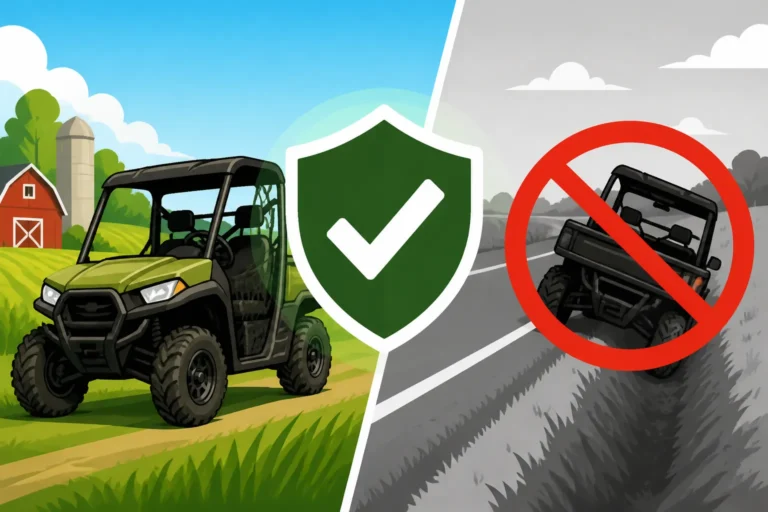
Let's start with the foundational understanding. Generally, in South Dakota, you can ride an ATV or UTV in the bottom of a highway ditch, extending up to the back slope, as long as the county you're in hasn't explicitly opted out of ditch riding. This applies to both state and county highways. The idea is to keep you out of the flow of traffic on the main roadway. There are stipulations, of course: you usually need to be at least 12 years old, follow speed limits, and adhere to specific equipment requirements if you're venturing out onto public rights-of-way. You can read more about these general guidelines in [South Dakota Ditch Riding Rules Explained]. It’s a flexible system designed to give riders access, but it places the onus on you to know the local ordinances.
How Deep Snow Changes the Game (and Visibility)
Now, imagine that ditch, usually visible with its grassy bottom and clear boundaries, completely buried under several feet of snow. Suddenly, the "bottom of the ditch" isn't so clear. The "outer edge rule," which dictates how far up the slope you can ride, becomes a guessing game. Is the snow five feet deep? Eight feet? It can be incredibly difficult to discern the true legal boundary when the landscape is smoothed over by drifts. The biggest frustration here is that what looks like a safe, open area might actually be well outside the legal right-of-way, or even on private property that's now indistinguishable from public land. This lack of visual cues makes accidental trespass or riding in prohibited areas a genuine concern, and it's your responsibility to know where you are, even when the snow makes it feel like uncharted territory.
County Opt-Outs and Snow-Covered Regulatory Signs
Another critical factor that deep snow complicates is the existence of county opt-out ordinances. Remember, ditch riding is legal unless a county bans it. Counties that choose to prohibit ditch riding are supposed to post regulatory signs at key entry points, like where a ditch meets a highway. But what happens when these signs are completely covered by snowdrifts, obscured by ice, or simply too far off the beaten path to be visible when the ditch itself is impassable? The law doesn't necessarily make exceptions for lack of visibility. If you're riding in a ditch that's in a county that has opted out, you could still be cited, even if you couldn't see the sign. It’s a frustrating reality, and it means you really need to do your homework on [South Dakota Counties That Ban Ditch Riding] before you even consider heading out in deep snow. Always check local county sheriff or highway patrol websites for specific regulations, rather than relying solely on roadside signage that might be hidden.
Safety Considerations for Riding in Deep Snow
Beyond the legal complexities, deep snow introduces a whole new array of safety hazards that can turn a fun ride into a dangerous predicament. It's not just about machine capability; it's about rider preparedness and environmental awareness.
Traction, Control, and the Unseen Hazards
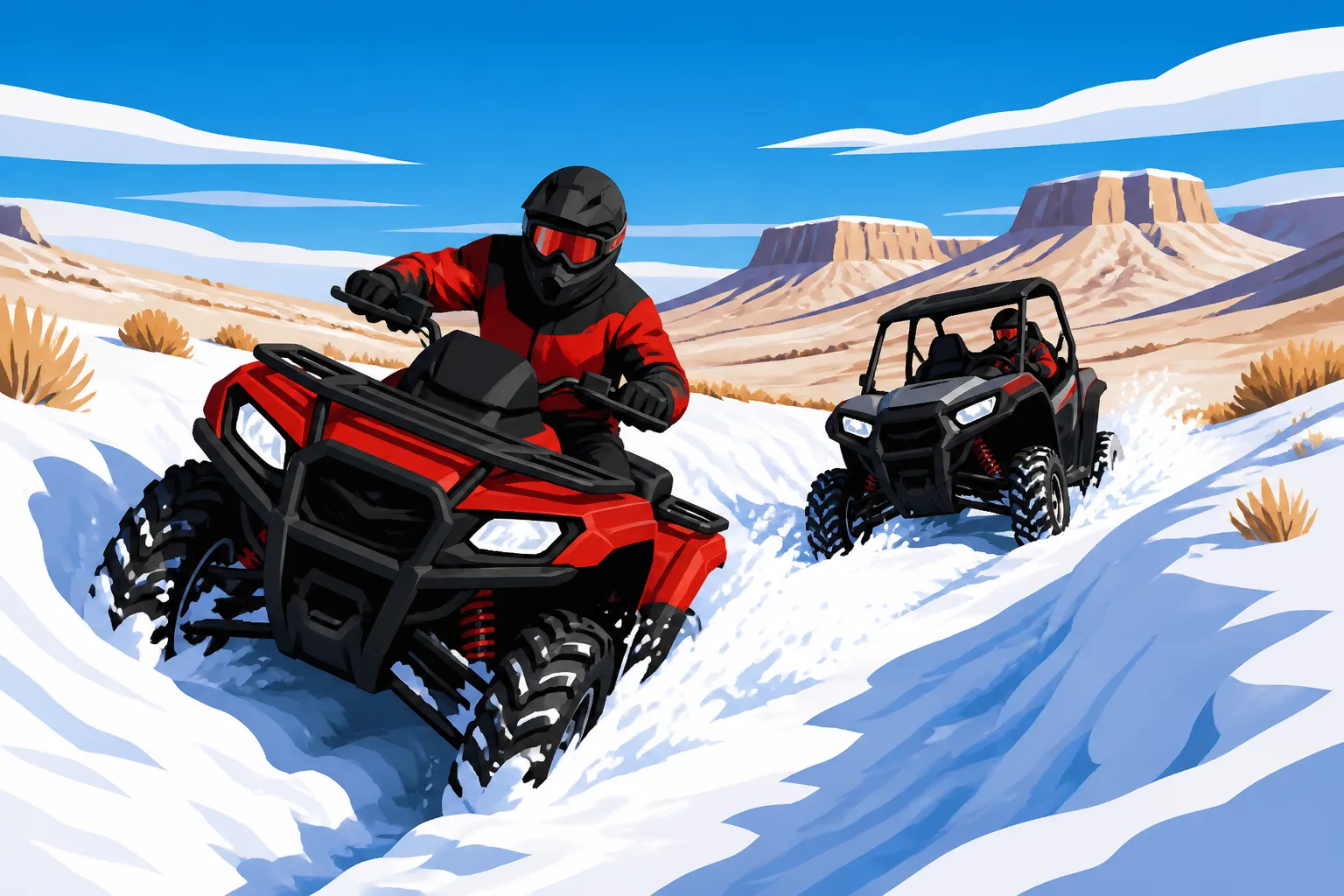
Riding in deep snow is physically demanding and significantly alters your machine's handling characteristics. Traction can be unpredictable; you might find surprising grip in some areas and suddenly spin out in others. Steering becomes heavier, and the machine might "snowplow" rather than turn crisply. The biggest danger, however, often lies beneath the surface. Rocks, stumps, culverts, fences, and even ditches themselves become invisible traps waiting to snag a tire or flip your machine. A culvert that’s easy to spot in summer could be a hidden ramp in deep snow, launching you unexpectedly. The deep, heavy snow can also increase the risk of rollovers, especially on uneven terrain or when trying to climb out of drifts. Having the right equipment, like specialized snow tires or even a track system from a brand like SuperATV, can make a huge difference in maintaining control and navigating these conditions more safely.
Hypothermia, Exhaustion, and Emergency Preparedness
Getting stuck in deep snow is not just an inconvenience; it can be life-threatening, especially if you're far from help in freezing temperatures. The physical exertion of trying to free a stuck machine, combined with exposure to cold, can rapidly lead to exhaustion and hypothermia. This is why emergency preparedness is paramount. Always dress in layers, with waterproof outer shells, and carry extra warm clothing. Pack emergency supplies: a shovel, a tow strap, fire-starting materials, a first-aid kit, high-energy snacks, and plenty of water. A fully charged phone or, even better, a satellite communication device, is essential, as cell service can be spotty in many of South Dakota's more remote areas. Most importantly, never ride alone in deep snow conditions. A riding buddy can provide assistance, share supplies, and call for help if needed. You can find more about general winter riding preparation in [South Dakota Rules for Riding in Winter].
Visibility for Other Drivers and Your Machine
Deep snow often means blowing snow, which can severely reduce visibility for everyone on the road, including you and other drivers. Your machine's headlights and taillights, while important, can be quickly caked with snow, diminishing their effectiveness. Other drivers on the main road might not expect to see an ATV or UTV in the ditch, especially if it's blanketed in snow, and reduced visibility increases the risk of them not seeing you as you approach a crossing or if you need to maneuver closer to the road. Always ensure your lights are clean and functional, consider adding additional lighting or reflective elements, and proceed with extreme caution, particularly when crossing highways or navigating areas with traffic.
Practical Tips for a Safe (and Legal) Winter Ditch Ride
So, you've decided to venture out. That's fantastic! But before you hit the snow-covered ditches, let's talk about some practical steps to ensure your ride is as safe, legal, and enjoyable as possible.
Pre-Ride Checks and Machine Preparation
Before you even think about firing up your engine, a thorough pre-ride check is non-negotiable. First, check the weather forecast for current conditions and what's coming. A sunny morning can turn into a whiteout blizzard in the blink of an eye in South Dakota. Next, verify the snow depth. A light dusting is one thing; several feet of fresh powder is another. Crucially, re-verify the local county ordinances for ditch riding. Don't assume anything, especially if you're riding in an unfamiliar area.
For your machine, make sure all fluids are topped off, especially fuel, as you'll likely burn more in deep snow. Check tire pressure; sometimes slightly lower pressure can increase flotation in snow. Ensure your winch is in perfect working order, and bring a sturdy shovel and a tow strap. If you frequently ride in heavy snow, consider investing in a snowplow attachment or a full track system, which can transform your machine's capabilities. Companies like SuperATV offer a range of accessories that can make your winter riding experience significantly better, from durable winches to specialized plows that can help clear a path or free a stuck machine. Always carry a basic tool kit for minor repairs.
Riding Techniques for Snowy Ditches
When you're out there, adjust your riding style for the conditions. Speed is rarely your friend in deep snow. Keep your pace moderate and consistent. Sudden acceleration or braking can cause you to lose traction and get stuck. Steering should be gentle and deliberate; abrupt turns can lead to rollovers or bogging down. Pay close attention to weight distribution; shifting your body can help maintain balance and traction, especially when climbing out of drifts or navigating uneven snow.
Constantly scan ahead for any changes in snow depth, hidden obstacles, or signs of open water or ice, which can be incredibly dangerous. If you encounter an area where the snow seems too deep, or the terrain too uncertain, don't hesitate to turn back or find an alternative route. There's no shame in playing it safe. Remember, the goal is to enjoy the ride and return home safely, not to conquer every drift.
What to Do if You Get Stuck or Stranded
It's going to happen. You'll get stuck. When it does, don't panic. First, assess the situation. Is your machine completely buried, or just high-centered? If you have a winch, secure it to a sturdy anchor point (tree, another machine) and winch yourself out carefully. If you don't have a winch, or it's not enough, your shovel will be your best friend. Clear snow from around the tires and under the frame. Rock the machine gently if possible to gain momentum. Traction mats, often carried by off-roaders, can also be invaluable.
If you find yourself truly stranded and unable to free your machine, or if someone is injured, that's when your emergency kit and communication devices become critical. Use your phone or satellite device to call for help. If you have a riding buddy, they can assist or go for help. Stay with your machine; it's easier to spot than a person on foot. Start a small fire for warmth if safe, and stay hydrated with the water you brought. Your preparedness can literally save your life.
Avoiding Penalties and Staying on the Right Side of the Law
The legalities of ditch riding in deep snow in South Dakota can be confusing, and confusion is rarely an excuse that holds up with law enforcement. Understanding the risks and how to interact with authorities is key to avoiding an unwelcome fine.
The Risks of Misinterpreting "Ditch" in Winter
As we discussed, deep snow blurs lines. The legal definition of a "ditch" and the associated right-of-way might be crystal clear on paper, but when the landscape is an unbroken expanse of white, it's incredibly easy to inadvertently stray onto private property or into a prohibited area. An innocent detour around a deep drift could land you in a landowner's field, which, even if covered in snow, is still trespassing. South Dakota has strict rules against riding on private land without explicit permission, and this applies year-round. [South Dakota Rules for Riding Private Land] outlines these requirements. The penalties for illegal operation, including trespassing or riding in a county that has banned ditch riding, can range from fines to impoundment of your machine, making a fun day quickly turn into an expensive headache.
Proving Legality and Interacting with Law Enforcement
If a law enforcement officer stops you while you're riding in a snow-covered ditch, remain calm and cooperative. The officer's primary concern will be your safety and ensuring you're operating within the law. Be prepared to present your driver's license, proof of machine ownership (title), and any applicable registration or permits. Even if you're certain you're in a legal ditch, the officer might have a different interpretation, especially with the difficulty of defining boundaries in deep snow. Being able to articulate your understanding of the local rules and having all your documentation in order will go a long way. You might need an [South Dakota ATV Plate Requirements] even if you are just ditch riding, depending on how close you are to crossing or connecting roads.
When a Plate Might Not Be Enough in Deep Snow
Having a valid license plate for your ATV or UTV in South Dakota certainly opens up more avenues for legal riding, particularly for crossing highways or riding on certain low-traffic roads. However, even with a plate, the specific rules for ditch riding—like respecting county opt-outs and staying within the designated right-of-way—still apply. A plate doesn't grant you carte blanche to ride anywhere. In deep snow conditions, if you're riding in an area where ditch riding is prohibited, or if you're deemed to be operating unsafely or off the right-of-way, that plate won't exempt you from potential fines under [South Dakota Fines for Illegal ATV Road Use]. It's a key piece of identification for your machine, but it doesn't override the nuanced rules of winter ditch riding. You might also want to consult [South Dakota Minimum Age for Ditch Riding] to ensure all riders meet the legal requirements.
| Feature / Condition | Typical Ditch Riding (Clear) | Ditch Riding in Deep Snow |
|---|---|---|
| Visibility of Boundaries | Clear, easy to define bottom and back slope. | Obscured, boundaries often indistinguishable from surrounding terrain. |
| Visibility of Signs | Regulatory signs typically visible. | Signs may be completely covered or hidden by snow/drifts. |
| Traction & Control | Predictable, varies with ground cover. | Unpredictable, high risk of bogging down, spinning, or rollovers. |
| Hidden Hazards | Minimal, generally visible. | High risk of hidden rocks, culverts, fences, ice, water. |
| Machine Exertion | Moderate, varies with terrain. | High, increased fuel consumption and engine strain. |
| Rider Exertion | Moderate. | High, especially if machine gets stuck. |
| Hypothermia Risk | Low, in good weather. | High, particularly if stranded. |
| Law Enforcement Interpretation | Generally straightforward. | More nuanced, potential for misinterpretation of boundaries by rider or officer. |
| Recovery Difficulty | Easier, often self-recoverable. | Difficult, often requires winching, shoveling, or external help. |
| Recommended Gear | Standard riding gear. | Cold-weather layers, emergency kit, shovel, tow strap, communication. |
Ultimately, while the thought of riding a ditch in deep snow can be exhilarating, it's an activity that demands significant respect for the environment, a thorough understanding of the law, and a robust approach to safety. Stay informed, stay prepared, and above all, stay safe out there!
Disclaimer
This article is for general informational purposes only and does not constitute professional advice. Laws, prices and regulations vary by location and change over time. Consult a qualified professional for guidance on your specific situation.