What a Meade County Road Ticket Costs a Rider
Finding yourself pulled over on a county road in Meade County, South Dakota, while enjoying a ride on your ATV or UTV can be a jarring experience, especially if you're unsure whether your machine is even supposed to be there. The immediate concern is often the cost of the ticket, but the reality is that a road-use citation can quickly escalate into a complex web of fines, fees, and long-term implications that go far beyond the initial penalty. This guide will meticulously break down what a Meade County road ticket for illegal ATV/UTV use might cost a rider, from immediate fines to less obvious expenses and how to prevent them.
Understanding the Foundation of a Meade County Road Ticket
Before we dive into the numbers, it's crucial to grasp why you might receive a ticket for riding your ATV or UTV on a Meade County road. South Dakota has specific rules about what constitutes a legal road-going vehicle, and off-road vehicles (ORVs) like ATVs and UTVs often fall outside those parameters unless certain conditions are met. Ignoring these rules, even unintentionally, can lead to a citation.
Why Your ATV Might Be Illegal on South Dakota Roads
In South Dakota, an ATV or UTV isn't automatically considered "street legal" just because it has wheels and an engine. The state's definition of an off-road vehicle clearly distinguishes it from a motorcycle or other highway-legal vehicles. For instance, most ATVs are designed for off-pavement use and lack the specific equipment required for safe road operation. This often includes things like proper lighting, mirrors, and a horn. If your machine doesn't meet these criteria, and you're caught riding it on a public road in Meade County, you're likely to receive a ticket. It's not just about having a license plate; it's about the vehicle's inherent design and safety features. Many riders might assume that if they have a plate, they're good to go, but the plate often signifies that the machine meets specific criteria, such as exceeding 200cc for four-wheelers, which allows it to be licensed as a motorcycle. However, even with a plate, operating it legally on the road involves more than just a piece of metal. You can learn more about [Are ATVs Street Legal in South Dakota?].
The Legal Basis: South Dakota's Statutes
Meade County, like all counties in South Dakota, operates under the state's codified laws regarding vehicle operation. When a law enforcement officer issues an ATV/UTV road ticket, they are citing a specific statute that your machine or your actions have violated. Typically, riding an off-road vehicle on a highway or public road without meeting the specific requirements for street legality, or outside designated ditch riding zones, can result in a Class 2 Misdemeanor. This isn't just a minor traffic infraction; it's a criminal offense in South Dakota, carrying more serious implications than a simple parking ticket. These statutes define what an "off-road vehicle" is, where it can be operated, and what equipment it must have to be considered road-worthy. Understanding these legal definitions is the first step in understanding the severity of a road ticket. For instance, the law specifies the minimum engine size for an ATV to be eligible for a motorcycle plate, and without that plate, road use is generally prohibited except in very specific circumstances.
Breaking Down the Costs of a Meade County Road Ticket
When you get a ticket in Meade County, the initial fine printed on the citation is just the beginning. There are several layers of costs that can accumulate quickly, making a seemingly simple ticket much more expensive than anticipated.
The Initial Fine: What to Expect
The actual dollar amount of the fine for a Class 2 Misdemeanor in South Dakota is not something fixed in stone and published online; it varies based on the specific circumstances, the judge's discretion, and whether there are any prior offenses. However, it's important to understand that a Class 2 Misdemeanor is not a trivial offense. It can carry a significant monetary penalty, which can feel substantial for what many riders might perceive as a minor infraction. While I can't give you a precise figure, expect it to be in the realm of hundreds of dollars, rather than tens. This is the direct penalty for violating the state statute and is usually the most visible cost initially. For a general idea of the penalty, you might look into [What a Class 2 Misdemeanor Costs a Rider], which will give you a baseline understanding of such offenses.
Court Fees and Surcharges
Beyond the base fine, the legal system tacks on various additional fees and surcharges. These can include court costs, administrative fees for processing your case, and state-mandated surcharges that fund different programs. These aren't optional; they are added to your total payment obligation. These fees can easily add another significant chunk to your bill, sometimes pushing the total cost of the ticket well above the initial fine amount. It's not uncommon for these additional fees to surprise riders who are only focused on the "fine" section of their citation. They contribute to the total financial burden and are non-negotiable once assessed by the court.
Potential Vehicle Impoundment and Towing Fees
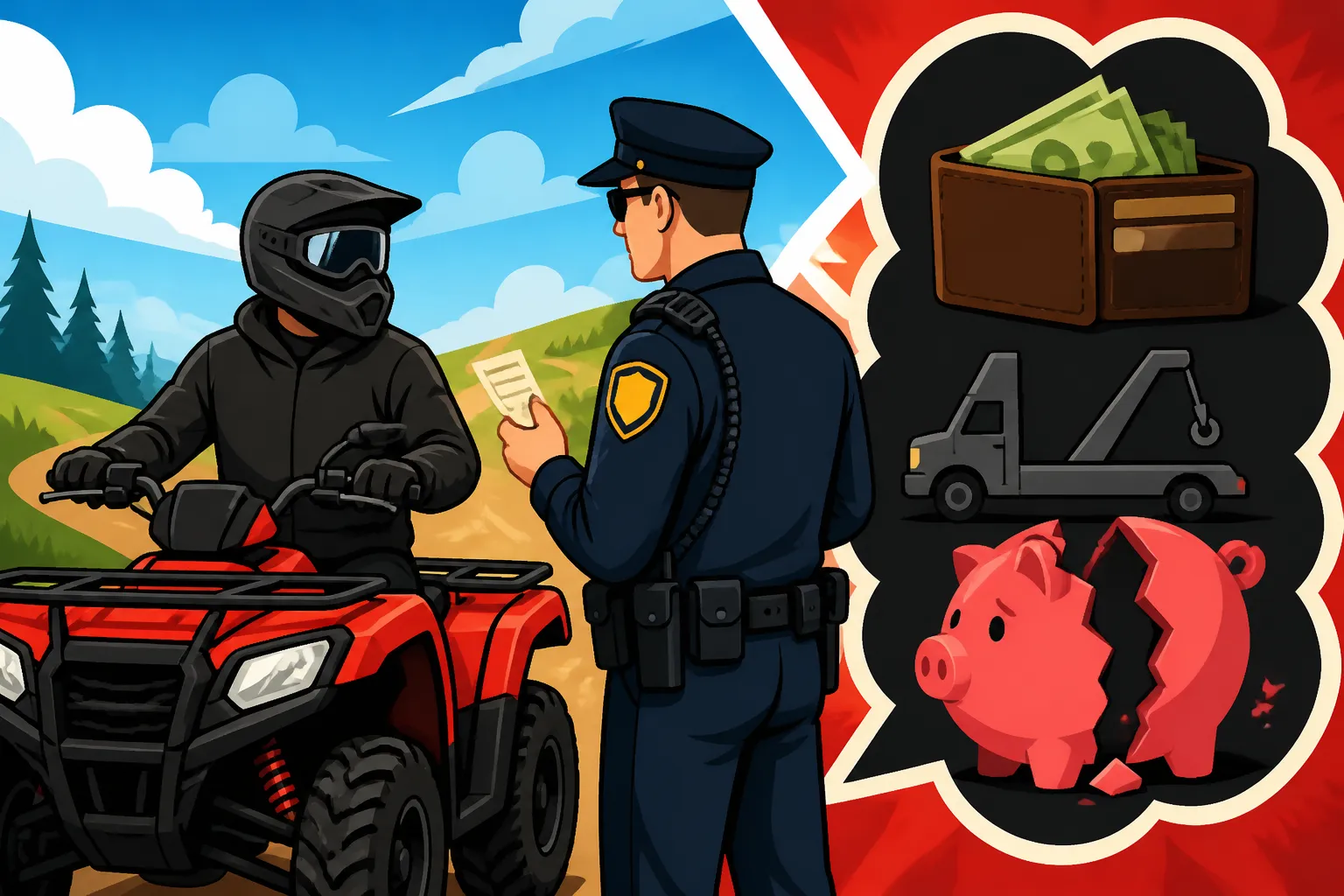
One of the most immediate and often unexpected costs associated with an illegal road-use ticket is the potential for your ATV or UTV to be impounded. If an officer determines your machine is not street legal and cannot be safely or legally ridden from the scene, they may call for a tow. This instantly triggers a cascade of additional expenses:
- Towing Fee: The cost to tow an off-road vehicle from the roadside to an impound lot. This can vary widely depending on the distance and the towing company.
- Storage Fees: Impound lots charge daily storage fees. These can accumulate rapidly, especially if you can't retrieve your machine immediately. If you have to wait for a court date or arrange for proper transportation, these daily fees can become substantial.
- Release Fees: The impound lot might also charge an administrative release fee in addition to the towing and storage costs.
Retrieving your impounded machine can be a bureaucratic headache and a drain on your wallet. Meade County is a large, rural county, and the distances involved in towing and retrieving a machine can be considerable, pushing these costs even higher. You might even need to arrange for a legal and safe way to transport the ATV/UTV home after release, adding another layer of expense.
Beyond the Monetary: Hidden Costs and Long-Term Implications
The immediate fines and fees are certainly painful, but a Meade County road ticket can have repercussions that extend far beyond your initial payment. These hidden costs can affect your driving privileges, insurance rates, and even your future.
Impact on Your Driving Record and Insurance
A Class 2 Misdemeanor, even if it's for an ATV/UTV offense, is a criminal offense that goes on your permanent record. While it might not directly add points to your driver's license in the same way a speeding ticket in your car would, it can still have an impact.
- Driving Record: A criminal misdemeanor conviction can show up on background checks, potentially affecting future employment opportunities, especially for jobs requiring a clean driving or criminal record.
- Insurance Premiums: Your auto insurance company, even if they don't directly cover your ATV/UTV for road use, might view a misdemeanor conviction as an increased risk. This could lead to higher premiums for your automobile insurance or even difficulty obtaining insurance in the future. If you have separate ATV/UTV insurance, those premiums are almost certainly going to increase upon renewal.
- Future Licensing: Depending on the specific circumstances, repeated offenses or certain types of violations could potentially impact your ability to hold a driver's license, even if the initial offense wasn't directly related to your car.
It’s a snowball effect that often catches riders by surprise. Many don't realize that an ATV ticket can ripple through other aspects of their lives.
Legal Fees and Representation
While you always have the right to represent yourself in court, many riders choose to hire an attorney, especially when facing a criminal misdemeanor charge. This is another significant cost that needs to be factored in.
- Attorney's Fees: Legal representation can be expensive, with hourly rates or flat fees that can easily exceed the cost of the ticket itself. However, a good attorney might be able to get the charges reduced, dismissed, or negotiate a plea bargain that minimizes the long-term impact on your record.
- Value of Representation: For some, the peace of mind and the potential for a better outcome are worth the legal fees. An attorney understands the nuances of South Dakota law and can navigate the court system more effectively. When you're considering [Appealing a Black Hills ATV Citation], legal counsel becomes even more critical for a favorable outcome. Comparing the potential long-term damage of a conviction against the cost of an attorney is a personal decision, but it's a cost that often arises.
Time Lost and Inconvenience
Beyond the measurable financial costs, there are significant hidden costs related to your time and personal inconvenience.
- Court Appearances: If you contest the ticket, or even if you just plead guilty, you will likely need to make at least one court appearance in Meade County. This means taking time off work, arranging travel, and waiting through court proceedings. If you live out of state or far from Sturgis, the county seat of Meade County, this can involve considerable travel time and expense.
- Stress and Frustration: Dealing with legal issues is inherently stressful. The uncertainty, the bureaucracy, and the potential consequences can take a significant emotional toll.
- Research and Paperwork: You might spend hours researching the laws, filling out forms, or communicating with the court, the impound lot, or your insurance company. This is uncompensated time that diverts you from other responsibilities or leisure.
These "soft costs" are difficult to quantify but can significantly impact your overall well-being and productivity.
Preventing a Meade County Road Ticket: Staying Legal
The best way to avoid the financial and emotional burden of a Meade County road ticket is to prevent it from happening in the first place. Understanding and adhering to South Dakota's laws regarding ATV/UTV road use is paramount.
Equipping Your Machine for Road Use
If you intend to ride your ATV or UTV on South Dakota roads, even for short distances or to cross a highway, your machine needs to meet specific equipment requirements to be considered street legal. This isn't just about personal safety; it's about legal compliance.
- Lighting: This includes working headlights, taillights, and brake lights. [Headlights and Brake Lights in South Dakota] are non-negotiable. Many stock ATVs might have basic lights, but they might not meet the brightness or visibility standards for road use.
- Mirrors: You will need at least one rearview mirror, typically mounted to provide a clear view of the road behind you. [A Rear-View Mirror for South Dakota Road Use] is essential. Companies like SuperATV offer a wide range of mirrors, from clamp-on universal designs to specific fitments that can help you meet these requirements.
- Horn: A functional horn is required to alert other drivers or pedestrians. [A Horn on a South Dakota Road Machine] is a small but critical piece of equipment.
- Tires: Your tires must be DOT-approved for highway use. Knobby off-road tires, while great for trails, might not be legal or safe for extended road travel.
- License Plate & Decals: Your ATV/UTV must be properly titled and registered with a visible license plate affixed, as if it were a motorcycle. Additionally, any required annual decals must be current and displayed correctly.
- Spark Arrestor: While not strictly for road legality, if you plan to access any trails or public lands that require it, ensuring your exhaust has a U.S. Forest Service-approved spark arrester is crucial for fire prevention and compliance.
Investing in these modifications upfront from reputable brands like SuperATV can save you a much larger sum down the road in fines and fees. [South Dakota Equipment List for Road Use] provides a comprehensive checklist.
Understanding Permitted Riding Areas and Rules
South Dakota has specific rules about where ATVs/UTVs can legally operate. It's not a free-for-all, and understanding these zones is critical, especially in a popular riding area like Meade County near the Black Hills.
- Ditch Riding: South Dakota allows for ditch riding along certain public roads, but there are strict rules. You must ride in the bottom of the ditch, not on the shoulder or the back slope. There are age restrictions ([Twelve Years Old in a South Dakota Ditch]), and counties have the option to opt-out of ditch riding entirely, though they must post regulatory signs to indicate this. [South Dakota Ditch Riding Rules] details these nuances. You cannot ride in ditches along interstate highways or within city limits.
- Highway Crossings: While continuous road travel might be prohibited, crossing a highway or road is generally allowed at a 90-degree angle, but you must yield to all traffic. [South Dakota Rules for Crossing a Highway] explains this critical maneuver.
- Designated Trails: Public lands, such as the Black Hills National Forest, have designated motorized trails. While you might use a road to get to a trailhead, you cannot just ride anywhere. You'll also need a Black Hills Motorized Trail Permit for trail riding.
- Private Land: Always obtain explicit permission from landowners before riding on private property. Trespassing laws are strictly enforced.
Always check local Meade County ordinances and state regulations before heading out. Ignorance of the law is not a valid defense.
Non-Resident Considerations
If you're visiting Meade County from out-of-state with your ATV or UTV, there are additional considerations. While a South Dakota license plate makes your machine street-legal if equipped correctly, what about your out-of-state plate?
- Out-of-State Plates: South Dakota generally honors valid out-of-state registrations and license plates for highway use, provided your machine meets your home state's requirements for street legality. However, these rules can be complex.
- Non-Resident ORV Permit: For off-road trail riding in designated areas, non-residents will need a [South Dakota Nonresident ORV Permit]. This permit is specifically for trails, not for making your machine street-legal on public roads. It's important not to confuse the two.
- Driver's License: You'll still need a valid driver's license to operate an ATV/UTV on any public road in South Dakota, even if you're only ditch riding or crossing. Showing a valid driver's license is part of [Showing a License at the Treasurer's Window] when titling, but it's also crucial to carry it while riding.
It's always best to err on the side of caution and ensure you have all necessary permits and your machine is fully compliant with South Dakota law before riding on any public road, especially when visiting.
Here's a breakdown of the potential costs associated with a Meade County road ticket:
| Cost Category | Description | Typical Financial Impact (Estimate) | Other Impact |
|---|---|---|---|
| Initial Fine | Direct penalty for Class 2 Misdemeanor (illegal road use). | $$$ (Hundreds of dollars) | Criminal record entry |
| Court & Admin Fees | Surcharges for processing, court operations, state funds. | $$-$$$ (Adds significant amount to fine) | |
| Towing Fee | Cost to remove impounded vehicle from roadside. | $$-$$$ (Varies by distance, company) | Immediate inconvenience |
| Storage Fees | Daily fees for vehicle storage at impound lot. | $-$$ per day (Accumulates quickly) | Prolonged inconvenience, additional stress |
| Vehicle Release Fees | Administrative fees charged by impound lot for release. | $ (Often a flat fee) | |
| Insurance Premiums | Potential increase in auto/ATV insurance rates. | $$-$$$ (Over time, can be substantial) | Long-term financial burden |
| Legal Fees | Cost of hiring an attorney for representation or advice. | $$$-$$$$ (Potentially thousands of dollars) | Reduced stress, better outcome, but significant upfront cost |
| Lost Time | Time off work, travel for court appearances, paperwork. | Value of lost wages, travel costs | Stress, reduced productivity |
| Repairs/Modifications | Cost to make the machine street legal after a ticket. | $$-$$$ (Varies by equipment needed) | Essential for future legal road use |
Ultimately, the cost of a Meade County road ticket for illegal ATV/UTV use is far more than just the number on the citation. It encompasses direct fines, court costs, potential impoundment fees, and significant hidden costs like increased insurance premiums and the invaluable loss of your time and peace of mind. By understanding South Dakota's laws and properly equipping your machine with necessary accessories—perhaps even from a reputable vendor like SuperATV—and knowing where you can and cannot legally ride, you can save yourself a lot of headaches and keep your hard-earned money in your pocket. Always prioritize legal compliance and safety, and enjoy your South Dakota rides responsibly.
Disclaimer
This article is for general informational purposes only and does not constitute professional advice. Laws, prices and regulations vary by location and change over time. Consult a qualified professional for guidance on your specific situation.