Meeting a Motorcycle Pack in August
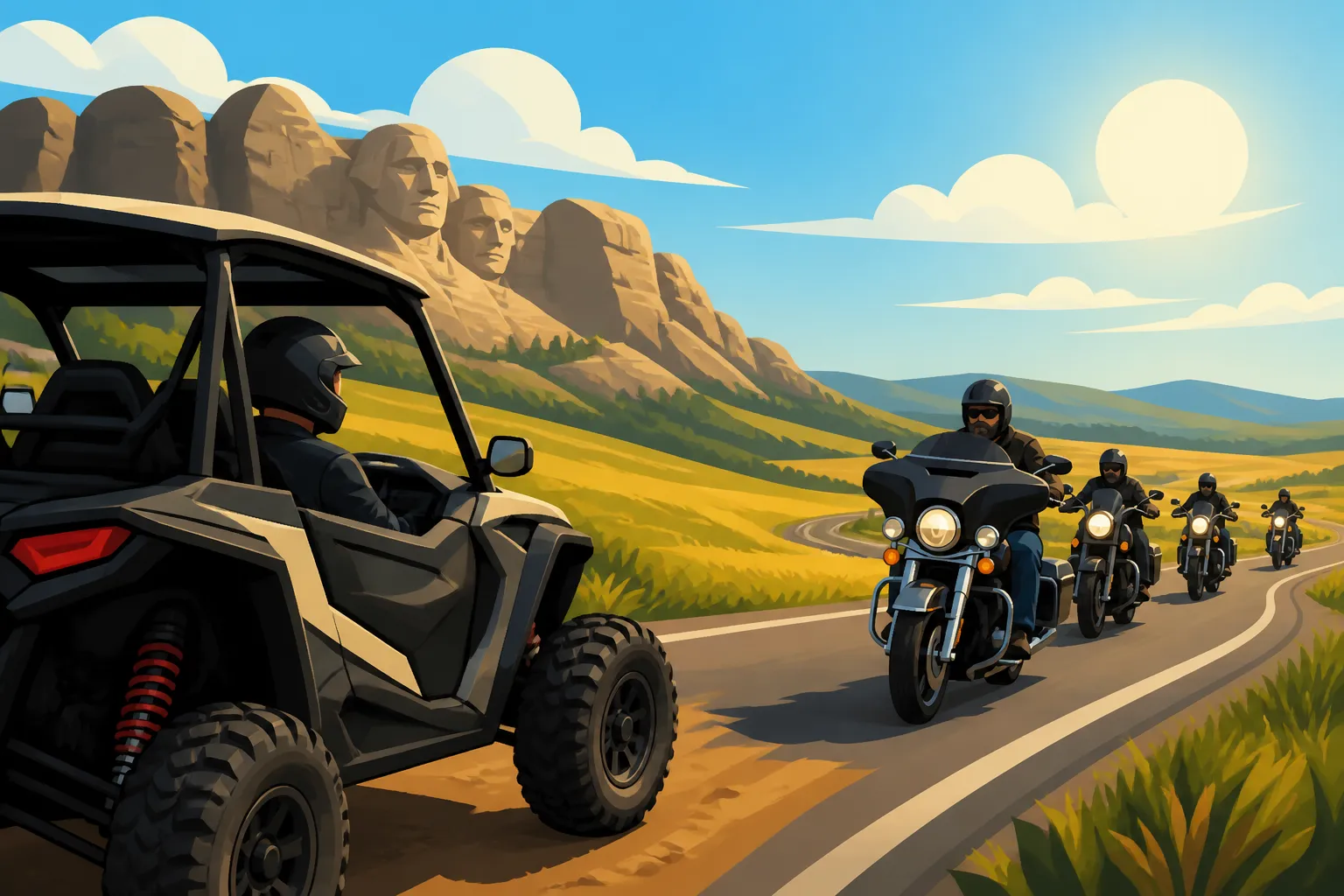
There's nothing quite like hitting the open road or a winding gravel trail in South Dakota with your ATV or UTV, especially when the August sun is shining. It’s a feeling of freedom, of connecting with the expansive landscapes, whether you're cruising through the Badlands or navigating the dense forests of the Black Hills. But if you’ve ever tried to enjoy these scenic routes during late summer, you’ve likely encountered a unique challenge: the sheer volume of motorcycles, often traveling in large, close-knit packs. This can feel intimidating, even a little overwhelming, for those of us on four wheels. This guide aims to help you understand why these packs are so prevalent, how to safely share the road, and what you can do to ensure your ride remains enjoyable, even when you're surrounded by roaring two-wheelers.
The August Rush: Why Motorcycle Packs Are Everywhere in South Dakota
If you’re riding in South Dakota in August and feel like you’re suddenly surrounded by motorcycles, you’re not imagining it. There’s a very specific reason for this annual phenomenon, and understanding it is the first step toward a more comfortable shared-road experience.
The Sturgis Rally Phenomenon
Every August, the quiet, picturesque towns of the Black Hills transform into the epicenter of the motorcycle world. The Sturgis Motorcycle Rally draws hundreds of thousands of riders from across the globe, turning every paved and often unpaved road into a highway of chrome and leather. It’s an incredible spectacle, a huge economic driver for the state, and a bucket-list event for many motorcyclists.
For us ATV and UTV enthusiasts, this means our typical riding environment changes dramatically. Roads that might be quiet and open for much of the year suddenly become arteries for a massive influx of two-wheeled traffic. These riders often travel in tight formations, sometimes dozens or even hundreds strong. They’re celebrating, they’re often focused on staying together, and they might not be as accustomed to sharing their space with ATVs and UTVs as they are with other motorcycles or cars. It's not a slight against us; it's simply a different riding culture and a temporary shift in the road's primary users. You'll find yourself sharing pavement with riders cruising on everything from classic choppers to modern touring bikes, all heading to the same scenic overlooks and small-town diners.
Popular Riding Routes for Both ATVs and Motorcycles
The irony, and sometimes the challenge, is that ATVs, UTVs, and motorcycles often gravitate to the same stunning landscapes and roads. We all seek the thrill of the open air, the panoramic views, and the sense of adventure that South Dakota’s diverse terrain offers. In the Black Hills, for example, many of the winding scenic byways like Iron Mountain Road, Needles Highway, and Spearfish Canyon are magnets for motorcyclists. Simultaneously, our ATVs and UTVs are often on the nearby [3,600 Miles of South Dakota Forest Road] or connecting from forest trails onto these paved or gravel sections.
This overlap means that encounters are inevitable. You might be on a designated forest road, enjoying the quiet, only to turn onto a section that's also a popular motorcycle route. Or you could be riding a gravel section line, and a pack of touring bikes might be using it as a scenic detour. Places like Custer State Park, while beautiful, become high-traffic zones during the rally. Even the quieter roads leading to trailheads can see increased motorcycle traffic. It's a testament to the beauty of South Dakota that so many different types of riders want to experience it, but it does require us to be extra vigilant and prepared for shared spaces.
Navigating Shared Roads: Safety and Etiquette for ATV/UTV Riders
Sharing the road, especially with large groups, is less about who has the "right of way" and more about mutual respect and proactive safety. When you encounter a motorcycle pack in South Dakota, a little understanding and a lot of caution go a long way.
Understanding Motorcycle Pack Dynamics
Motorcycle packs, especially during events like the Sturgis Rally, often ride with a specific cadence and formation. Many will ride in staggered formations, meaning one rider is near the left side of the lane, and the next is near the right, creating a zig-zag pattern that allows for more stopping distance and a better view of the road ahead. They do this for safety and to keep the group together.
When you see a pack approaching, understand that they are operating as a single unit. It's generally considered poor etiquette, and potentially dangerous, to try and "break up" a pack by driving into their formation. Don't try to cut through or squeeze in between riders. Likewise, if you're behind a pack, maintain a safe following distance. Passing a large pack can be tricky and requires significant clear road, especially on winding Black Hills routes. Many riders will use hand signals to communicate hazards or turns; keep an eye out for these, even if they aren't directly for you. Respecting their formation helps everyone stay safe and keeps the flow of traffic predictable.
Defensive Riding Strategies
When you encounter a motorcycle pack, whether you’re heading towards them or they’re passing you, the best strategy is always defensive riding. This means anticipating potential issues and taking actions to minimize risk.
First and foremost, slow down. Reduced speed gives you more time to react. If you're on a two-lane road and a pack is approaching from the opposite direction, move as far to the right as safely possible. Give them ample room. Remember, the wind buffeting from a large group of vehicles, even motorcycles, can be significant, potentially affecting your steering, especially on a lighter ATV. If you're on a gravel road, a large pack will kick up a considerable amount of dust. Slowing down, increasing your following distance, and turning on your headlights can make a huge difference in visibility for both you and them.
If a pack is trying to pass you, maintain a steady speed and position. Don't swerve or make sudden movements. Let them get around you safely. If you’re riding with a group of ATVs or UTVs, consider pulling over to a safe spot, like a wide shoulder or a turnout, and letting the entire pack pass before rejoining the road. This can reduce stress for everyone involved and prevent any misunderstanding. Being seen is critical, so always make sure your headlights are on, even during the day, and consider adding reflective elements to your machine. [Equipment a South Dakota Road Machine Needs] can give you a better idea of what to outfit your machine with for optimal visibility.
Legal Considerations for ATVs and UTVs on South Dakota Roads
Navigating South Dakota's roads alongside motorcycle packs also brings up the essential topic of legal compliance for your ATV or UTV. While the spirit of the open road is about freedom, adhering to the rules ensures your safety and keeps you out of trouble, especially during high-traffic times.
Plating Your ATV/UTV for Road Use
In South Dakota, simply owning an ATV or UTV doesn't automatically grant you permission to ride it on public roads. For that, your machine needs to be "street legal," which means it must meet specific criteria and be properly titled and registered. This isn't just a formality; it's about making sure your machine is equipped to safely share space with cars, trucks, and, yes, motorcycle packs. You'll need things like proper lighting, mirrors, a horn, and often a minimum engine size for ATVs.
[What South Dakota Requires to Plate an ATV] goes into much more detail, but the gist is: if you intend to regularly ride on paved or public gravel roads, especially during busy times like August, getting your machine plated is non-negotiable. Riding an unplated ATV on a public road, even a quiet one, can lead to fines and legal headaches. This becomes even more critical when traffic is heavy and law enforcement presence is increased due to major events. You don't want to add to the chaos by being pulled over for an unplated machine while a long line of motorcycles waits to pass. Companies like SuperATV offer a range of accessories, from mirrors to turn signal kits, that can help you meet these street-legal requirements, ensuring your UTV is ready for any road.
Ditch Riding and Highway Crossings
South Dakota has some unique and often misunderstood laws regarding ditch riding. Many counties allow ATVs and UTVs to ride in the bottom of highway ditches. This can seem like a great way to avoid direct road traffic, especially when motorcycle packs are abundant. However, it's not a free-for-all, and there are crucial rules to follow.
First, not all ditches are open. Counties have the option to opt out of ditch riding, and they must post regulatory signs indicating a ban. You need to know which areas are open and which are closed. Second, even where ditch riding is allowed, you must still adhere to safety rules, such as remaining within the outer edge of the right-of-way, slowing down when approaching intersections or driveways, and always yielding to traffic on the main road. [South Dakota Ditch Riding Rules] provides a deep dive into these regulations.
When it comes to crossing highways, this is where ditch riding intersects directly with road traffic. You are generally permitted to cross a highway, but you must do so safely and directly, after stopping and yielding to all oncoming traffic. During peak motorcycle season, exercising extreme caution at these crossings is paramount. The sheer speed and volume of a motorcycle pack can make judging distances and gaps much harder. Don't rush; wait for a clear, safe opportunity, even if it means waiting for an entire pack to pass. Your safety is worth the extra few minutes.
Enhancing Your Ride: Gear and Preparation
Preparing your ATV or UTV effectively, beyond just legal requirements, can significantly improve your safety and enjoyment when sharing South Dakota roads with motorcycle packs. It’s about being proactive and making sure you and your machine are as visible and predictable as possible.
Visibility is Key
When you're riding an ATV or UTV, especially one that might be lower profile than a truck or car, standing out in a sea of motorcycles can be a challenge. Bright colors, reflective gear, and proper lighting aren't just good ideas; they're essential for your safety. Consider wearing bright, high-visibility clothing, like a neon vest or jacket. For your machine, look into adding reflective tape to key areas, especially the rear and sides. SuperATV offers many aftermarket lighting options, including brighter LED headlights and taillights, which can drastically increase your visibility to other riders, particularly important when you're meeting a dense motorcycle pack or riding in dusty conditions.
Always ensure your headlights are on, even in broad daylight. South Dakota's open landscapes can be deceiving; while the sun might feel bright to you, your machine can still blend into the background for oncoming traffic. If you're riding in a group of ATVs, all members should practice these visibility enhancements. The more noticeable your group is, the safer everyone will be. This is especially true on winding roads where visibility can be limited around turns, giving other riders less time to react to your presence.
Communication and Awareness
Riding an ATV or UTV, particularly off-road, can sometimes feel solitary, but when you're on shared roads, communication and awareness become vital. If you're riding with a passenger or in a group, invest in rider-to-rider communication systems. These helmet-mounted devices allow you to talk freely, making it easier to point out approaching motorcycle packs, potential hazards, or to coordinate pulling over safely.
Situational awareness is your best friend. Constantly scan the road ahead, behind, and to the sides. Use your mirrors frequently, especially if you hear the distinct rumble of a large number of motorcycles. [A Rear-View Mirror for South Dakota Road Use] is not just a legal requirement but a critical safety tool, allowing you to see what's happening behind you without having to constantly turn your head. This sustained awareness helps you anticipate encounters with motorcycle packs and react proactively rather than reactively. Knowing what's coming allows you to slow down, move over, or find a safe pull-off point well in advance, reducing stress for both you and the other riders.
| Feature / Action | ATV/UTV Rider Perspective | Motorcycle Pack Perspective | Mutual Benefit |
|---|---|---|---|
| Visibility | Essential; bright gear, headlights, reflective elements | Helps spot ATVs/UTVs earlier, especially on winding roads | Prevents surprises, reduces risk of collision |
| Speed Adjustment | Slow down significantly when encountering a pack | Appreciates caution; less likely to be impeded | Safer passing, reduces dust/debris for both |
| Lane Position / Space | Move to the far right of your lane, avoid cutting into packs | Allows for safe passage, maintains formation | Clear understanding of shared space, less conflict |
| Dust Management | Increase following distance on gravel; slow down | Reduces amount of dust kicked up | Improves visibility and air quality for everyone |
| Communication | Use hand signals, rider-to-rider devices in groups | Helps anticipate ATV/UTV actions | Clearer intentions, smoother traffic flow |
| Anticipation | Actively scan for oncoming/passing traffic, check mirrors | Expect other vehicles, but appreciate predictable behavior | Reduces sudden reactions, enhances overall safety |
Disclaimer
This article is for general informational purposes only and does not constitute professional advice. Laws, prices and regulations vary by location and change over time. Consult a qualified professional for guidance on your specific situation.