The Proposed Rise to $30 and $50 Permits
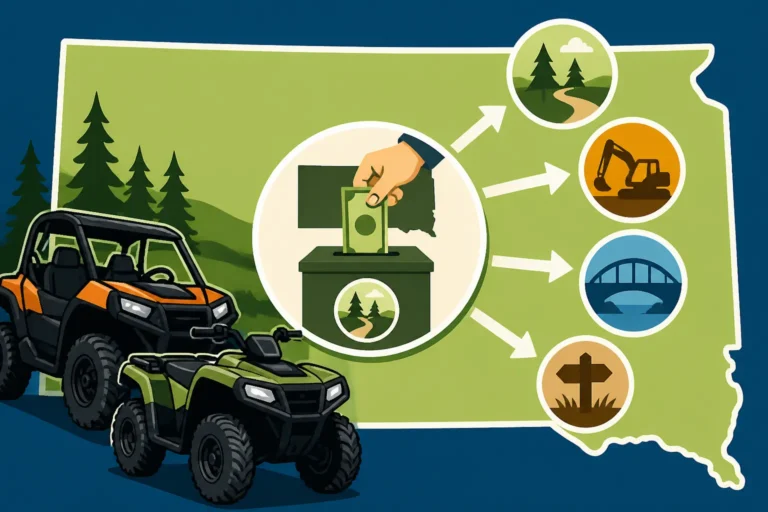
South Dakota’s proposed $30 seven-day and $50 annual trail permits are easy to mistake for current prices. If you’re planning a Black Hills ride, that confusion can affect your budget and when you buy. Here’s what the proposal means, how to tell whether a new fee is actually in effect, and what to check before riding.
What the Proposed $30 and $50 Permits Mean
The proposed figures refer to trail-permit options: a short-term permit priced at $30 and an annual permit priced at $50. They describe a proposed increase, not a price you should assume is currently in effect. A proposal does not change what you owe just because the figures appear in an article, discussion, or planning document.
That distinction matters because permit prices can be discussed before a change is approved, finalized, and implemented. There may be a period when a proposal is under consideration but riders can still buy permits at the existing rate. Later, if a change is approved, the new price may not take effect immediately. The effective date and the way permits are sold after that date matter as much as the proposed amount.
The most useful way to read the title is as a comparison of two possible permit prices—not as a receipt or a guarantee of what a permit costs today. Before buying, check the current information from the official permit seller or the agency responsible for the riding area. If the seller’s current checkout price differs from the proposed figures, use the current official price and confirm which permit period you’re selecting.
| Permit option in the proposal | Proposed price | What to confirm before buying |
|---|---|---|
| Short-term permit | $30 | The current price, validity period, and exact start and end dates |
| Annual permit | $50 | The current price, expiration date, and whether it covers your planned rides |
| Either option | Not necessarily the current price | Whether an adopted change has taken effect and which machines need a permit |
If you’re comparing costs with an older trip, be careful not to carry over an old figure as though it were still current. Nor should you treat a proposed increase as an approved one. Check the purchase page or ask the official seller what the permit costs now, how long it is valid, and whether any service or mailing charge is added.
For a broader overview of permit types and where they apply, see South Dakota Trail Permits Explained. If you’re specifically considering a year-long option, South Dakota’s Nonresident Annual Permit explains the annual permit in more detail. The basic point is simple: the proposed $30 and $50 figures are useful for understanding a possible change, but they do not replace checking the current rules and checkout information.
Why the Proposed Increase May Not Be the Price You Pay
A proposal, an approval, and a fee in effect are different things. Riders sometimes see a proposal reported as though a price change has already happened. That can lead to two opposite mistakes: budgeting too much because the proposed figure is treated as current, or budgeting too little because an older fee is assumed to remain in place without checking.
When you encounter a claimed new permit price, work through these questions:
- Is the figure described as proposed or adopted? A proposal signals a possible change. It is not enough, by itself, to show that the price has changed.
- Has an official source announced that the change is in effect? Look for current purchasing information from the responsible agency or authorized seller, rather than relying only on a summary or social post.
- What is the effective date? An approved increase may have a start date. A permit bought before that date may be handled differently from one bought afterward.
- Does the price apply to the permit you need? A short-term permit and an annual permit can have different terms. Confirm you are comparing the same option.
- Does the permit cover the machine and riding area you have in mind? The price is only one part of the decision. The permit’s scope and restrictions matter too.
These checks are especially important if you’re traveling from out of state or planning a trip well ahead. A price displayed in an old saved page, a previous season’s receipt, or a friend’s message may no longer be current. On the other hand, a proposal may be discussed for a while before it becomes a charge at checkout. Don’t infer either outcome from the proposed numbers alone.
The annual figure can attract particular attention because riders may compare it with the short-term option and conclude that one is automatically the better deal. But the right choice depends on the current price, how often you’ll ride, the permit’s validity dates, and whether it applies to every trip you’re planning. If a permit expires on a calendar-year date rather than lasting a full year from purchase, buying it late in the year can change the value of the annual option. Verify the expiration rule before choosing. When a Black Hills Trail Permit Expires covers that timing question.
Similarly, do not assume that a short-term permit lasts for seven full days beginning at the exact moment you buy it. Check the official terms for how the validity period is counted. It might be based on dates rather than a rolling number of hours. When planning a multi-day trip, knowing the exact start and end rules helps you avoid buying too early or discovering that the permit has expired before your last ride.
The phrase “proposed rise” also does not tell you whether every permit type will change in the same way. Check the current schedule for the specific permit you intend to buy. A change to one option does not automatically tell you the price or terms of another.
Who Needs a Trail Permit and Where It Applies
A permit’s price only matters if you need that permit for the kind of riding you plan to do. South Dakota’s trail-permit rules are not the same as a blanket state registration system or permission to ride anywhere. A trail permit is tied to riding in places where that permit is required, and it does not override closures, route restrictions, landowner rules, or other vehicle requirements.
For a Black Hills trip, first identify the land and route you plan to use. A route that looks open on a map may have seasonal limits, width restrictions, or a temporary closure. A permit does not make a closed route legal to ride, and buying one does not provide access to private property. Before you leave, check the current information for the specific area, including notices posted at trailheads. South Dakota Rules for Riding Federal Land and South Dakota Trail Maps and MVUMs are useful starting points for understanding the land and map side of the trip.
Also separate the permit question from the plate question. A machine’s road registration or plate and its trail permit serve different purposes. A plate may matter for road use, while a trail permit may still be required for a designated motorized trail. Do not assume that being street legal in your home state automatically removes every trail-permit requirement in South Dakota. Review Does South Dakota Honor Out-of-State Registration? and Why a Plate Does Not Replace a Trail Permit if you’re bringing a plated machine from another state.
The reverse can also be true: a trail permit is not a road plate. It does not authorize you to use public roads where a plate, equipment, insurance, or other road-use condition is required. Check Out-of-State Plates on South Dakota Roads if your plan includes riding between trail areas on public roads.
A few practical distinctions help:
- A trail permit is not general permission. It does not give you access to every public or private parcel.
- A permit is not the same as a vehicle title or road registration. Each addresses a different requirement.
- A permit does not cancel seasonal or temporary closures. Follow current signs and official closure notices.
- A permit may be required per machine rather than per person. Confirm the current rule before assuming one purchase covers a group.
- A permit is not necessarily interchangeable across areas. Check the rules for the place where you intend to ride.
If you’re riding a machine that is not plated, or you’re unsure whether an out-of-state plate counts for a particular purpose, resolve that question before travel. Why South Dakota Honors Only a Plated Machine explains why the distinction can matter. For a broader overview of what a permit allows, see What the South Dakota Permit Lets You Ride.
It’s also worth checking whether your route crosses between management areas. A ride can start on a permitted motorized trail and later approach a road, private boundary, or another recreation area with different rules. Carrying a permit is not a substitute for knowing where you are. Keep a current map available, pay attention to posted signs, and turn around if the route status is unclear.
Choosing Between a Short-Term and Annual Permit
The proposed $30 short-term and $50 annual prices make it tempting to compare the options using the proposed figures alone. That can be a helpful rough exercise, but it is not enough to choose confidently. First confirm the current cost of each option and the dates each one covers.
A short-term permit may suit a visitor with one compact trip, especially if the trip falls within the permit’s validity window. An annual permit may be worth considering if you expect several visits or a longer riding season. But the arithmetic only works if the permit covers the relevant dates and riding locations.
Ask yourself:
- How many days will you actually ride?
- Are those days within one short-term permit period?
- Do you expect another trip before the annual permit expires?
- Is the annual permit valid for a full period from the date of purchase or only until a set expiration date?
- Does each option cover the same machine and riding locations?
- Are there additional costs, such as delivery or processing, that change the comparison?
Do not count days when you expect to be traveling, repairing equipment, or staying off the trails as riding days. If your trip is uncertain, you may prefer to wait until you have confirmed your dates, as long as you leave enough time to obtain the permit in the required form.
Likewise, do not buy an annual permit on the assumption that it will be valid for twelve months from the day you purchase it. Permit terms can define an expiration date that is not tied to your purchase anniversary. Check that carefully if you’re buying near the end of the calendar year or planning an early-season trip. For the broader expiration issue, see Why Every South Dakota Trail Permit Expires December 31.
For visitors, the annual option may be useful when several trips are planned, but there is no universal break-even answer. A local rider who expects frequent outings may weigh the options differently from someone making a single long weekend trip. A family or group also needs to know whether the requirement applies to each machine, because buying a permit for one vehicle may not cover another. Confirm the machine-by-machine rule before using a simple per-person comparison.
Think about the physical permit as well. If the permit is issued as a decal, it needs to be mounted where the rules require and remain visible. A permit purchase confirmation, email, or printed receipt may not serve as a substitute for the required decal. Check Why a South Dakota Trail Permit Is a Stick-On Decal and Black Hills Trail Permit Decal Placement for practical details. If a decal must be mailed, allow time for delivery rather than planning to buy it at the last minute. See How Long a Black Hills Permit Takes to Arrive for that concern.
If you’re riding only on private land with the owner’s permission, the public-trail permit question may be different from a trip onto designated public motorized routes. Don’t assume that a permit is needed for every ride everywhere, but don’t assume that private permission covers a nearby public trail either. Keep the planned route clear and check the applicable rules for each portion.
How to Check the Current Fee Before You Ride
The simplest way to avoid paying the wrong amount is to confirm the current fee at the point of purchase. Do not rely on an old receipt, an undated screenshot, or the proposed $30 and $50 figures by themselves. Make sure the information you’re reading applies to the permit option and riding season you need.
Use this process before you leave home:
- Choose the riding area and routes. Confirm that your planned routes are open to your type of machine and that the permit applies there.
- Identify the permit option. Decide whether you need a short-term or annual permit, then check its current terms.
- Confirm the current fee through an official channel. Check the responsible agency’s information or an authorized seller. If the listed amount is unclear, ask whether it is a proposed figure or a price currently being charged.
- Check the dates and expiration. Confirm when the permit becomes valid and when it ends. Don’t assume the validity period starts at the instant of purchase.
- Check delivery and decal requirements. Find out whether the permit is issued immediately, mailed, or available from a seller, and whether a confirmation alone is acceptable while you wait.
- Buy one for each machine if required. Confirm the rule for your group rather than assuming one permit covers multiple vehicles.
- Keep proof and follow the mounting instructions. Retain the purchase confirmation, but mount the decal as directed if a physical permit is required.
- Recheck closures just before riding. A valid permit does not reopen a closed trail.
If you buy online, review the final checkout page before paying. It should help you identify the permit type, price, and any additional charges. If the displayed cost does not match the information you expected, pause and ask the seller or responsible agency to clarify. Don’t purchase a different permit simply because it looks close enough.
If you buy in person, ask the seller to confirm the permit’s duration, expiration, and machine coverage. This is particularly useful if your trip crosses a season boundary or you’re uncertain about whether your vehicle’s plate affects the requirement. Keep the answer straightforward: “Does this permit cover this machine on these routes for these dates?” That gives the seller the information needed to direct you to the right option.
For riders who order a decal close to departure, factor in delivery time. If it has not arrived, don’t assume that an emailed confirmation allows you to ride in place of the decal. Check the official instructions before setting out. The same applies if you leave the permit at home, damage it, or stick it somewhere that makes it hard to see. What Happens If You Leave Your Permit at Home may help you think through that situation, but check the current replacement or compliance process with the official seller.
Finally, keep the fee question in proportion. The proposed increase is worth knowing about because it may affect trip budgeting, especially for repeated visits or a group with several machines. But a permit price is only one part of a safe and legal ride. Make sure the route is open, the machine meets the applicable requirements, and the permit is valid for the right place and dates. For a visitor-focused overview of the permit process, see [South Dakota Rules for a Visiting Rider].
The practical takeaway is to treat $30 and $50 as proposed figures unless the official purchase information confirms they have taken effect. Check the current price when you’re ready to buy, verify the permit’s dates and scope, and don’t let a decal—or a plate—stand in for checking the route rules.
Disclaimer
This article is for general informational purposes only and does not constitute professional advice. Laws, prices and regulations vary by location and change over time. Consult a qualified professional for guidance on your specific situation.