South Dakota ATV Camping Near the Trails
Finding a campsite near South Dakota ATV trails is not just about distance. A site can look close on a map but still leave you with a long tow, a closed route, or no legal connection to the trail system. This guide explains how to choose a practical base camp, check access and seasonal conditions, and plan around your machine, trailer, and riding group.
Choose a South Dakota camping area that fits your ride
Start with the riding area, not the campsite listing
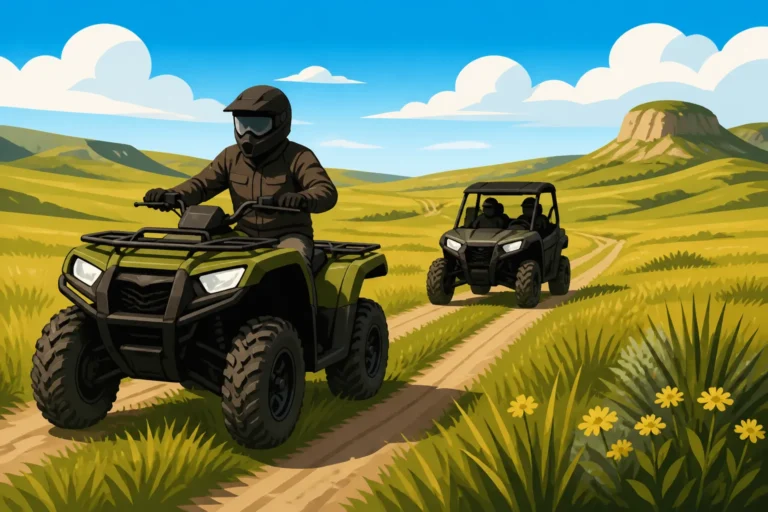
South Dakota’s Black Hills are a popular base for ATV and UTV trips, but “near the trails” can mean very different things. A campground may be close to a motorized route as the crow flies yet require you to load your machine and drive to a legal staging area. Before booking, identify the riding area you want to explore, then look for camping options that make the trip manageable.
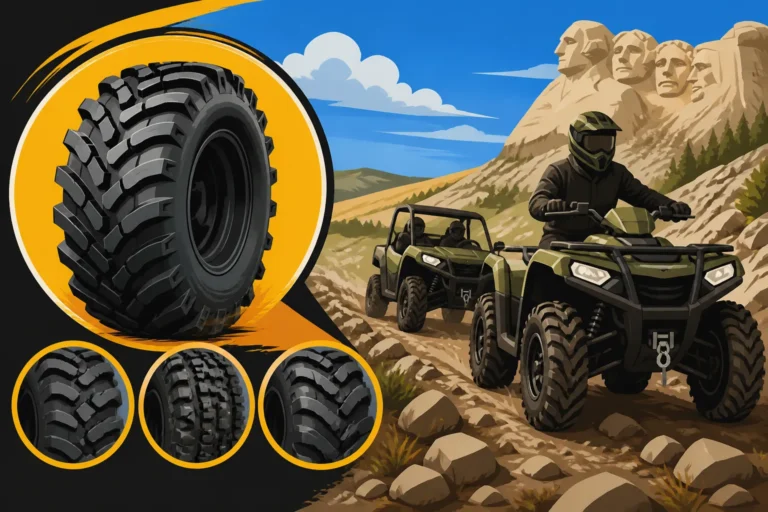
The Black Hills National Forest has a large network of roads and trails, but not every road or trail is open to motorized use. Route status, machine-width limits, seasonal openings, and temporary closures can all affect your plan. Check an up-to-date travel map or Motor Vehicle Use Map before assuming a route connects your campground to a trailhead. [South Dakota Trail Maps and MVUMs] can help you understand what to check when planning a route.
If you are considering a campsite around Pactola Reservoir, Sheridan Lake, Custer, Hill City, Deadwood, or Spearfish, treat the location as a starting point—not proof of direct riding access. Confirm the drive to the staging lot, whether your trailer can fit and park there, and whether the route you want is open to your machine. A few extra miles of towing can be less frustrating than discovering that a tempting connector is closed or not designated for motorized travel.
Match the campground to your kind of trip
A family staying several nights may value showers, a reliable water source, and a place to relax after a dusty ride. A group focused on covering more miles may care more about a straightforward drive to a staging lot, trailer parking, and enough space to organize helmets, tools, and food. There is no single “best” campground for every rider; the right choice depends on how much comfort you want and how much time you are willing to spend moving between camp and trail.
Think through a typical day before reserving. If you plan to ride early, will you be able to load quietly and leave without disturbing other campers? If you expect to return muddy, is there somewhere to clean off boots and equipment without washing soil into a lake, stream, or campground drain? If you are traveling with children or a large group, consider whether the site layout gives everyone room to move around safely while machines and trailers are parked.
Nearby lakes and recreation areas can be appealing for non-riding time, but riding access is a separate question. A campsite close to water does not automatically allow ATVs on the campground roads or shoreline. Read the campground’s vehicle and equipment rules, and confirm whether your machine must stay trailered until you reach a designated route or riding area. For more planning ideas, see [Camping Near South Dakota Trails].
Compare camping setups before you reserve
The campsite itself can make a trip smoother or more stressful. Beyond the view and amenities, check whether the site works for your vehicle, trailer, machine, and daily schedule. Calling ahead with specific questions is often more useful than relying on a short listing description.
| Camping setup | Often works well for | Check before booking |
|---|---|---|
| Developed campground | Families, longer stays, riders who want shared facilities | Trailer parking, quiet hours, generator rules, machine access, and reservation requirements |
| Private campground or RV park | Groups wanting utilities or a convenient base | Site dimensions, turning room, surface conditions, and rules for parking or washing machines |
| Dispersed camping where permitted | Riders seeking a more basic, self-sufficient stay | Current land rules, legal vehicle access, fire restrictions, water availability, and waste disposal |
| Lodging with a separate staging drive | Riders prioritizing beds and indoor amenities | Drive time to the trailhead, trailer security, and whether machines may be parked at the lodging |
Confirm trailer space and machine storage
A campsite that fits your truck may not fit your truck, trailer, and UTV. Ask about the usable length of the site, the width of the access road, and whether there is a place to park the tow vehicle if the trailer occupies the site. Tight turns, steep approaches, and soft ground can be a real problem for a loaded trailer, especially after rain.
Also ask where machines may be parked overnight. Some campgrounds allow them only on the assigned site; others may have designated parking areas or restrictions on operating them within campground boundaries. Avoid assuming that a machine can be ridden from the campsite to a nearby trail. Confirm the allowed route and whether it is an open, signed motorized route.
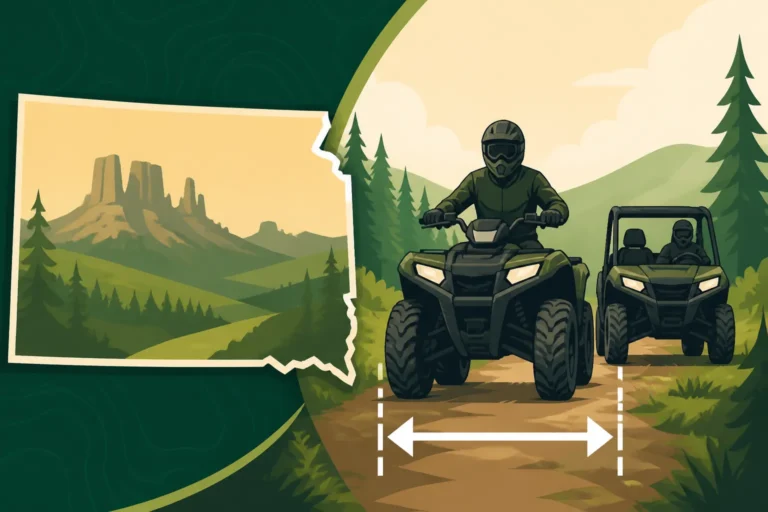
If you are towing a wider side-by-side, check width limits on the trails you intend to ride as well as the physical fit at camp. A machine that clears the campsite entrance may still be too wide for some trails. [South Dakota Trail Width Limits] explains why measuring your machine and checking route restrictions should be part of the plan.
Decide how much self-sufficiency you need
A developed campground can make daily routines easier, but it does not remove the need to plan for fuel, food, water, and equipment. If you choose a more basic site, bring enough drinking water, a way to manage waste, and a clear plan for charging phones or navigation devices. Do not count on cell service at every campsite or along every Black Hills route.
Plan fuel around your actual ride rather than assuming there will be a station close to the trail. Towns such as Rapid City, Hill City, Custer, Deadwood, and Spearfish can serve as useful planning points, but the route you choose determines whether a fuel stop is convenient. Identify where you can refuel before heading out and keep enough fuel in reserve for detours, slow travel, or an unexpected closure. [Fuel Between Black Hills Towns] is a useful companion topic when planning a longer loop.
If you use a navigation app, download the information you need before leaving reliable service. onX Offroad can help you review route options and save map information for offline use, but digital maps should be treated as one planning tool rather than permission to ride. Compare your route with official land-manager maps, posted signs, and closures. A line displayed on a screen does not override a gate, a seasonal restriction, or a route designation.
Check permits, access, and seasonal conditions
Verify what kind of route you plan to ride
A trip can include several kinds of access: a campground road, a public road, a designated motorized trail, or a route on federal land. Each may have different rules. Confirm where the Black Hills motorized trail permit applies, whether your machine needs a plate or another form of authorization for the road portions of your trip, and whether a rental machine already has the required permit. [South Dakota Trail Permits Explained] provides a useful overview of the permit question.
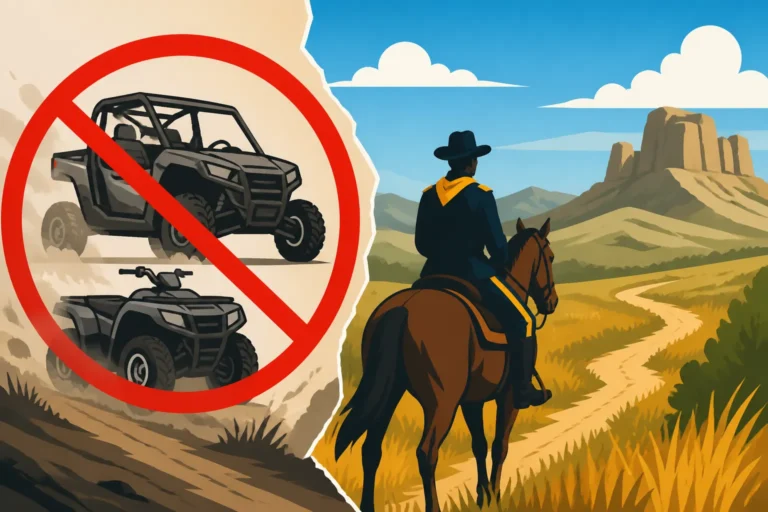
Do not assume a campground’s location means its access roads are open to your ATV or UTV. Ask the campground operator what riding is allowed on site and whether riders must trailer to a staging lot. Then check the route from the lot to the trail system. On federal land, remain on routes open to your vehicle and follow posted closures. [South Dakota Rules for Riding Federal Land] is relevant if your plans involve Forest Service or other federal ground.
For trip planning, use more than one source of route information. onX Offroad can help you trace a proposed ride and spot possible connections, while official maps and signs help establish whether a route is authorized and currently open. If the information does not line up, choose the conservative option and contact the responsible office before riding.
Plan around openings, closures, and weather
South Dakota trail access can be seasonal. Some Black Hills motorized trails have defined opening periods, and weather, fire danger, maintenance, or other conditions can change access. A route shown as open in an older saved map may not be open for your travel dates. Check current notices shortly before you leave and again before you unload at a trailhead. See [South Dakota Trail Conditions Before You Ride] and [South Dakota Trail Closures to Check First] as part of that routine.
Weather can affect both the ride and your campsite. A summer storm may leave a route muddy or difficult, while dry conditions can bring fire restrictions and closures. Ask about current fire rules at your campground and on the land where you plan to ride. Do not assume that a fire ring automatically means a campfire is allowed; restrictions can change with conditions. Carry a backup meal plan if a planned cooking method is not permitted.
Give yourself a flexible first day. If you arrive after a long drive, it may be smarter to set up camp, check the trail information, and ride a shorter route the next morning rather than rushing out late in the day. That buffer also helps if the trailhead is busier than expected or a route is closed. [Parking a Trailer at a Hills Trailhead] offers more to consider when choosing where to unload.
Build a campsite-to-trail routine that works
Prepare your gear before you leave camp
The easiest way to lose riding time is to reach the staging area and discover that a key item is back at the campsite. Before leaving, check helmets, eye protection, gloves, water, food, navigation, first-aid supplies, tools, and any machine-specific recovery gear. Make sure everyone knows the planned route and where the group will stop if riders become separated.
Keep the plan realistic for the least experienced rider in your group. A route that feels manageable to a confident adult may be tiring or intimidating for a child or a first-time passenger. Build in breaks, and do not let a long return ride become a race against sunset. Before heading out, tell someone at camp or at home where you expect to ride and when you plan to return.
Navigation deserves a backup. Save maps offline, carry a charged phone, and consider bringing a paper map or other backup that does not depend on cell service. onX Offroad can be useful for reviewing a route before the ride, but make sure you know how to use your saved maps before you lose reception. Check signs and barriers as you go, even when your planned route appears clear on the screen.
Protect the campsite and make the return easier
Keep machines on surfaces where they are allowed, and follow campground rules about idling, noise, and storage. Avoid washing mud or fuel residue into storm drains, streams, or lakes. If you need to clean equipment, ask where that is permitted rather than improvising at the campsite. Secure loose gear and food, and keep fuel containers stored according to campground rules.
When you return, take a few minutes to check the machines before the next ride. Look for damage, loose straps, low fuel, or items that need drying. A small repair handled at camp may prevent a larger problem on a remote route the next day. Keep a simple list of what needs restocking so you are not trying to remember it while packing up.
Finally, leave enough time to pack the trailer safely. A dusty, tired group is more likely to rush, forget a tie-down, or leave gear behind. Do a walk-through of the campsite, secure the machines, and follow the campground’s checkout and waste rules. A well-chosen campsite should make the trip easier not only while you are riding, but also during the quiet work of setting up, recovering, and getting home.
Disclaimer
This article is for general informational purposes only and does not constitute professional advice. Laws, prices and regulations vary by location and change over time. Consult a qualified professional for guidance on your specific situation.