South Dakota’s 120cc Two-Wheel Threshold
It’s a common scenario: you’ve got a fantastic two-wheeled off-road machine, maybe a smaller dirt bike, and you dream of cruising it down a scenic South Dakota gravel road to get to your favorite fishing spot or a friend’s ranch. You’ve heard whispers about plating smaller motorcycles, but the reality of South Dakota’s rules can be frustratingly opaque. This guide will cut through the confusion, specifically breaking down the state’s crucial 120cc engine size threshold for two-wheeled vehicles to hit the road legally, and what that means for your riding plans.
Understanding South Dakota's Engine Size Requirements for Road Use
South Dakota's approach to allowing off-road vehicles on public roads is quite specific, and it hinges significantly on engine displacement. This isn't just about whether your machine looks street-legal with headlights and turn signals; it's about a foundational cubic centimeter (cc) requirement that often surprises riders. For those who own smaller two-wheeled machines, this distinction can be the difference between a legal ride and a potential citation. It's a key piece of the puzzle that governs how you interact with the state's roadways, even the scenic, less-trafficked ones.
The Core Rule: 200cc for Four-Wheelers, 120cc for Two-Wheelers
When it comes to getting an off-highway vehicle (OHV) ready for the asphalt or gravel, South Dakota draws a clear line in the sand, or rather, in the engine block. For four-wheeled machines, like many ATVs and UTVs, the minimum engine size required to even consider plating it for road use is 200 cubic centimeters. This is a crucial number that dictates whether your larger quad or side-by-side can legally transition from trail warrior to road-going utility vehicle. We've discussed this in detail in [South Dakota's 200cc Motorcycle Licensing Rule], but it bears repeating as it forms the basis for comparison with two-wheelers.
For two-wheeled vehicles, primarily dirt bikes and certain smaller motorcycles not originally designed for the street, that magic number drops to 120cc. This means if you have a dirt bike with an engine smaller than 120cc, it simply doesn't qualify for a South Dakota license plate, regardless of any aftermarket modifications you might add. This rule helps classify vehicles and ensures that only machines deemed capable of safely integrating into road traffic, even if just for limited use, are given that privilege. It’s not about power, but about a baseline standard.
The legislative intent behind these thresholds is multifaceted. Firstly, it’s about safety. Larger engine sizes are generally associated with more stable and predictable performance in traffic, offering enough acceleration to keep up and manage various road conditions. Secondly, it helps differentiate true off-road machines from those that can genuinely perform dual roles. While many smaller dirt bikes are incredibly fun and capable on trails, they might lack the weight, stability, or power characteristics considered necessary for even secondary road use, such as maintaining minimum speeds or handling wind shear from passing vehicles.
What "Two-Wheel" Truly Means in This Context
When South Dakota refers to the "two-wheel" threshold of 120cc, it's specifically addressing vehicles that are fundamentally motorcycles, even if they started life exclusively as off-road dirt bikes. This is where the distinction between what we typically call an "ATV" and a "motorcycle" becomes critical in the eyes of the law. An ATV, by definition, is designed to travel on four low-pressure tires, has a seat designed to be straddled by the operator, and handlebars for steering. The 200cc rule generally applies to these four-wheeled machines.
A "two-wheel" machine, in this regulatory context, encompasses any vehicle with two wheels, an engine, and designed to be ridden like a motorcycle, including traditional street motorcycles and dirt bikes. If your dirt bike is 120cc or larger, and you equip it with all the necessary street-legal components—headlights, taillights, brake lights, a horn, mirrors, and appropriate tires—you might be able to get it plated. This opens up possibilities for trail connectors or short hops on public roads that would otherwise be off-limits.
It's important to understand that this definition isn't trying to make your motocross bike a highway cruiser; it's about providing limited, conditional access to public roads for specific purposes. This typically means traveling to and from trailheads, accessing private property, or traversing short sections of road where legal ditch riding might not be an option. The core idea is to enable connectivity for riders who primarily use their machines off-road but occasionally need to use public routes.
The Impact of the 120cc Threshold on Riders
For riders who love the agility and lightweight nature of smaller dirt bikes, South Dakota's 120cc rule can feel like a direct hit. Many popular models, especially those favored by younger riders or for technical single-track, fall squarely below this threshold. This legislative nuance forces owners to carefully consider how and where they plan to ride their machines, often requiring a shift in strategy from what might be permissible in other states or under different vehicle classifications.
The Frustration of Having a Smaller Machine
Imagine the excitement of getting a new 80cc or 100cc dirt bike, perfectly sized for tight trails or for teaching a younger rider the ropes. You might even invest in a basic lighting kit, thinking you're halfway to making it street-legal for those quick runs down the road. Then, you hit the South Dakota Department of Revenue or a county treasurer's office and are met with the news: your machine, despite its lights, horn, and maybe even a mirror, cannot be plated because its engine is under 120cc. This can be a deeply frustrating moment, as your perception of "street-legal" crashes head-on with the state's specific engine displacement requirement.
This frustration is entirely valid. Riders often equip their smaller machines with safety features like lights and horns, believing that these accessories are the primary hurdle to road legality. They envision a short, safe commute on a backroad, only to discover that a fundamental engine size rule overrides all their efforts. It’s not about capability on a trail, but about fitting into a specific regulatory box for road use. The state isn’t questioning your riding skill or the quality of your machine; it’s simply applying a blanket rule designed for broader safety and regulatory consistency.
This rule especially impacts families and those who enjoy more casual, lower-speed riding. A smaller dirt bike might be perfect for exploring ranch roads or accessing hunting spots on private land, but if those routes require even a brief stint on a public road, the 120cc rule creates a significant barrier. This often means investing in a trailer, even for short distances, adding an extra layer of logistics and expense that many owners of smaller machines hoped to avoid.
Options for Sub-120cc Two-Wheel Machines
So, what are your choices if your beloved two-wheeled machine is under that 120cc threshold in South Dakota? The primary answer is that these machines are strictly for off-road or private land use. This means embracing their intended purpose as trail bikes, dirt bikes, or machines for closed-course riding. Many fantastic riding opportunities still exist, even if public roads aren't an option.
Designated OHV areas are your best friends in this situation. Places like the Oahe Downstream OHV Area near Fort Pierre or the Revheim Bay OHV Area offer dedicated spaces where you can ride these machines legally and safely without needing a street plate. These areas are designed for recreational off-roading and are perfect for enjoying your sub-120cc bike to its fullest. They provide a controlled environment, often with varying terrain to suit different skill levels. Remember that while you don't need a street plate, you might need a [South Dakota's Motorized Trail Permit] to ride in certain areas, particularly federal lands like the Black Hills National Forest, though OHV areas like Oahe Downstream typically don't require it.
For moving your machine between these legal riding spots, or to and from private property, trailering becomes essential. Even if it's just a short distance down a county road, an unplated, sub-120cc dirt bike cannot be ridden legally on public roads. This means investing in a small utility trailer or a hitch-mounted carrier. While it adds an extra step to your riding day, it's the only legal way to transport these machines to where they can be enjoyed. Consider checking [South Dakota Trail Conditions Before You Ride] before you head out, as trailering might be necessary even for plated machines if conditions are poor.
Navigating the Broader Landscape of South Dakota Road Rules
Getting your two-wheeled vehicle plated is just the first hurdle in South Dakota. Once you meet the engine size requirement (120cc for two-wheelers, 200cc for four-wheelers), you're then faced with a host of other regulations that govern where and how you can actually ride on public roads. It's a comprehensive system designed to integrate these specialized vehicles into the existing road network while maintaining safety for all users. Understanding these nuances is key to a smooth and legal riding experience.
Comparing Two-Wheel and Four-Wheel Plating Requirements
While the engine size is a primary differentiator, South Dakota also has specific equipment requirements that vary slightly depending on whether you're plating a two-wheeled motorcycle (120cc+) or a four-wheeled ATV/UTV (200cc+). It’s not just about the motor; it’s about making sure the machine is adequately equipped for road interaction.
Here's a comparison of common requirements for plating:
| Feature/Requirement | Two-Wheeled (120cc+) | Four-Wheeled (200cc+) | Notes |
|---|---|---|---|
| Engine Size Minimum | 120cc | 200cc | Absolute minimum for registration. |
| Headlight | Required (low & high beam) | Required (low & high beam) | Must illuminate specific distance. |
| Taillight/Brake Light | Required (visible from distance) | Required (visible from distance) | Essential for visibility, especially from the rear. |
| Rearview Mirror | Required (left side, minimum) | Required (at least one) | Critical for situational awareness. Consider options from brands like SuperATV for sturdy aftermarket mirrors. |
| Horn | Required (audible from 200 ft) | Required (audible from 200 ft) | For signaling and alerting others. |
| Tires | DOT-approved motorcycle tires | DOT-approved ATV/UTV tires | Must be designed for road use, not just off-road. |
| Turn Signals | Not explicitly required by state, but highly recommended for safety | Not explicitly required by state, but highly recommended for safety | Many riders add these for better visibility and communication. |
| Muffler/Exhaust | Required (must meet sound limits) | Required (must meet sound limits) | To control noise pollution. |
| Driver's License | Motorcycle endorsement | Standard Class 1/2/3 license | Specifics depend on the vehicle. [South Dakota Driver's License Rules for ATVs] provides more detail for quads. |
| Title/Registration | Yes, at county treasurer | Yes, at county treasurer | Standard vehicle titling process. |
Meeting these equipment requirements is paramount. You can find many of these necessary components from aftermarket suppliers. For instance, when it comes to durable mirrors, quality lighting, or robust horns, companies like SuperATV offer a wide range of products that can help ensure your machine meets the legal criteria for road use in South Dakota. Don't forget that a standard vehicle title is required for both types of machines. [Titling an ATV in South Dakota] covers the process for quads, and similar steps apply to two-wheeled vehicles.
The Role of Ditch Riding and Highway Crossings
Even if your two-wheeled (120cc+) or four-wheeled (200cc+) machine is fully plated and street-legal in South Dakota, you can't just ride anywhere you please. The state has very specific rules about where you can operate these vehicles on or adjacent to public roads. This is where understanding concepts like ditch riding and highway crossings becomes critical for avoiding fines and ensuring your safety.
South Dakota is one of the states that permits "ditch riding" on certain public roads. However, this isn't a free-for-all. [South Dakota's Ditch Riding Rule] states that a properly plated off-road vehicle can be operated in the ditch bottom or on the back-slope of certain highways and county roads, typically staying off the paved or graveled travel lanes. This allowance is generally meant to provide a path for recreational riders or those needing to access agricultural land without impeding regular traffic. It's not a universal right; counties have the option to "opt out" of ditch riding, and many busy highway ditches are off-limits regardless.
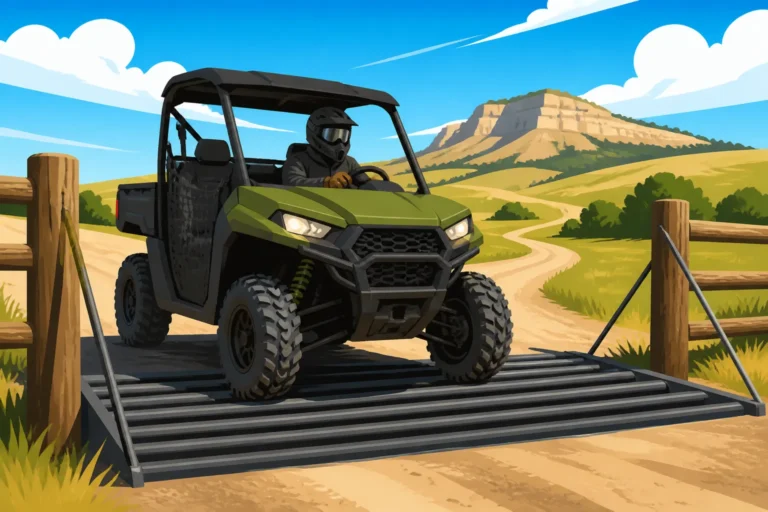
Highway crossings are another area of careful regulation. You can't simply pull onto a busy highway and merge with traffic. Instead, [South Dakota Rules for Crossing a Highway] stipulate that if you need to cross a paved highway, you must do so at approximately a 90-degree angle, after coming to a complete stop and yielding to all traffic. The goal is to minimize your time in the direct path of moving vehicles. This is usually allowed only when moving from one permissible ditch to another, or from a private drive to a ditch. You cannot ride down the highway itself. Always prioritize safety and visibility when making these crossings, especially with smaller two-wheeled machines that might be less visible to fast-moving traffic.
Essential Equipment Beyond Engine Size for Road Legality
Beyond simply meeting the engine displacement minimums of 120cc for two-wheelers or 200cc for four-wheelers, making your machine truly road-legal in South Dakota involves outfitting it with specific safety and operational equipment. These items are not optional extras; they are foundational requirements that ensure your vehicle can communicate with other road users and operate safely in a shared environment. Neglecting any of these components could lead to fines, citations, or worse, dangerous situations on public roads.
Lights, Mirrors, and Horns: Non-Negotiables for Plating
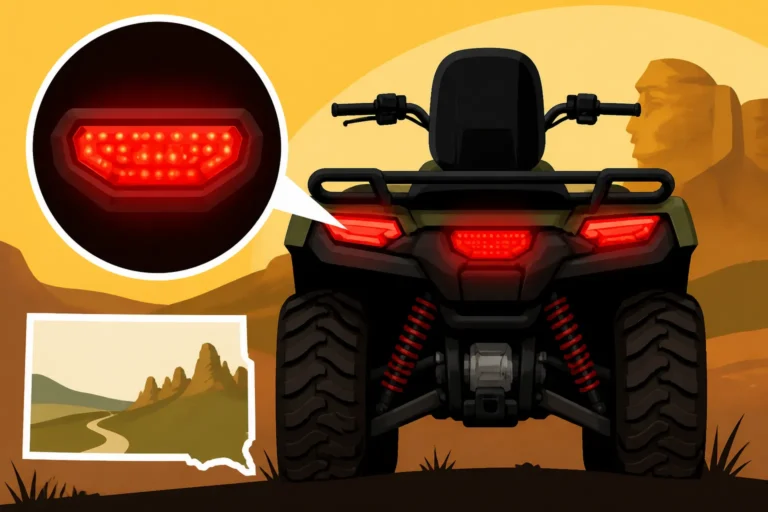
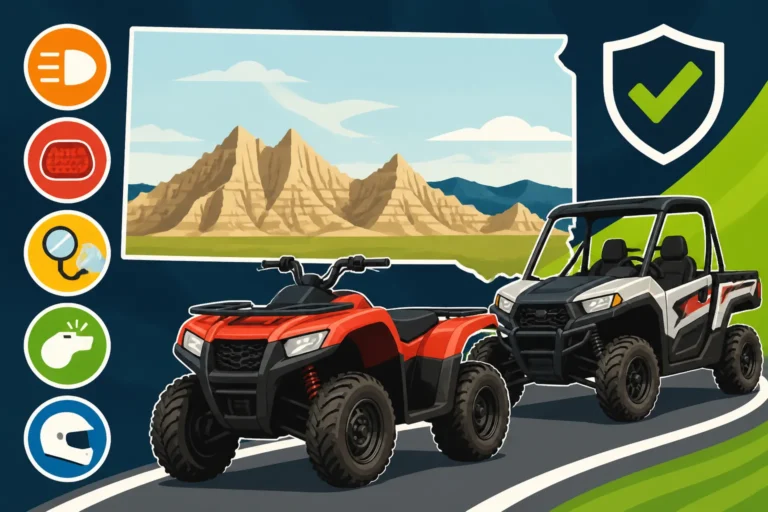
When you're aiming to get that plate for your 120cc+ dirt bike or 200cc+ ATV, the Department of Revenue and county treasurers are going to be looking for a specific set of equipment. First and foremost, proper lighting is crucial. Your machine needs a functioning headlight that illuminates the road ahead, typically with both high and low beam settings to adapt to different conditions and avoid blinding oncoming drivers. Just as vital are taillights and brake lights. The taillight must be clearly visible from a certain distance to signal your presence, and the brake light must illuminate brightly when you apply the brakes, alerting vehicles behind you to your slowing or stopping. Many off-road machines come with basic lighting, but for street legality, they must often be upgraded to meet DOT (Department of Transportation) standards for intensity and coverage.
Visibility to the rear is another critical element, which is why [A Rear-View Mirror for South Dakota Road Use] is a non-negotiable item. While many states require only one mirror, often on the left (driver's) side, having at least one functioning mirror allows you to monitor traffic approaching from behind without constantly turning your head. For off-road machines, these mirrors need to be durable enough to withstand vibrations and occasional impacts. You'll find many robust aftermarket mirrors available, and brands like SuperATV specialize in creating accessories that stand up to the rigors of off-road use while also meeting street-legal specifications.
Finally, you absolutely need a horn. [A Horn on a South Dakota Road Machine] isn't just for trail signaling; it's a vital safety device to alert pedestrians, other vehicles, or even wildlife to your presence. The horn must be audible from a specified distance, typically around 200 feet, to be effective. Many stock off-road horns are weak or non-existent, so an aftermarket upgrade is often necessary to meet this requirement. These three categories—lights, mirrors, and horns—form the basic communication and visibility package required for any vehicle to be considered safe enough for South Dakota's roads. [Equipment a South Dakota Road Machine Needs] provides an even more comprehensive list to review.
Driver's License and Helmet Rules
Beyond the machine itself, the operator also needs to meet certain requirements to legally ride a plated two-wheeled or four-wheeled vehicle on South Dakota roads. The most fundamental of these is possessing the correct driver's license. For a plated 120cc+ dirt bike, you will need a valid motorcycle endorsement on your driver's license, just as you would for any street motorcycle. This typically involves passing a written knowledge test and a practical riding skills test. For plated 200cc+ ATVs or UTVs, a standard Class 1, 2, or 3 driver's license is generally sufficient, as specified in [South Dakota Driver's License Rules for ATVs]. This means that while you don't necessarily need a specific ATV endorsement, you still need to be a legally licensed driver.
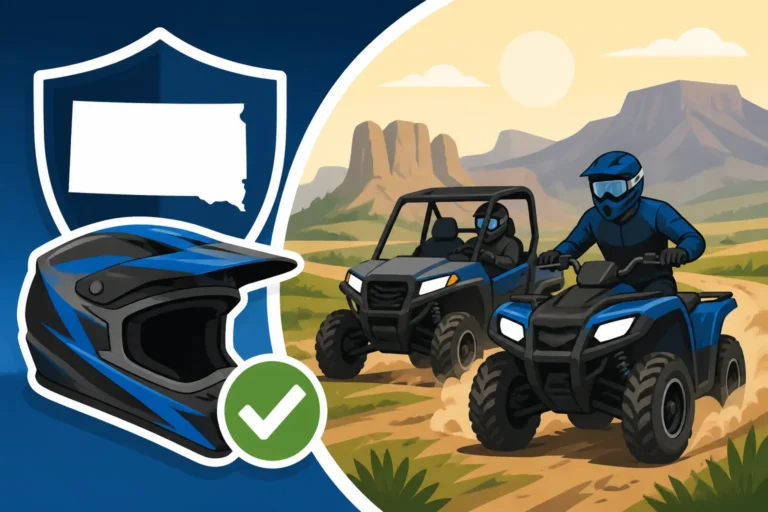
South Dakota also has specific helmet rules, particularly for younger riders. While adults (18 years and older) are generally exempt from mandatory helmet use on motorcycles and plated ATVs in South Dakota, this exemption does not extend to all riders. Anyone under the age of 18 is legally required to wear a helmet when operating or riding as a passenger on a motorcycle or a plated ATV/UTV on public roads. This rule is in place for obvious safety reasons, protecting those who are still developing judgment and riding skills. [South Dakota Helmet Law for ATV Riders] delves deeper into these regulations.
Furthermore, eye protection is required for all riders, regardless of age, unless the vehicle is equipped with a windscreen. This means goggles or a face shield are mandatory to protect your eyes from debris, insects, and the elements. Failing to adhere to license and helmet/eye protection requirements can result in citations, fines, and even the impoundment of your vehicle, making it crucial to be fully compliant before hitting any public roads in South Dakota.
Practical Scenarios and Common Misconceptions
Despite South Dakota's clear guidelines, confusion often persists among riders, especially those new to the state or those transitioning their off-road machines to partial road use. These misunderstandings often stem from experiences in other states, or from a logical but incorrect assumption about how vehicle modifications are viewed by the law. Addressing these head-on can save riders a lot of grief and ensure their adventures remain legal and enjoyable.
"My Dirt Bike Has Lights – Why Can't I Plate It?"
This is perhaps one of the most common points of frustration and misunderstanding for riders with smaller displacement dirt bikes. Many modern dirt bikes, even those well under 120cc, come equipped from the factory with basic headlights, taillights, and sometimes even brake lights. Others can easily have an aftermarket lighting kit installed, making them look like they're ready for the road. The logical leap for many riders is: if it has the lights, horn, and mirrors, it should be street legal, right?
Unfortunately, in South Dakota, this is a significant misconception. As we've thoroughly covered, the engine size requirement of 120cc for two-wheeled vehicles is a foundational prerequisite for obtaining a plate for road use. It doesn't matter how many Department of Transportation (DOT) approved components you bolt onto a 100cc dirt bike; if it doesn't meet that minimum engine displacement, it simply cannot be titled and registered for public roads. The lights, horn, and mirrors are necessary, but they are in addition to the engine size rule, not a replacement for it.
The reason for this strict adherence to engine size often boils down to safety and classification. Smaller displacement engines, while fantastic for certain off-road applications, might not be deemed powerful or stable enough to safely integrate with road traffic, even for short distances or in ditches. They might struggle to maintain even minimum safe speeds if they accidentally have to enter a traffic lane, or they might be less visible to other drivers due to their smaller stature. Many sub-120cc dirt bikes are designed for closed-course racing or very specific off-road recreation, where interaction with regular vehicle traffic is never intended. So, while your machine may appear ready, the law looks deeper than just superficial equipment.
Planning a Trip: What to Consider for Smaller Machines
If you own a sub-120cc two-wheeled machine in South Dakota, or even a plated 120cc+ machine, planning your rides becomes even more critical. You can't just spontaneously decide to ride down any road you see. Knowing your legal boundaries and preparing accordingly will make all the difference between a smooth adventure and a potential headache.
First, always remember that your sub-120cc machine is strictly for private land or designated off-road riding areas. This means your primary mode of transport to these areas will be trailering. Before you even load up, you should check [South Dakota Trail Conditions Before You Ride] for your intended destination. Weather, recent rains, or even fire bans (especially during dry Black Hills summers) can lead to trail closures. There's nothing worse than trailering your bike hours only to find the gates locked.
For plated machines (120cc+ two-wheelers or 200cc+ four-wheelers), you gain the flexibility of using some public roads, but it's essential to understand the restrictions. You'll likely be relying on [South Dakota's Ditch Riding Rule] and [South Dakota Rules for Crossing a Highway]. Always carry a physical map, like [The Black Hills Travel Map on Every Ride], especially when exploring less-trafficked areas where cell service can be spotty. This map will help you identify legal routes, road types, and designated riding areas. Knowing [Where to Ride an ATV in South Dakota] before you set out is paramount. Never assume a road or ditch is open; always verify first. Plan your fuel stops carefully, as some remote areas might have significant distances between services. Being prepared ensures that your ride is not only legal but also safe and enjoyable.
Disclaimer
This article is for general informational purposes only and does not constitute professional advice. Laws, prices and regulations vary by location and change over time. Consult a qualified professional for guidance on your specific situation.