What Happens If You Leave Your Permit at Home
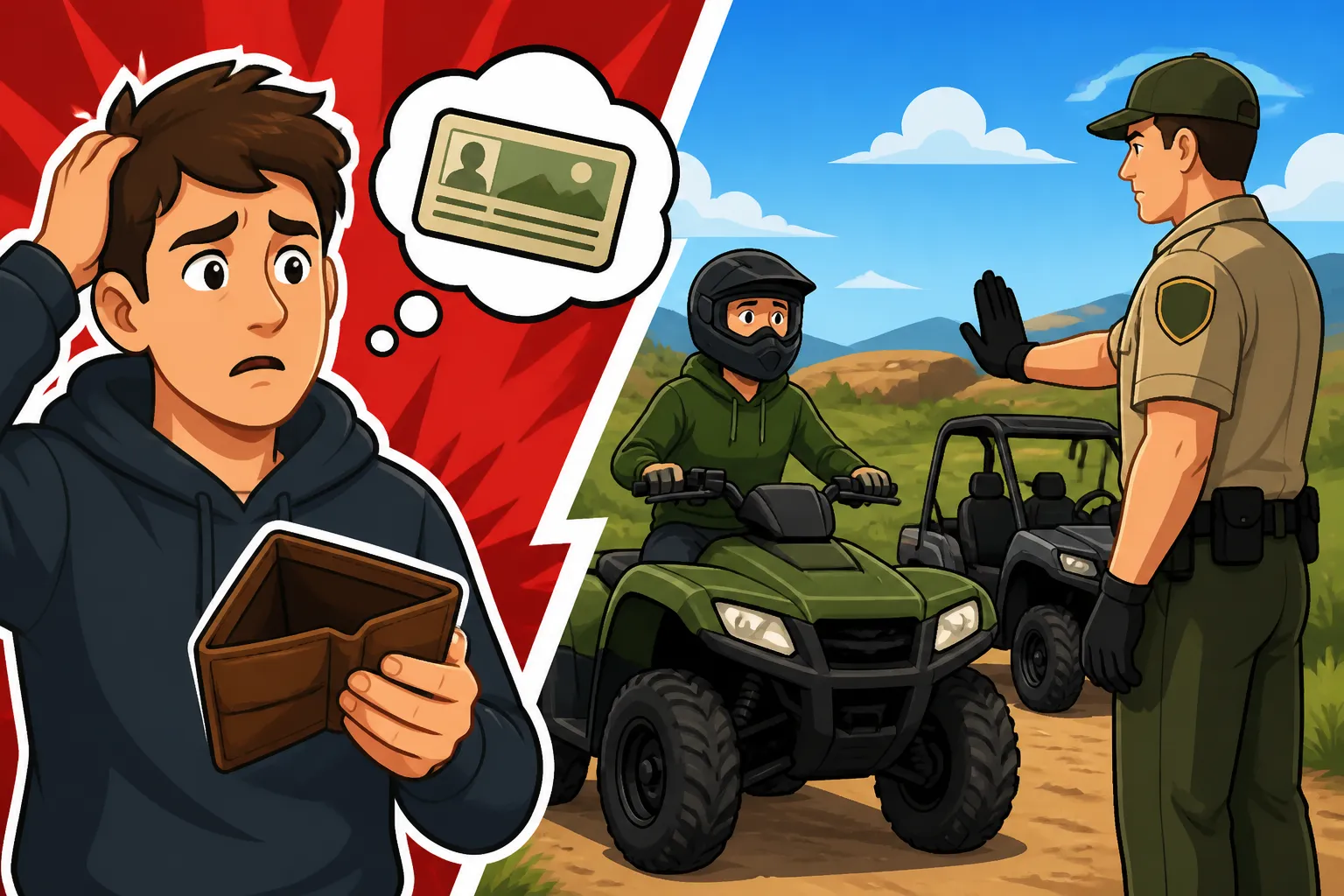
If you’ve reached a South Dakota riding area and realize your trail permit is at home, the key question is whether the machine has the required decal with it. A receipt, phone photo, or permit stored in another vehicle may not take its place. Here’s how to decide what to do next, and why a plate does not automatically solve the problem.
First, check what you forgot
Riders can mean different things by “the permit.” You might have bought a permit but left the decal at home, left the whole machine with its decal on it, or simply never bought one. Those situations call for different next steps, but the practical rule is the same: don’t assume you can ride a motorized trail until you have the required permit displayed on that machine.
South Dakota’s Black Hills motorized trail permit is issued as a decal, not as a print-at-home pass. The permit is tied to the machine, so carrying a confirmation or receipt does not necessarily meet the display requirement. For details on where and how the decal must be attached, see Black Hills Trail Permit Decal Placement and Why You Cannot Print One at Home.
| What you left behind | What to do before riding | What not to assume |
|---|---|---|
| The decal, but you bought the permit | Retrieve the decal or contact a permit seller or relevant office about your options | A receipt or phone photo automatically replaces the decal |
| The machine with the decal attached | Use a different properly permitted machine, or retrieve the machine | The permit transfers to another ATV or UTV |
| The permit was never bought | Purchase the required permit before entering a trail | A vehicle plate alone covers motorized trails |
| A plate or registration document | Check whether the machine is properly plated for the road you intend to use | A plate removes the trail-permit requirement |
| The permit is present but damaged or detached | Ask an authorized seller or office what to do before riding | A loose, unreadable decal will be accepted |
The permit requirement is separate from ordinary vehicle registration and road-use rules. A plated machine may be able to use certain roads without a trail permit, but that does not make it eligible to ride a motorized trail without the required decal. The distinction is explained in Why a Plate Does Not Replace a Trail Permit and Do You Need a Permit on a Black Hills Trail?.
A permit is also generally associated with the individual machine, not each person riding it. If your group has several machines, check that each one has the required permit. Buying one for a different ATV or UTV does not automatically cover the machine you brought.
If you bought the permit but left the decal at home
Having paid for a permit is useful information, but it doesn’t mean you should ride first and sort out the decal later. If you can retrieve it without creating a larger problem, that is the clearest option. If you cannot, pause and contact an authorized permit seller, a ranger district office, or the relevant land manager to ask whether there is an approved way to handle your specific situation.
Keep any purchase confirmation, receipt, or other permit details available when you make that call. They may help staff identify the transaction and tell you what steps are available. But treat those documents as supporting information, not as a substitute for the decal unless the responsible authority specifically confirms otherwise. A photograph of a decal or a digital receipt is not the same thing as a permit displayed on the machine.
Do not peel a decal off another machine and move it to the one you want to ride. The permit is issued for a machine, and transferring a decal can create a problem for both vehicles. If the decal is stuck to a panel or windscreen on the machine you left at home, the permit has not followed you simply because you remember buying it.
If the decal is missing, damaged, or will not stick, don’t improvise with a homemade copy or a printout. Ask an authorized seller or the relevant office how to replace or correct it. Permit handling details can depend on the circumstances, so get instructions before entering a trail. For help finding a seller, see Where to Buy a Black Hills Trail Permit. If you are considering buying online shortly before a trip, note that the decal may not arrive immediately; How Long a Black Hills Permit Takes to Arrive covers the timing issue.
While you wait for an answer, you can still make useful progress without riding a trail. Check your route, trail status, staging area, fuel, and machine width. Confirm whether the roads you plan to use are open to your machine and whether they require a plate or permit. A useful distinction is that some roads may have one requirement while motorized trails have another. Don’t assume that reaching a trailhead by a road makes the trail itself available to an unpermitted machine.
If you never bought one, or the wrong machine has it
If you discover the problem before unloading, buy the required permit through an authorized channel before riding where it applies. Permit sellers and offices may vary by location and hours, so check ahead rather than counting on a shop being open when you arrive. The process and purchase options are discussed in Where South Dakota Trail Permits Are Sold.
If you discover the missing permit at a staging area, do not enter a motorized trail to look for a place to buy one. Leave the machine parked and find an authorized seller or contact the appropriate office for instructions. Do not ride just far enough to reach a store or trailhead, and do not rely on another rider’s permit. A permit belongs with its associated machine, not with the group.
A machine’s plate can matter on some roads, but it does not solve every permit problem. A valid plate may allow use of certain roads under the applicable rules; trails have their own permit requirement. Visitors should also distinguish their home-state plate or registration from the South Dakota trail permit. Whether another state’s registration is recognized for a particular road is a separate question from trail access. See Out-of-State Plates on South Dakota Roads for that distinction.
| Where you plan to ride | What to verify before moving the machine |
|---|---|
| A motorized trail | Whether the machine has the required South Dakota trail permit decal |
| A forest road | Whether the road is open and whether the machine’s plate or permit meets the applicable rule |
| A road leading to a trailhead | Whether the road is legal for your machine, and whether the trail itself requires a decal |
| Private ground | Whether you have permission and whether any separate rules apply |
| A designated riding area | The area’s access rules, current closures, and any permit requirements |
A South Dakota motorized trail permit is not a general authorization to ride anywhere. It does not make a closed route open, grant permission to cross private property, or replace other rules for roads, land, and machines. Confirm your route and access separately, especially if your plan crosses from a road to a trail or from public to private ground.
What can happen if you ride without the decal
Riding onto a trail without the required permit can expose you to enforcement and may interrupt or end your ride. You may be directed to leave or be cited, depending on the circumstances and the applicable rules. The exact outcome can vary, so it is not sensible to treat the risk as a predictable fee or assume that a receipt will resolve it roadside. See South Dakota Fines for No Trail Permit for more on the enforcement issue.
The practical costs can go beyond a citation. Your group may have to turn around, rearrange transportation, or wait while someone retrieves the decal. If you are on a trip with a rental machine, contact the rental company before moving the vehicle. A rental provider may have already supplied the required permit, but you should verify that the decal is actually present on the machine. If you are responsible for obtaining it, ask the provider where to buy one and whether the machine may be used on your intended route without it.
If you realize the problem after starting a ride, stop somewhere safe and do not continue onto a trail to see whether anyone checks. Contact the responsible office or an authorized seller and explain exactly what you have: the machine, any plate or registration, the purchase receipt if you have one, and whether the decal is missing, left at home, or attached to another vehicle. Follow the instructions you receive. If you cannot confirm that you may legally continue, choose a route that does not require the missing permit or end the ride.
For a group, make the decision machine by machine. One person’s permitted ATV does not make the rest of the group’s vehicles permitted. If some riders have compliant machines and others do not, the group may need to split up, change plans, or wait until every machine is ready. That can be inconvenient, but it is safer than treating a group purchase or a shared receipt as blanket coverage.
A quick check before unloading can prevent most of these problems:
- Confirm that the permit decal is physically on the machine you intend to ride.
- Check that the decal is readable and attached as required.
- Confirm that every machine in the group has its own permit when needed.
- Check whether your route includes roads, trails, or both, and verify the rules for each.
- Check current closures and access restrictions before setting out.
- If a permit is missing or damaged, contact an authorized seller or land manager before riding.
If the permit is at home, the best answer is usually simple: retrieve it, arrange an authorized replacement or purchase if appropriate, or change plans. A receipt, plate, or another machine’s decal should not be treated as a substitute unless the relevant authority confirms that it is acceptable for your situation.
Disclaimer
This article is for general informational purposes only and does not constitute professional advice. Laws, prices and regulations vary by location and change over time. Consult a qualified professional for guidance on your specific situation.