Out-of-State Plates on South Dakota Roads
An out-of-state plate can make an ATV or UTV look ready for a South Dakota road, but registration is only part of the answer. The machine must be legal for the kind of road or route you plan to ride, and trail permits and local restrictions may still apply. Here’s how to check the difference before you unload.
What an Out-of-State Plate Does and Does Not Mean
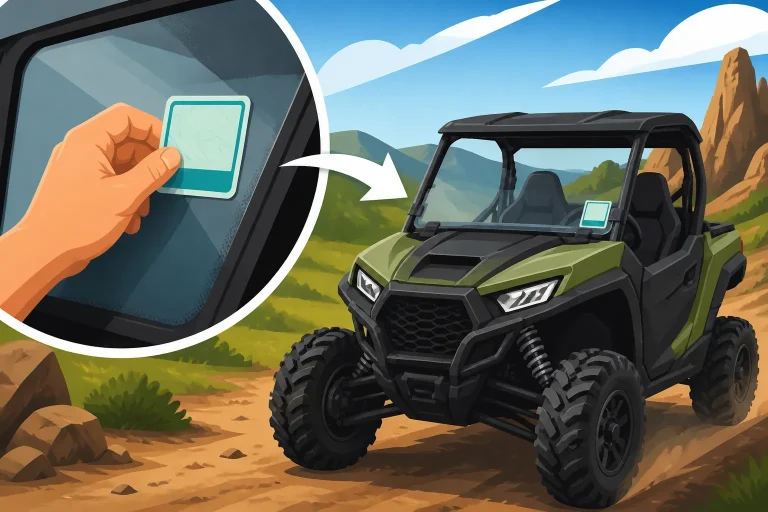
A plate issued by another state is evidence that the machine is registered there. It does not automatically mean the ATV or UTV may be driven on every South Dakota road, shoulder, ditch, or off-road trail. The key question is what the plate and registration authorize in the state that issued them, and whether South Dakota allows that use on the route you have in mind.
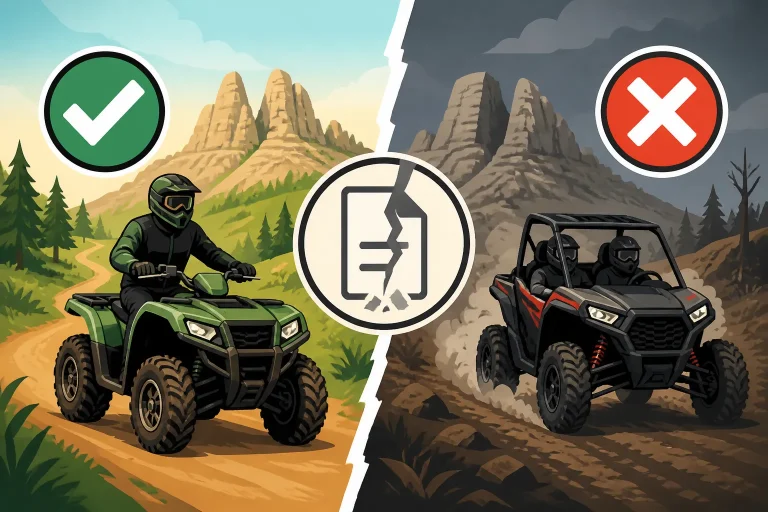
That distinction matters because “registered” and “street legal” are not always interchangeable. A home state might register an ATV for off-road use without authorizing it on public roads. Or it may allow limited road use only under certain conditions. A plate alone may not show those details to a South Dakota officer or land manager, so carry registration documents that explain the machine’s status.
Reciprocity is not a blanket permission to ride wherever a similar South Dakota machine could go. It generally concerns recognition of an out-of-state vehicle’s registration or legal status; it does not remove South Dakota’s route restrictions, equipment rules, or permit requirements. Before relying on reciprocity, check Does South Dakota Honor Out-of-State Registration? and Why a Street-Legal Home State Matters.
| Where you plan to ride | What an out-of-state plate may help establish | What it does not settle |
|---|---|---|
| A public road | That the machine is registered in its home state and may qualify for road use | Whether that specific South Dakota road allows it, or whether its equipment and operator meet local rules |
| A highway crossing | That the machine is registered | Whether the crossing is permitted and how it must be made |
| A ditch or right of way | Registration may be relevant to the machine’s status | Whether the route is open, whether the county has opted out, or whether the rider meets applicable age rules |
| A designated motorized trail | Registration may help identify the machine | Whether a South Dakota trail permit is required |
| Private property | The machine’s registration status | Whether the owner has granted permission |
The safest practical approach is to treat the plate as one part of your paperwork, not as a universal road pass. Keep your registration available, confirm the machine is authorized for road use where it is registered, and check the South Dakota rules for the specific route. If the registration card is vague, ask the issuing state’s motor vehicle agency what kind of use it covers.
Road Use Depends on the Route, Not Just the Plate
“Road riding” can describe several different situations: traveling along a town street, using a public highway, riding in a highway ditch, crossing a road, or taking a forest road. These are not automatically governed by one rule. A machine that can use one type of route may still be barred from another.
Public roads and town streets
Do not assume an out-of-state plate grants access to every paved street or public road. Check whether the machine’s home-state registration authorizes road use, whether South Dakota requirements apply to its equipment and operator, and whether the local road authority allows that class of vehicle.
Pay special attention to the difference between a state-level rule and a local restriction. A road may have a posted prohibition, and access rules can differ between town streets, county roads, and state highways. For town-street questions, see South Dakota Rules for Riding a Town Street. For the broader equipment and road-use picture, What South Dakota Requires to Plate an ATV is a useful companion.
South Dakota also has machine-specific rules that can affect whether an ATV qualifies for certain road use. Engine size, vehicle type, and required equipment may matter. An out-of-state plate does not necessarily prove that the machine meets South Dakota’s conditions. Review the applicable requirements for the actual vehicle rather than relying on another rider’s experience with a different model or registration class.
Ditches, shoulders, and crossings
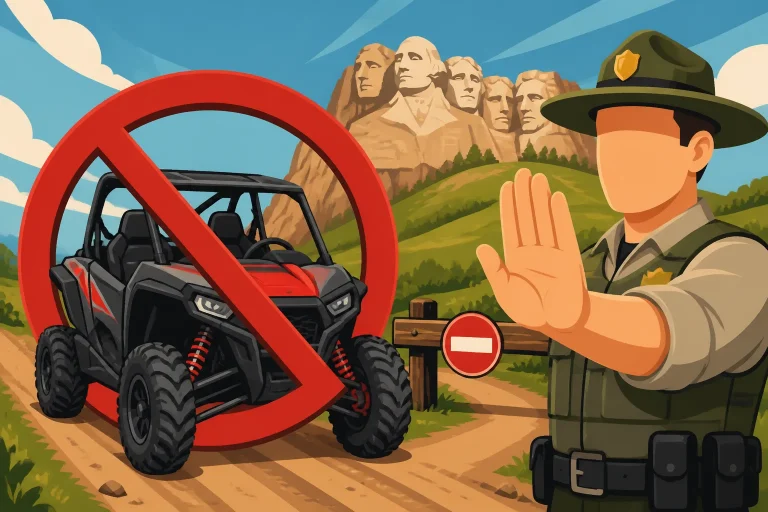
A ditch is not simply another name for a road shoulder. South Dakota has specific rules for riding in highway ditches, and county decisions can affect where riding is allowed. Those rules may also depend on the rider and the location. A registration plate does not override a county restriction or a sign closing the route.
Similarly, crossing a highway is not the same as riding along it. A permitted crossing does not mean you may travel down the road or use its shoulder. Plan a crossing only where it is allowed, make it directly and safely, and follow signs and applicable rules. See South Dakota’s Ditch Riding Rule and South Dakota Rules for Crossing a Highway before treating a ditch or crossing as part of your route.
Road conditions add practical risks even where riding is allowed. A large UTV may be difficult for other drivers to see at a junction, while a narrow ATV can be obscured by roadside grass. Dust, traffic, and uneven ground can also affect visibility and control. Use the route’s actual access rules first; then decide whether the machine and riding conditions make the trip sensible.
Forest roads and motorized trails
In the Black Hills and other riding areas, a road and a designated motorized trail are different route types. A forest road may have its own vehicle and access rules, while a motorized trail can require a separate permit. A plate that supports road use does not automatically replace a permit for a designated trail. Review South Dakota’s Motorized Trail Permit and Why a Plate Does Not Replace a Trail Permit before planning a route.
A map is not always enough to confirm current access. Roads or trails can be closed, restricted to certain vehicle widths, or subject to seasonal and land-management rules. Check the current notices and maps for the agency responsible for the land. For federal land, South Dakota Rules for Riding Federal Land can help separate general road access from trail requirements.
The Plate, the Trail Permit, and Other Documents
A common mistake is to treat registration, a trail permit, and land access as if they were interchangeable. They serve different purposes. Registration identifies the vehicle and its status under the issuing jurisdiction. A trail permit addresses access to particular motorized riding areas. Permission from a private landowner is a separate matter again.
If your trip includes both roads and trails, plan for each part independently. A machine may be eligible for a road route but still need a permit for a designated trail. Conversely, a trail permit does not by itself authorize the machine to use a public road. Check [South Dakota Rules for Riding a State Trail] and the permit conditions that apply to your destination.
The permit question can be especially confusing when you have an out-of-state plate. Do not assume that your home state’s registration substitutes for a South Dakota permit, and do not assume the reverse—that a permit makes an otherwise non-road-legal machine legal on a public road. Confirm the requirements for the exact vehicle and exact route. If you are visiting the Black Hills, [South Dakota Rules for a Visiting Rider] and Riding a Montana-Plated Machine on a Black Hills Road address related visitor questions.
Carry the basic documents and information that can help clarify your status:
- The current registration document from the state that issued the plate.
- Any document showing that the registration permits road use, if that status is not clear on the registration card.
- The required South Dakota trail permit, if your planned trail requires one.
- Proof of identity and any documents needed to establish that the machine belongs to you or is being used with the owner’s permission.
- A route plan that distinguishes public roads, ditches, crossings, designated trails, and private land.
A photograph of paperwork can be a useful backup, but do not assume it replaces a document that an officer or land manager requires you to carry. Keep originals or accepted documents accessible and protected from water and damage.
If your vehicle has no plate, an expired plate, or a registration that only covers off-road use, stop and resolve the issue before riding a public road. A trail permit cannot fix a road-registration problem. Likewise, a registration card should not be treated as a pass onto private property or a closed public route.
A Practical Check Before You Unload
A short check before the ride can prevent an expensive detour or a citation. Use this sequence for each machine, especially when traveling with several ATVs or UTVs registered in different states.
- Read the registration. Confirm that it is current and identify what kind of use it authorizes. If the document does not make road eligibility clear, ask the issuing state’s motor vehicle agency.
- Identify the exact route. Mark whether each segment is a public road, town street, ditch, crossing, forest road, designated trail, or private road. Avoid planning with a vague label such as “the trail system.”
- Check who manages the route. Town, county, state, federal, and private routes can have different rules. Check current signs and official notices, not just an older map or a route suggestion.
- Verify the machine’s requirements. Check the rules that apply to its vehicle type, engine, equipment, and intended use. Do not assume an out-of-state plate establishes that every South Dakota requirement is met.
- Check permits separately. Confirm whether your destination requires a South Dakota motorized trail permit and whether your vehicle’s plate or registration changes that requirement. If the answer is unclear, confirm it with the land manager or permit administrator.
- Review operator and passenger rules. Registration does not settle who may operate the machine, whether a passenger is allowed, or what protective equipment is required. Check the applicable South Dakota rules for the riders in your group.
- Keep proof with the machine. Make sure the registration and any required permit are available to the person operating that particular ATV or UTV.
If you are visiting a designated riding area, confirm access for every planned segment rather than stopping after you verify the first road. A route can begin on an open public road, continue onto a permitted forest road, and then enter a trail with a separate permit requirement. A legal start does not guarantee that the rest of the route is open.
For uncertain cases, contact the appropriate agency before the trip. A county office can help with county-road or local restrictions; the relevant land manager can confirm trail access and permits; and the state that issued the registration can clarify what the plate authorizes. Share the machine type, home-state registration class, and intended route when you ask. General questions like “Can I ride here?” are harder to answer accurately than a specific route question.
Common Mistakes to Avoid
The most frequent error is assuming that because the machine is plated at home, it is street legal everywhere. Confirm what the plate represents, and check South Dakota rules for the intended route. A home-state plate is not a substitute for understanding local access.
Another mistake is confusing a road with a trail. A road open to registered vehicles may lead near a trail that has a separate permit requirement or is closed to your machine. Watch for route signs and current closure notices. Do not continue just because another vehicle has gone ahead.
Some riders also treat a highway crossing as permission to use the road. A crossing and travel along the roadway are different activities. Follow the specific crossing rules, and do not ride along a shoulder or ditch unless that route is open to your vehicle and the rules allow it.
Finally, avoid relying only on a map, a social media post, or a rental listing. Maps can be outdated, and riders may describe a route casually without distinguishing roads from trails or private land. Confirm current conditions and access with the responsible agency or property owner.
Frequently Asked Questions
Can I ride an ATV on South Dakota roads with an out-of-state plate?
Possibly, but the plate by itself does not answer the question. Confirm that the home-state registration authorizes the intended road use and that South Dakota’s route, equipment, and operator rules are satisfied.
Does an out-of-state plate replace a South Dakota trail permit?
Do not assume it does. Trail permits and vehicle registration serve different purposes. Check the permit rules for the specific trail or riding area before you go.
Does a valid plate allow riding in a ditch?
Not automatically. Ditch access has its own rules and can be affected by county restrictions and signs. Check the route and local rules before entering a ditch.
What should I carry when riding with an out-of-state plate?
Carry the current registration and any documentation that clarifies the machine’s road-use status. Bring any required South Dakota trail permit as well, and keep the documents accessible to the operator.
Disclaimer
This article is for general informational purposes only and does not constitute professional advice. Laws, prices and regulations vary by location and change over time. Consult a qualified professional for guidance on your specific situation.