Why the Proposed Permit Price Is Not the Price
A proposed permit price can sound like a bill you need to pay before your South Dakota ride, but a proposal and an active fee are not the same thing. The key is to identify which permit applies, whether a change has taken effect, and whether your route needs a separate forest permit. That distinction helps visitors budget without confusing permits or paying for the wrong one.
A proposed price is not automatically the amount due
A proposed permit increase is not, by itself, a new fee. It may be under discussion, but riders should not treat a proposed amount as payable until the responsible agency confirms that it has taken effect. For budgeting, use the active charge published by the agency that administers the permit, then check again before applying or traveling.
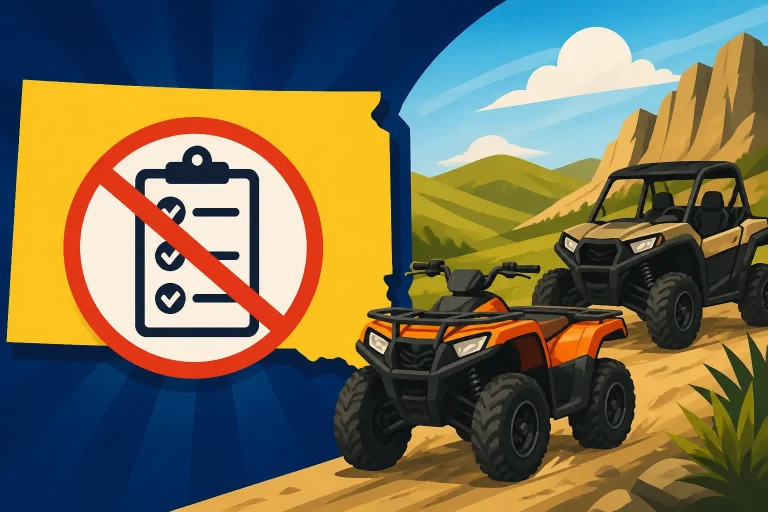
For the South Dakota nonresident off-road vehicle permit, the South Dakota Department of Revenue lists a cost of $50 as of November 2026. The department also says applicants who have their decal mailed pay an additional $2.50 mailing fee. That is the current listed state permit cost and mailing charge—not a statement about any separate permit required for forest trails.
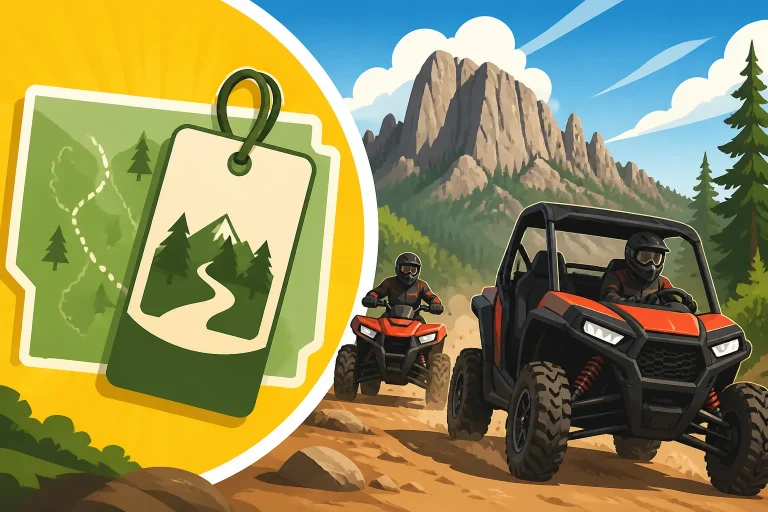
The distinction matters because “South Dakota permit” can refer to more than one requirement. A nonresident state decal and a Black Hills National Forest Motorized Trail Permit serve different purposes. The state permit applies to nonresident off-road vehicles under the state’s requirements; the Forest Service permit is required for motor vehicles using designated motorized trails in the forest. One should not be assumed to cover the other.
| Permit or charge | What it applies to | Cost information |
|---|---|---|
| South Dakota nonresident off-road vehicle permit | The state’s permit for eligible nonresident off-road vehicles | The South Dakota Department of Revenue lists $50 as of November 2026 |
| Mailing the state decal | Applies when the state decal is mailed to the applicant | The South Dakota Department of Revenue lists an additional $2.50 mailing fee as of November 2026 |
| Black Hills National Forest Motorized Trail Permit | Motor vehicles using designated motorized trails in the forest | The Forest Service requires the permit; check the Forest Service for the current price |
For more detail on what the state permit costs and what may be added, see South Dakota Nonresident ORV Permit Cost and South Dakota’s $2.50 Decal Mailing Fee. If you have heard a different figure, check whether it refers to a proposal, a different permit, or an added mailing charge before relying on it.
South Dakota residents cannot purchase the nonresident off-road decal, according to the South Dakota Department of Revenue. The nonresident permit is valid for one year, according to the department. Those points can help you identify whether the state permit you are researching is even the right one for your situation. For background on the annual permit, see South Dakota’s Nonresident Annual Permit.
The state permit and forest permit are separate
A common source of confusion is assuming one permit covers every riding location. The South Dakota Department of Revenue says a separate permit is needed to use U.S. Forest Service trails in addition to the state permit. The Forest Service also requires a Motorized Vehicle Use Trail Permit for motor vehicles traveling on motorized-use trails in the Black Hills National Forest in South Dakota.
The Forest Service permit requirement depends on where you ride, not just where your machine is titled or plated. The Forest Service says unlicensed off-highway vehicles on forest roads designated Open to All Vehicles need a valid Black Hills Motorized Trail Permit. Vehicles with a valid state license plate do not need that permit unless they are driven on a designated motorized trail. That exception does not make a state plate a substitute for a trail permit where one is required.
The practical approach is to check your route against the official Motor Vehicle Use Map. The Forest Service identifies that map as the official map for roads, trails, and areas open to public motorized travel on the National Forest. The map is available free to the public from local Forest Service offices, local vendors, and online, according to the Forest Service.
Before you ride, match the permit to the terrain:
- If your plan includes a designated Black Hills National Forest motorized trail, check the Forest Service permit requirement and obtain the separate trail permit.
- If your machine is an unlicensed OHV and you plan to use a forest road designated Open to All Vehicles, check the Forest Service permit requirement for that road.
- If you are relying on a state plate, confirm that your planned route does not include a designated motorized trail that requires a permit.
- If your itinerary crosses between South Dakota and Wyoming, verify which state’s rules apply to each part of the route. The Forest Service says trail users in the Wyoming portion must display a Wyoming State ORV Permit, while a Black Hills National Forest Trail Permit is not required for OHVs using trails in Wyoming.
For a fuller explanation of the distinction between public-land and state requirements, see South Dakota Rules for Riding Federal Land. It is also useful to read Why a Plate Does Not Replace a Trail Permit before assuming that a plate removes every trail-permit obligation.
The Forest Service says permit sales support maintenance of the Forest’s motorized trail system. It lists purchases through Black Hills National Forest offices, local vendors, online, or the visitor center. A nearby vendor may be convenient, but check availability and current purchasing details before setting out. For vendor options and buying routes, see Where to Buy a Black Hills Trail Permit.
Check whether your machine and application qualify
The state permit is only one part of preparing an out-of-state machine for South Dakota. The South Dakota Department of Revenue says off-road vehicles must be titled even though they may not be registered and licensed for highway use. That means “not street legal” does not necessarily mean “no title paperwork.”
For an out-of-state OHV to be street legal in South Dakota, the South Dakota Department of Revenue says it must have a hard license plate issued by its home state’s DMV. The department gives minimum engine classifications of 200 cc for four-wheeled OHVs and 120 cc for two-wheeled OHVs; it also says electric four-wheeled OHVs are permitted to meet the street-legal engine-classification requirements. These road-use rules are separate from the question of whether a machine needs a permit on a particular trail.
If you are applying for the nonresident state permit, the South Dakota Department of Revenue requires a copy of your driver’s license and proof of your Social Security Number for the annual permit. If an authorized agent signs the title and registration application, the department requires a Power of Attorney document. Confirm the application instructions before submitting paperwork so a missing document does not delay the process.
The decal also has placement requirements. The South Dakota Department of Revenue says it must be placed on the rear of the off-road vehicle in an easily visible location, and the expiration sticker must be placed on the decal for the permit to be valid. Keep the decal and sticker intact and visible rather than assuming that carrying application paperwork is enough.
A state permit decal should not be mistaken for a forest trail permit decal or for a license plate. They represent different requirements and may be checked in different settings. If you are unsure which applies to your machine, start with What a South Dakota Nonresident Permit Requires and Does South Dakota Honor Out-of-State Registration?. Then confirm the trail-specific rules for the places you plan to ride.
A practical way to verify the price before you travel
You do not need to resolve every possible fee while comparing a proposed price with the active charge. Instead, identify the permit, the issuing agency, and the riding area. Then verify the amount and application steps with that agency close to your trip.
- Name the permit precisely. Is it the South Dakota nonresident off-road vehicle permit, the Black Hills National Forest Motorized Trail Permit, or both? A general search for “South Dakota ATV permit” can mix requirements together.
- Check the issuing agency’s current information. For the state decal and its mailing charge, consult the South Dakota Department of Revenue. For a Black Hills motorized trail permit, consult the Forest Service. If a proposed amount appears in an article, discussion, or announcement, look for confirmation from the agency responsible for the fee.
- Separate the permit charge from add-ons. A mailed state decal has an additional mailing fee, according to the South Dakota Department of Revenue. Do not assume that this charge is the same as the permit price or that it applies to every way of obtaining the permit.
- Allow time for an online application. The South Dakota Department of Revenue advises submitting online permit applications at least two weeks before a planned trip. That timing is especially important if you are counting on a decal arriving before departure.
- Check the route, not just the vehicle. The Forest Service says a Motor Vehicle Use Map identifies roads, trails, and areas open to public motorized travel. A valid state plate may affect whether a forest permit is needed on some forest roads, but it does not remove the permit requirement for designated motorized trails.
- Keep the permit evidence usable. Follow the agency’s placement directions for the state decal and its expiration sticker. For forest riding, make sure you have the required trail permit for the areas on your itinerary.
For example, a visitor planning a Black Hills ride should not budget only for the state nonresident decal and assume that it also grants access to designated Forest Service trails. The state permit and trail permit address separate requirements. The route may also include a forest road where the Forest Service treats a plated vehicle differently from an unlicensed OHV. Checking the map and permit conditions together is more reliable than judging from the machine’s home-state registration alone.
The most useful answer to “Why isn’t the proposed price the price?” is that proposals, active state charges, mailing costs, and land-manager permits are separate things. Use the published active fee for the permit you actually need, and treat any proposed change as informational until the issuing agency says it is in effect. For a concise breakdown of which charges can stack, see Which Fees Stack on Top of the Title Itself and Why South Dakota Charges Everyone the Same.
Sources
- South Dakota Department of Revenue — Off-Road Vehicles | South Dakota Department of Revenue (checked November 3, 2026)
Disclaimer
This article is for general informational purposes only and does not constitute professional advice. Laws, prices and regulations vary by location and change over time. Consult a qualified professional for guidance on your specific situation.