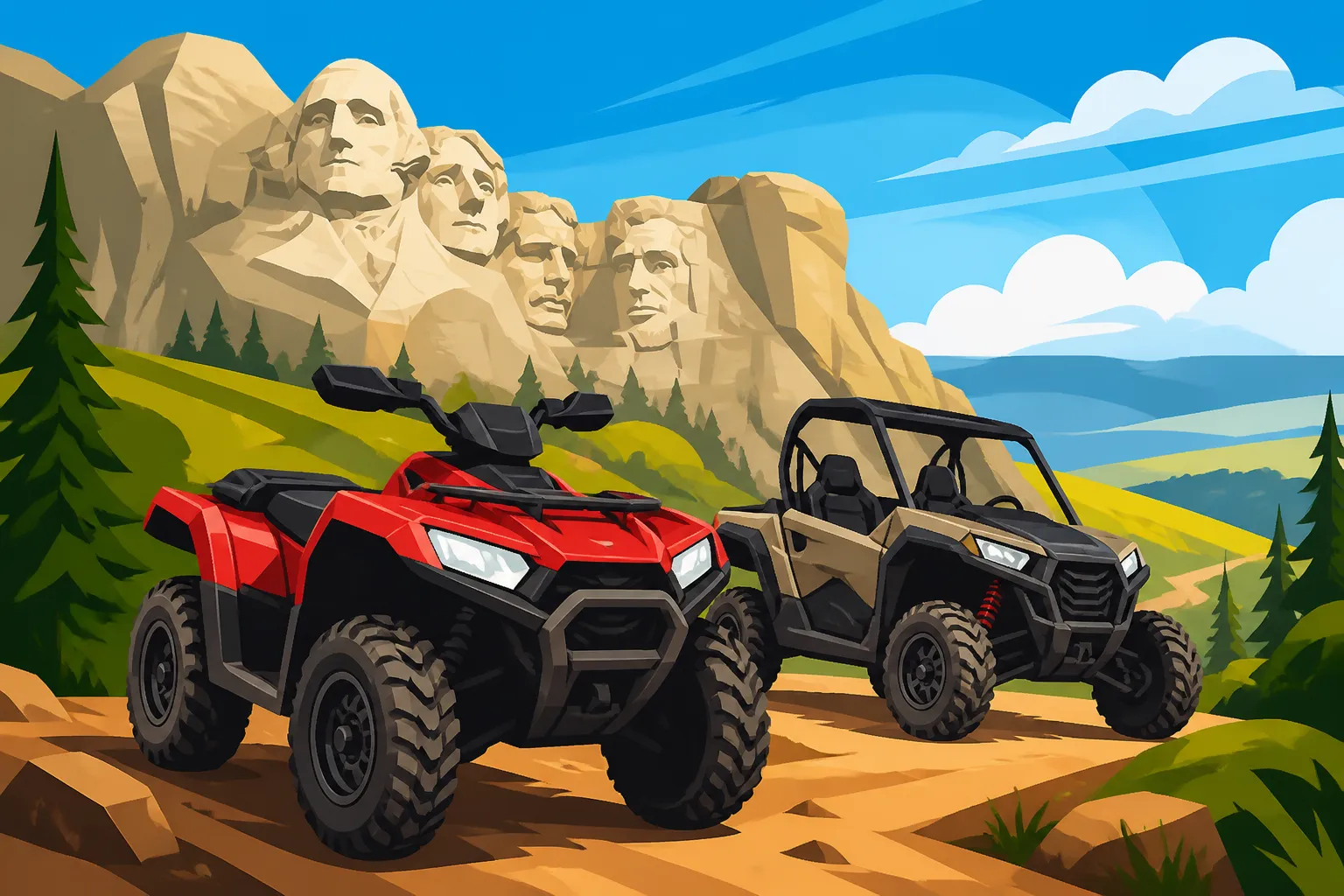
Renting an ATV in South Dakota
Renting an ATV in South Dakota can mean an easy day out—or a confusing mix of machine choices, trail permits, age rules, deposits and route limits. The right rental depends on who is riding, where you want to go and how much help you want along the way. Here’s how to compare ATVs, UTVs and tours, book thoughtfully, and avoid surprises at pickup.
Choose the right kind of ride
Rental listings may use “ATV,” “quad,” “side-by-side” and “UTV” in ways that can blur the differences. An ATV is generally a straddle-seat machine controlled with handlebars. A UTV has a steering wheel, bucket or bench seats, seat belts and a roll cage. A side-by-side is a type of UTV.
The best choice is not automatically the biggest or most powerful machine. Think about who is coming, whether everyone can operate the vehicle safely, and what kind of route you hope to ride.
| Option | Often a good fit for | Check before booking |
|---|---|---|
| ATV or quad | A rider who wants a hands-on, single-rider experience | Minimum age, riding experience, passenger rules and whether instruction is provided |
| Two-seat UTV | A couple or two riders who prefer a shared vehicle | Whether the passenger seat is suitable for the person riding and who is allowed to drive |
| Four- or six-seat UTV | Families or groups who want to ride together | Seating capacity, child-restraint requirements, passenger age rules and luggage space |
| Guided tour | First-time riders or visitors who want help navigating | Tour length, pace, route, group size and what the guide expects from participants |
| Self-guided rental | Riders who want more control over their schedule | Approved routes, navigation help, turnaround time and what to do if the machine has a problem |
If comfort and shared seating matter most, compare a side-by-side rental with an ATV before deciding. [Renting a Side-by-Side in South Dakota] covers the questions that are specific to that style of machine.
A solo ATV may feel more engaging, but it demands more balance and attention than riding as a UTV passenger. A UTV can be a practical choice for a group, but it is wider and heavier than a quad. That can affect where it can go, how it handles tight turns, and whether a particular trail allows its width. Do not assume that a machine offered by a rental company can travel on every nearby route.
Be realistic about the least experienced person in the group. If one rider is nervous, has never operated an off-road vehicle, or is not comfortable with rocky or steep terrain, choose a suitable beginner route or a guided outing rather than trying to keep up with the most confident rider.
Decide between a guided tour and a self-guided rental
A guided tour provides structure: a route, a meeting time and a person responsible for leading the group. It can be a good match if you have limited experience, want local orientation or would rather concentrate on the ride than on navigation. It is also a useful option for groups with mixed confidence, as long as the tour pace and terrain suit the least experienced participant.
The word “guided” does not tell you everything. Before paying, ask how long the ride lasts, how much of that time is spent operating the machine, how many people ride together and whether the route includes terrain that could be difficult for a beginner. Find out whether the guide stays with the group throughout and what happens if someone wants to stop early.
A self-guided rental offers more independence, but you take on more responsibility. You need to understand which routes are authorized, follow the operator’s map or navigation instructions, watch the time and know how to contact the business if you need help. Self-guided does not mean unrestricted: a rental agreement may limit where the machine can go, and land managers may close routes or prohibit off-route travel.
If you mainly want a short introduction to riding, a tour may be simpler than arranging a machine, route and navigation yourself. If you already know how to operate the vehicle and want to plan your own day, a self-guided rental may offer a better fit. For tour formats and booking questions, see [Guided ATV Tours in South Dakota].
Compare the actual outing, not just the booking headline. A listing may describe a half-day or full-day rental, but the time available to ride can be affected by check-in, safety instructions, fitting helmets, loading and the required return time. Ask when the rental period starts and ends, whether late return rules apply, and how long the business recommends setting aside for the route you have in mind.
Listings on Polaris Adventures or Viator can help you find or compare experiences, but use the operator’s own terms to confirm the details. Check who will provide the machine, where you must arrive, whether the outing is guided, and what the cancellation and weather policies say. A marketplace summary is not a substitute for the rental contract.
Choose a location and route that fit your plans
The Black Hills are a major draw for off-road visitors, and rental options are commonly associated with towns such as Deadwood, Spearfish, Custer, Hill City and Sturgis. These locations are not interchangeable. A rental’s pickup point, staging area and approved riding area may be in different places, so check the route logistics before choosing a business based on the town name alone.
If you are staying in one town and renting in another, allow for the drive to the pickup location and any time needed to reach the riding area. Ask whether you transport the machine yourself, whether the operator provides a shuttle or delivery, and whether the rental period includes travel to the trailhead. Never assume that a machine may be driven on public roads simply because the road connects the shop to a trail.
Riding opportunities can include forest roads and designated motorized trails, but access varies by vehicle, route and land-management rules. A route open to one class or width of machine may not suit another. Confirm the permitted route with the rental company and check current land-manager notices before riding. South Dakota Trail Conditions Before You Ride and South Dakota Trail Closures to Check First can help you plan around changing conditions and access restrictions.
Use these questions to assess whether a location and ride make sense:
- Is the advertised ride on a designated trail, a forest road, private land or a combination?
- Is the route approved for the exact machine you are renting?
- Does the machine’s width fit the route’s restrictions?
- Is the route suitable for beginners, children or passengers?
- How much time does the operator recommend for the ride?
- Are there fuel stops, rest areas or reliable cell coverage along the route?
- What should you do if weather, a closure or a breakdown changes the plan?
The Black Hills can involve gravel, rocks, changing elevation and weather that differs from what you encountered in town. A route that looks short on a map may take longer than expected if the surface is rough or you ride at a cautious pace. Ask the operator to describe the terrain plainly. “Scenic” does not necessarily mean smooth or easy.
If your itinerary includes a state park, a town street or a route outside the rental area, ask specifically whether the machine is allowed there. Trail access, road use and park entry are separate questions. A rental company’s recommendation to follow a route does not replace posted restrictions or the rules that apply to the land.
Check permits, rules and riding limits before you book
A rental does not automatically grant permission to ride anywhere. A permit, a road-legal plate and permission to use a particular trail are different things. Which requirements apply depends on the machine, where you plan to ride and the rules of the land manager.
Ask the rental business whether the machine already has the permit required for the riding area and whether that permit is included in your booking. Get a clear answer about what you are allowed to ride: designated trails, forest roads, private land or another specific route. If a permit is required, clarify who obtains it and whether it applies to the rented machine during your rental period. South Dakota Rentals That Include the Trail Permit explains why this question is worth asking before pickup.
Do not assume that a plate or registration replaces a trail permit. Likewise, do not assume a trail permit gives you permission to ride on a public road. A machine may be allowed on one type of route but not another, and local restrictions or temporary closures can change the plan. Keep the rental company’s route instructions with you and follow signs at trail entrances.
Age and driver requirements are another important check, especially when children or young adults are in the group. Minimum ages can differ for driving, riding as a passenger and joining a guided tour. A business may also have its own rental age policy in addition to the rules that apply where you ride. Check both before booking and describe the ages of everyone who will operate or ride in the vehicle. For more detail, see South Dakota Rental Age and License Rules.
Ask what identification or license the renter and any additional drivers must bring. Do not rely on a general assumption that every adult in the group can drive simply because they are old enough to rent. Confirm which names need to be listed in the agreement and whether the operator allows drivers to switch during the ride.
Other rules to clarify include:
- Whether passengers are allowed and how many the machine can carry
- Whether children may ride and what protective gear they need
- Whether seat belts must be used in a UTV
- Whether helmets or eye protection are supplied or required
- Whether riders may bring pets
- Whether a passenger can become a driver during the rental
- Whether the operator restricts alcohol or other conduct
Ask the rental company to explain unfamiliar rules before you sign. If an instruction seems inconsistent with posted signs or a closure notice, stop and ask the operator or the relevant land manager rather than riding on and hoping the restriction does not apply.
Compare the full cost and rental terms
The advertised rate is only one part of the cost of a rental. The final amount may depend on the machine, rental duration, number of vehicles, time of year, location and the company’s policies. For a named provider or booking platform, check its current listing and contract rather than relying on an old quote or a general estimate. South Dakota UTV Rental Prices explains the cost categories to compare without treating a single listing as a statewide rate.
Before reserving, ask for the full amount due and a breakdown of what it covers. Confirm whether the quote includes required permits, helmets, fuel, taxes, cleaning or delivery. A low headline rate may not include items that another rental bundles into its price, so compare the same rental duration and inclusions.
A useful comparison checklist includes:
- Rental length and the exact pickup and return times
- Machine type, seat count and age or mileage condition
- Whether helmets and other protective equipment are supplied
- Whether fuel is included, provided at pickup or charged separately
- Whether a trail permit is included or must be obtained separately
- Any required deposit or card hold
- Damage, cleaning, late-return and recovery terms
- Cancellation, rescheduling and weather policies
- Whether a guide, map, shuttle or delivery is included
A deposit or card hold is not always the same as a charge, but the agreement should explain how it works, when it may be released and what can be deducted. Ask whether the renter must use a particular type of payment card, whether the cardholder must be present, and what happens if the vehicle is returned with damage. For more on that distinction, see South Dakota Rental Deposits and Card Holds.
Read the damage and insurance language carefully. A waiver may reduce or change some financial responsibility, but it does not necessarily cover every type of damage or every situation. Ask what the renter could owe after a rollover, collision, puncture, lost key, recovery from a remote route or damage caused by riding outside the permitted area. Find out whether personal insurance applies at all; do not assume a standard auto policy covers an off-road rental. South Dakota Rental Insurance and Waivers can help you identify the terms to review.
Clarify what “fuel included” means. The machine might be handed over with a particular fuel level and need to be returned similarly, or the operator may handle fuel in another way. Ask where you can refuel and whether the route has fuel available. If you are told to bring fuel, confirm what type of container and handling rules apply.
Booking direct can make it easier to ask the operator questions about the exact machine and route. A marketplace such as Viator may be useful for comparing available experiences, but the company actually providing the rental sets important details. Check the cancellation terms, pickup instructions and included services on the final booking confirmation, not just the search result.
Prepare for pickup and ride within your limits
Arrive with enough time to complete check-in and listen to the safety briefing. Bring the identification and payment method the operator requested, and have every driver present if the agreement requires it. If the machine is for a group, make sure the number of passengers matches the machine’s approved capacity. Never plan to squeeze in an extra rider.
Use the pre-ride briefing to ask practical questions. Have the operator show you the controls, starting and stopping procedure, gear selection, parking brake, lights and any emergency shutoff. Ask how to reverse safely, what to do if the vehicle stalls on a slope, and how to contact the rental company from the route. If you have not operated that type of machine before, say so. A short explanation is more useful than pretending to be familiar with the controls.
Before leaving, inspect the vehicle with the employee. Note visible damage and make sure it is recorded in the way the company requests. Check tires, lights, mirrors if fitted, seat belts, helmet condition and any equipment you were promised. Take clear photos if the operator permits them and follow its procedure for reporting a problem. This is a simple way to reduce confusion about pre-existing damage when you return.
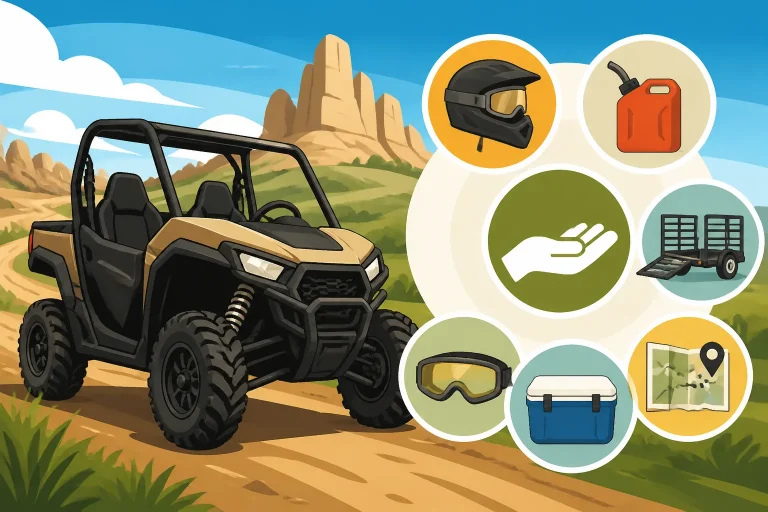
Wear clothing suited to dust, wind and changing weather. Closed-toe footwear, long sleeves, eye protection and gloves can make a ride more comfortable. Bring layers, water and any personal medication you may need. A phone is useful, but cell service can vary in remote areas, so ask whether the operator supplies a map or another navigation method. Do not count on a phone being the only way to find your route or call for help.
During the ride, leave space between vehicles and keep a pace that allows you to see and respond to the terrain. Dust can reduce visibility, and gravel or loose rock can affect braking and steering. Avoid following so closely that you cannot see the person ahead. If you are unsure about an obstacle or slope, stop somewhere safe and ask the guide or group rather than feeling pressured to attempt it.
Stay on routes the rental business has approved and obey signs, gates and closure notices. Do not cross private land or leave a designated route because it appears to offer a shortcut. If the route becomes difficult, the weather turns, or a rider is uncomfortable, use the operator’s directions for turning back or requesting assistance.
Return the machine on time and follow the agreed fuel and cleaning instructions. Tell the business about any incident or damage as soon as possible, even if you are not sure it is significant. Waiting until inspection can make a straightforward report harder to resolve.
Book around weather, busy dates and group needs
Rental availability can be limited when many visitors want the same machines, particularly during busy travel periods and popular local events. If the machine type or seat count matters, contact operators early enough to confirm what is actually available for your dates. The closer you get to travel, the more important it is to have a backup plan.
A booking is not a guarantee that every route will be open. Weather, trail conditions, fire restrictions or other closures can affect where you can ride. Ask how the operator handles a closure: whether it offers an alternate route, rescheduling or another remedy under its policy. Read the written terms and keep the contact details for the business accessible during the trip.
For families, confirm both the vehicle configuration and the rules for children before making a reservation. A six-seat machine is not automatically suitable for every child or every outing. Ask about child-size helmets, seat belts, supervision and whether a child can ride on the planned route. Do not make a reservation based only on the number of seats shown in a listing.
For a group, decide in advance who will drive each machine and how many vehicles you need. Check whether the company permits drivers to switch, whether all drivers need to appear at pickup and whether the group will travel together or be split into separate departures. A larger group may need more time for check-in and instruction than a couple renting one vehicle.
If you are comparing businesses in different towns, check the full travel plan, not just the rental itself. Confirm the meeting point, parking, arrival time, pickup process and whether your group can reach the riding area without using a route that is not permitted. For location-specific options, [South Dakota Rentals Near Deadwood] is a useful starting point, but verify current services directly with the operator.
A short pre-booking call can prevent avoidable problems. Ask the operator to confirm, in writing if possible:
- The exact machine and seating configuration
- Who can drive and what identification is required
- Whether the planned route suits your group’s experience
- Which permits or access permissions are included
- What gear and fuel are provided
- What costs may be added beyond the quoted rental
- What happens if weather or a closure disrupts the ride
- How to get help during the rental
Frequently Asked Questions
Do rental companies include the trail permit?
Some may include the required permit, while others may not. Ask whether a permit is needed for your exact riding area, whether it is included for the rented machine and what documentation you should carry. Do not assume that a vehicle plate replaces a trail permit.
Can a beginner rent an ATV in South Dakota?
A beginner may be able to rent, subject to the operator’s requirements, but that does not mean every route is appropriate for a new rider. Ask about instruction, machine choice, guided options and terrain. Choose a ride that matches the least experienced person in the group.
Is a UTV better than an ATV for a family?
A UTV may make it easier for several people to travel together, but suitability depends on passenger rules, ages, seat belts, machine capacity and route width limits. Confirm the operator’s requirements before booking. For some families, a guided outing or separate arrangements may be a better fit.
What should I check before signing a rental agreement?
Confirm the total cost, deposit or card hold, included gear and permits, driver rules, fuel expectations, cancellation terms and possible damage or recovery charges. Ask which routes are authorized and what to do if you encounter a closure, breakdown or unsafe conditions.
Disclaimer
This article is for general informational purposes only and does not constitute professional advice. Laws, prices and regulations vary by location and change over time. Consult a qualified professional for guidance on your specific situation.