How a South Dakota County Opts Out of Ditch Riding
The open road, or in our case, the open ditch, often feels like a haven for ATV and UTV enthusiasts in South Dakota. Yet, for many riders, the seemingly simple act of riding in a ditch can become a confusing maze of rules that change from one county line to the next. This guide aims to demystify exactly how a South Dakota county can choose to opt out of ditch riding, shedding light on the process and what it means for you when you're out exploring.
Understanding South Dakota's Default Ditch Riding Rule
It's easy to get lost in the nuances of South Dakota's ATV and UTV laws, especially when it comes to ditch riding. Many riders, particularly those new to the state or just passing through, often assume that ditch riding is universally prohibited. However, the reality is a little more complex and, for many, quite surprising.
The Statewide Presumption of Legality
Here's the kicker that often catches people off guard: in South Dakota, ditch riding is generally legal by default. That's right, unless a specific county has taken action to prohibit it, you're usually allowed to ride your ATV or UTV in the right-of-way ditches alongside public roads. This isn't a free-for-all, mind you, and there are still important stipulations, but the baseline is permission, not prohibition.
Think about it like this: the state essentially says, "Go ahead and enjoy the ditches, but keep it safe and respectful." This is where things like [South Dakota's Ditch Riding Rule] come into play. You're typically expected to stay on the outer slope or bottom of the ditch, avoiding the driving lanes of the road itself. There's also the [South Dakota's Outer Edge Rule] which speaks to how far you can venture from the roadway. If you have younger riders, you'll need to pay close attention to the [South Dakota's 12 Years Old in a South Dakota Ditch] regulations, ensuring they meet the minimum age requirements for operating in these areas. It's a system designed to allow access while attempting to maintain safety for all road users. For folks living out in the vast, open prairie where section lines are common and towns are far apart, this default legality means machines can be a practical way to get around or access fields without trailering everywhere.
Why Counties Are Given This Local Control
So, why doesn't the state just make a blanket rule one way or the other? The reason lies in the immense diversity of South Dakota itself. What works in the wide-open spaces of a rural county with minimal traffic might be a significant safety hazard in a more densely populated area or near a busy town. The state legislature wisely recognized that a "one-size-fits-all" approach simply wouldn't work for every community.
Giving counties the power to decide allows local governments to tailor regulations to their specific conditions. A county with a high volume of agricultural traffic, for instance, might have different concerns than one that sees a lot of tourist activity or has residential developments backing up to ditches. Local officials, who are intimately familiar with their communities – the traffic patterns, the terrain, the concerns of their constituents – are in the best position to make these calls. This local control empowers them to address unique safety considerations, manage potential conflicts with landowners, and respond to the specific needs and desires of their residents. It’s all about striking a balance between offering recreational opportunities and ensuring public safety, and that balance often looks different depending on where you are in the state.
The County's Power to Opt Out: Legislative Framework
While ditch riding is generally permitted across South Dakota, this isn't a universal guarantee. The state's legal framework includes specific provisions that grant individual counties the authority to change this default status within their own borders. Understanding this legislative power is key to navigating the complex landscape of riding opportunities.
The "Opt-Out" Clause in State Law
The ability for a county to ban ditch riding isn't just an informal local decision; it's explicitly outlined in South Dakota state law. Essentially, the state statute provides a clear mechanism for counties to opt out of the default statewide allowance for ditch riding. This means that if a county commission feels that ditch riding is a safety concern, a nuisance, or simply not appropriate for their area, they have the legal standing to prohibit it.
This "opt-out" isn't automatic; it requires a proactive, formal step by the county's governing body, typically the County Commission. They would need to pass an official ordinance or resolution to enact such a ban. This process ensures transparency and allows for public input, meaning it's not a decision made behind closed doors. It's a direct response to local conditions and public sentiment, reflecting the democratic process at a local level. For example, if residents along a busy county road voice concerns about ATVs kicking up dust or posing risks to pedestrians, the commission can consider an opt-out ordinance to address those specific problems. This legislative framework is a vital part of why a rider needs to check local rules, as the state empowers this localized decision-making.
What South Dakota Counties May Only Opt Out
It's crucial to understand the scope of a county's opt-out power. While they can ban ditch riding, their authority isn't limitless, nor does it extend to all aspects of ATV and UTV use on public rights-of-way. The state law is quite specific about what can and cannot be prohibited at the county level.
A county may only opt out of the allowance for recreational or general transportation ditch riding. They cannot, for instance, prevent you from legally crossing a highway or county road if you follow the proper procedures. This is a common point of confusion for riders, but the state makes a clear distinction: [Why No South Dakota County May Bar a Crossing]. This means that even if a county bans riding in the ditches, you can still use your machine to get from one side of a paved or gravel road to the other, provided you do so safely and legally. This provision ensures that riders aren't completely cut off from accessing private property or designated trails that might lie on the opposite side of a public thoroughfare. Furthermore, it's important to note that certain vehicles, particularly those used for farming or utility purposes, often have exemptions. [Agricultural and Utility Vehicles Exempted] from some of these ditch riding rules, regardless of a county's opt-out status, recognizing their essential role in rural life. Understanding these limitations on county power is just as important as knowing what they can prohibit.
The Process for a South Dakota County to Ban Ditch Riding
If you're a rider in South Dakota, understanding how a county bans ditch riding isn't just academic; it directly impacts where and how you can enjoy your machine. The process is a formal one, involving several steps that ensure public input and official documentation.
From Discussion to Ordinance
The journey for a county to ban ditch riding typically begins with local discussions and concerns. Perhaps residents have contacted their county commissioners about safety issues, noise complaints, or environmental impacts. These concerns often lead to public meetings where the topic is debated. Local residents, landowners, law enforcement, and riders themselves might attend to share their perspectives, often leading to passionate discussions.
Following these initial discussions, if the county commission decides to move forward, they will draft a proposed ordinance. This ordinance explicitly outlines the new rules, defining the areas where ditch riding will be prohibited. This draft typically undergoes review and may be revised based on further public input or legal advice. Finally, the county commission holds an official vote. If the majority votes in favor, the ordinance is formally passed and becomes law within that county's jurisdiction. This isn't a quick process; it can take months, involving multiple readings and public hearings, giving everyone a chance to weigh in. It's a deliberate, democratic process designed to ensure that such significant changes are thoroughly considered.
Notification and Regulatory Signs
Once a county has officially passed an ordinance banning ditch riding, they have a responsibility to inform the public. This isn't done with a quiet whisper; it involves clear and visible notification. The most direct and important method of notification for riders on the ground is the posting of [Regulatory Signs a South Dakota County Must Post].
These signs are not subtle. They are typically placed at major entry points into the county, along key roadways, and at regular intervals where ditches are present. Their purpose is to clearly state that ditch riding is prohibited beyond that point. Imagine riding your machine along a beautiful prairie road, only to encounter a sign at a county line clearly indicating "No ATV/UTV Ditch Riding." This is what these signs are for. They act as the official, on-the-ground notice to riders that the rules have changed. It's crucial for riders to keep an eye out for these signs, as ignorance of the law is never an excuse for a violation. Beyond physical signage, counties will often publish the new ordinances on their official websites, in local newspapers, and through other public announcements to ensure widespread awareness. However, for a rider traversing various county lines, the physical signs are your most immediate and important indicator of the local rules.
What a County Opt-Out Means for Riders
When a South Dakota county decides to opt out of ditch riding, it fundamentally alters the landscape for ATV and UTV enthusiasts. This decision moves from a permissive default to an outright prohibition, carrying significant implications that every rider needs to understand.
The Immediate Impact on Riding
The most direct and immediate consequence of a county opting out is simple: ditch riding in that county becomes illegal. This isn't a suggestion or a guideline; it's a hard rule. If you're caught riding your ATV or UTV in the ditch of a public road within a county that has enacted such a ban, you are in violation of a local ordinance.
The ramifications for such a violation can be serious. You could face a citation, which typically comes with a fine. These fines can add up, and repeat offenses might lead to even harsher penalties. In some cases, your machine could even be impounded, leading to additional fees for towing and storage, not to mention the massive inconvenience. We're talking about potential consequences that extend beyond just a slap on the wrist. [South Dakota Fines for Illegal ATV Road Use] are real, and depending on how the ordinance is classified, it could even escalate to something like [What a Class 2 Misdemeanor Costs a Rider], carrying more significant legal weight. Imagine being on a fun [Riding Home After a Prairie Sunset] ride, only to be stopped by a sheriff's deputy because you unknowingly crossed into an opt-out county. It's a frustrating scenario that can quickly sour an otherwise enjoyable day.
Navigating County Lines and Jurisdictions
One of the biggest headaches for riders in South Dakota is the patchwork of rules that can emerge due to county opt-outs. You might be riding legally in a ditch in one county, cross an invisible county line, and suddenly be in violation in the next county over. This jurisdictional maze demands a high level of awareness and planning.
It's not uncommon for a single stretch of road to have varying rules along its length as it passes through different counties. This makes spontaneous rides risky. A quick check of county maps before you head out is no longer a suggestion; it's a necessity. You need to know which county you're in at all times and what their specific ordinances are. Many riders find that a robust GPS system, perhaps mounted securely with a heavy-duty bracket from SuperATV, can be invaluable. This allows you to track your position accurately and consult digital maps that might highlight county boundaries, helping you stay compliant. Without careful attention to these jurisdictional shifts, you could easily find yourself on the wrong side of the law without even realizing it.
South Dakota Counties That Ban Ditch Riding and How to Identify Them
Knowing which counties have opted out is paramount. Unfortunately, there isn't always one centralized, real-time database that every rider can easily access from their phone. The best approach involves a bit of proactive research.
To find out which specific counties have enacted a ban, your first stop should be the websites of the county governments you plan to ride in. Most counties will publish their ordinances online, and a quick search for "ATV UTV ditch riding ordinance" or similar terms should yield results. You can also contact the county sheriff's office or the county auditor's office directly. These local officials can confirm the current regulations and often point you to the relevant documentation. It's also worth checking with local riding clubs or visitor centers in the area, as they often have up-to-date information on local regulations. Being informed about [South Dakota Counties That Ban Ditch Riding] is your responsibility as a rider, and dedicating some time to this research before your trip can save you a lot of trouble and potential fines down the road.
| Ditch Riding Status | Characteristic | Rider Action Required |
|---|---|---|
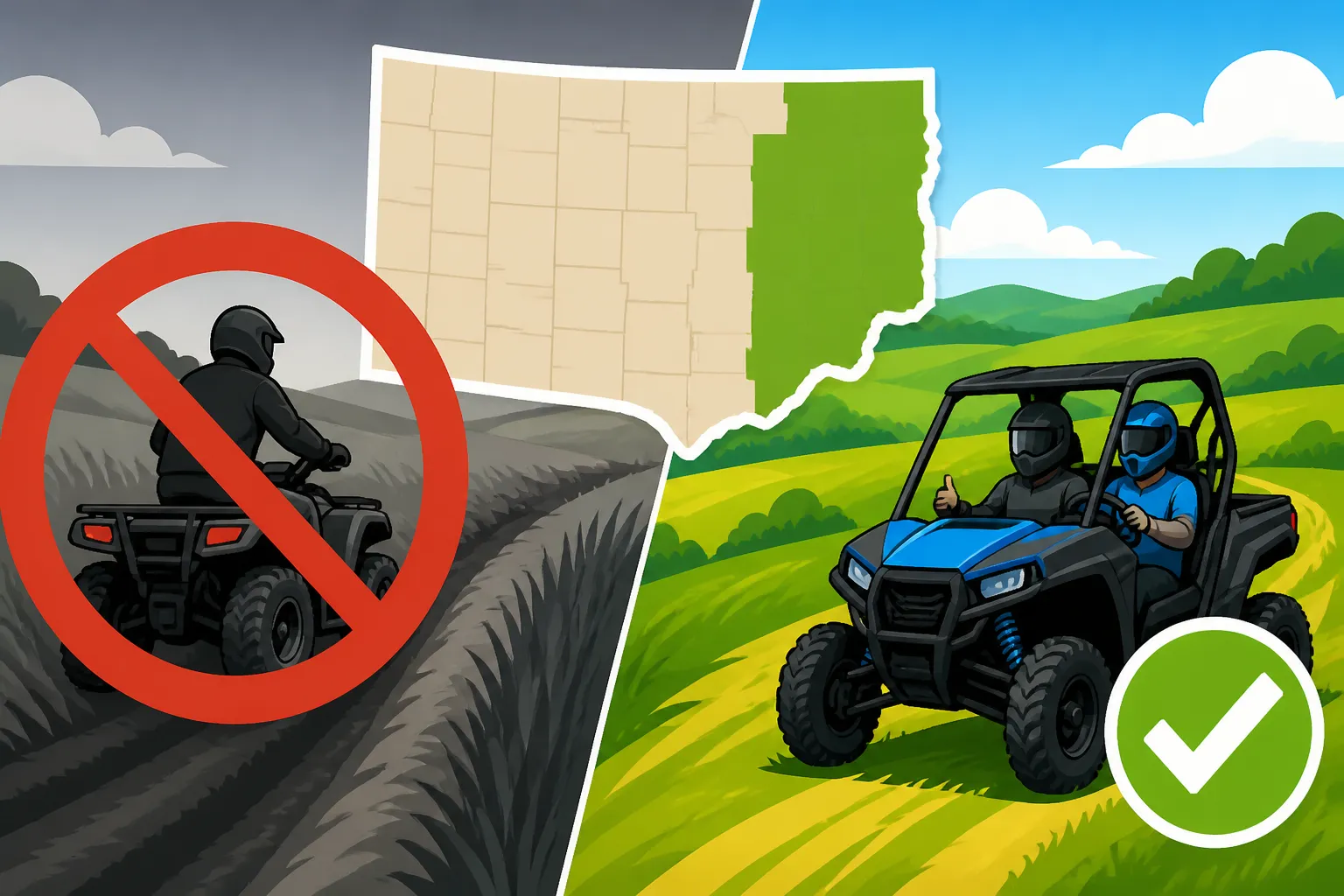
| Default (Legal) | County has not passed an opt-out ordinance. | Ride cautiously, observe general state ditch riding rules (age, outer edge, etc.). |
| Opt-Out (Illegal) | County has passed an ordinance banning ditch riding. | Do not ride in ditches within this county. Look for regulatory signs. |
Exceptions and Nuances in Opt-Out Counties
Even in a South Dakota county that has banned ditch riding, the rules aren't always absolute. There are crucial exceptions and specific situations where an ATV or UTV may still legally traverse certain areas, even if general ditch riding is prohibited. Understanding these nuances is vital for responsible riding and avoiding unnecessary legal trouble.
Essential Crossings and Access
One of the most important distinctions to grasp, even in an opt-out county, is the difference between riding in a ditch and crossing a road. South Dakota law, even when allowing counties to ban ditch riding, protects a rider's ability to cross a highway or road. This means that if you're on a trail, private property, or a permitted area on one side of a road, you can still legally cross that road to reach another legal riding area on the other side. This critical allowance prevents counties from completely isolating riding areas.
The key here is that the crossing must be done safely and directly, typically at a 90-degree angle to the road, and you must yield to all traffic. You're not allowed to travel along the road or in the ditch for any significant distance, but merely to traverse it from one side to the other. This is precisely why the state emphasizes [Why No South Dakota County May Bar a Crossing]. For riders trying to connect different parts of a ranch, access a remote hunting spot, or link up with friends on another property, this crossing exception is incredibly important. It ensures a basic level of connectivity and access, even in areas where general ditch cruising is a no-go.
Landowner Permission and Private Property
Another significant carve-out from county ditch riding bans involves private property. The county ordinances generally apply to public rights-of-way, which are the ditches alongside public roads. They typically do not dictate what you can or cannot do on private land, provided you have the landowner's permission.
If you have explicit permission from a private landowner to ride on their property, that permission supersedes a county's ditch riding ban for activity on that specific private land. For example, if a rancher allows you to use their fields and access roads, the county's ban on ditch riding on public roads doesn't apply to your actions within the ranch boundaries. This is where [South Dakota Landowner Permission Rules] become your guiding principle. However, a crucial point of caution: getting to that private property might still involve using a public ditch or crossing a road. If the county has an opt-out in place, you still cannot ride in the public ditch to reach the private land. You would need to trailer your machine to the private property access point, or only cross public roads where permissible, to begin your ride on private ground. Always clarify with the landowner about access points and any local rules that might affect your journey to their property.
Riding Smart: Navigating Ditch Riding Rules
Navigating the various ditch riding rules in South Dakota requires more than just knowing the law; it demands proactive planning and a commitment to responsible riding. For the seasoned rider and the newcomer alike, staying informed and prepared is your best defense against unexpected fines or mishaps.
Pre-Ride Planning and Research
Before your tires ever touch the ground, your most important tool is research. The dynamic nature of South Dakota's ditch riding rules, with counties having the power to opt out, makes pre-ride planning absolutely essential. You can't just assume what's legal in one county will be legal in the next.
Start by identifying the specific counties you plan to traverse. Then, make it a habit to check their official county government websites. Look for ordinances related to ATV/UTV use, particularly regarding ditch riding. If the information isn't readily available online, don't hesitate to call the county auditor's office or the county sheriff's department. A quick phone call can save you a world of trouble later on. Beyond legal compliance, consider the terrain and conditions. Will you be [Riding Home After a Prairie Sunset]? If so, ensure your machine is equipped with proper lighting and that you understand any nighttime riding regulations. Having a good, detailed map, whether physical or digital, is also critical. Many modern GPS units, especially when paired with a robust mounting solution from SuperATV to withstand rough terrain, can display county boundaries. This allows you to know exactly where you are in relation to any opt-out zones and helps you plan a route that keeps you on the right side of the law.
Essential Gear and Preparedness
Beyond legal compliance, a smart rider always prioritizes preparedness. This isn't just about avoiding tickets; it's about ensuring a safe and enjoyable experience for yourself and your companions. While the state doesn't mandate a safety course for ATV riders, being prepared means having the right gear.
Always carry essentials like a first-aid kit, tools for basic repairs, and a way to communicate in areas with spotty cell service, like a satellite messenger. Water, snacks, and extra fuel are also non-negotiable, especially on longer rides across vast South Dakota landscapes. Consider the terrain you'll be on – if it's rocky or challenging, you might want to look into aftermarket protection or suspension upgrades. For instance, SuperATV offers a wide range of parts, from heavy-duty axles to skid plates, that can significantly enhance your machine's durability and capability, preparing it for whatever the trail (or legal ditch) throws at it. Don't forget personal protective gear like helmets, goggles (even if not strictly required for adults in ditches), and appropriate clothing. Visibility is key, so wearing blaze orange, especially during hunting seasons, is a smart move, even if you're just ditch riding. Being prepared ensures that you can handle unexpected situations gracefully, allowing you to focus on the enjoyment of the ride rather than worrying about minor breakdowns or emergencies.
Advocating for Rider Rights and Safety
The landscape of ATV and UTV access is constantly evolving, and riders have a voice in shaping these rules. If you have strong feelings about ditch riding allowances or bans in your county, engaging with local government is crucial. Attend county commission meetings, write letters, or join local riding clubs that advocate for responsible access.
Responsible riding is also a powerful form of advocacy. When riders operate their machines safely, respectfully, and without causing disturbance or damage, it helps foster a positive image of the ATV/UTV community. Conversely, irresponsible behavior can quickly lead to stricter regulations and further bans. Teach younger riders about proper etiquette and the importance of respecting private property, even when riding on adjacent public land. Be mindful of noise levels, especially near residential areas, and always "Tread Lightly!" This commitment to responsible riding not only ensures your own enjoyment but also helps protect riding opportunities for everyone in the long run. By being informed, prepared, and engaged, you contribute to a sustainable future for ATV and UTV riding across South Dakota.
Disclaimer
This article is for general informational purposes only and does not constitute professional advice. Laws, prices and regulations vary by location and change over time. Consult a qualified professional for guidance on your specific situation.