South Dakota Rules for Towing With a UTV
It’s a fantastic feeling to harness the power of your UTV for more than just trail riding, isn't it? Whether you’re moving a load of firewood across your acreage, hauling tools to a distant corner of the ranch, or trying to take a small utility trailer to the dump, using your UTV for towing just makes sense. However, the rules surrounding what you can tow and where you can tow it in South Dakota can be a real head-scratcher, leaving many of us feeling uncertain about staying on the right side of the law. This guide is here to cut through the confusion and give you the clear, actionable information you need to tow safely and legally with your UTV across the Mount Rushmore State.
Understanding South Dakota's Approach to UTVs on Roads
Before you even hitch up a trailer, it's absolutely crucial to understand the fundamental ways South Dakota views UTVs, especially when they leave private land and venture onto public roads. This distinction forms the bedrock of all towing regulations.
The Distinction Between Off-Road and Road-Legal Use
Let's be real: UTVs are designed for rough terrain, for adventures far from paved roads. That's their sweet spot. But in South Dakota, there are provisions that allow many UTVs to become "street legal" and share the pavement with cars and trucks. This isn't just a minor detail; it’s the whole ballgame when it comes to towing. If your UTV isn't properly plated and equipped for road use, then using it to tow anything on a public road is generally a no-go.
Think about it this way: your UTV needs to meet specific criteria, like having an engine size of at least 200cc, proper lighting, mirrors, and a horn, to even qualify for a license plate. If it doesn't have these things, it's considered an off-road vehicle only. You can learn more about these requirements in guides like [South Dakota Street Legal ATV Requirements] and [South Dakota ATV Engine Size for Plates]. Without that plate, your UTV is confined to private property or designated off-road areas, and any towing outside those boundaries would likely be met with a friendly chat from law enforcement, or worse, a ticket.
So, before you dream of towing your fishing boat to the lake using your UTV, you absolutely must verify that your UTV itself is legal for the road you plan to travel. This isn't just about avoiding a fine; it's about ensuring your vehicle is equipped to handle the demands of public roads safely, especially when the added strain of a trailer is involved. Without that basic road legality, discussing specific towing regulations for public roads is moot.
Why Towing Rules Matter for UTV Owners
For many UTV owners, the ability to tow is one of the most practical aspects of their machine. Imagine you've just felled a dead tree on your property, and you need to haul the logs to a splitter. Or maybe you're building a new fence line and need to transport posts and wire. These are the everyday scenarios where a UTV’s towing capability shines. The convenience is undeniable, turning your recreational vehicle into a true workhorse.
The frustration often creeps in when you venture beyond your own land. You might assume that if your UTV is capable of pulling a certain weight, it’s fine to do so on any public road. But that assumption can lead to trouble. Picture this: you're towing a small, loaded utility trailer down a county gravel road, heading to a neighbor's place to lend a hand. If you're pulled over and your setup doesn't meet South Dakota's specific rules for trailers—maybe the trailer lacks proper lights, or its weight exceeds limits for a UTV—that helpful gesture could quickly turn into an expensive lesson.
Safety is, of course, the paramount concern. UTVs are not semi-trucks. They have different braking capabilities, suspension, and overall stability than a pickup truck designed for heavy towing. Overloading your UTV or using an improperly equipped trailer can lead to loss of control, especially when navigating turns, braking suddenly, or traveling at higher speeds. Understanding these rules isn't just about avoiding a ticket; it's about preventing accidents that could injure you, your passengers, or others on the road.
Specific Regulations for Towing with a Road-Legal UTV
Once your UTV is officially street-legal in South Dakota, the conversation shifts to the nuances of what you can actually tow. This involves a closer look at your UTV’s capabilities, the trailer’s requirements, and where these combined units are permitted to travel.
Towing Capacity and Manufacturer Guidelines
The very first place you should look before hitching anything to your UTV is its owner's manual. This often-overlooked document contains critical information, including the maximum towing capacity and tongue weight for your specific machine. Every UTV has limits, and pushing beyond them is asking for trouble. It's not just about whether the engine can pull it; it's about whether the frame, transmission, and braking system can handle the strain without causing damage or, more importantly, a dangerous situation.
While aftermarket accessories, like heavy-duty hitches from reputable brands like SuperATV, can certainly enhance the durability and connection points for towing, they do not magically increase your UTV's maximum rated towing capacity. These components are designed to provide a more robust and secure connection, which is fantastic for safety and longevity, but they can't override the fundamental engineering limits set by the manufacturer. Always use these enhancements within the original equipment's specified limits. For instance, if your UTV is rated for 1,200 pounds of towing, a SuperATV heavy-duty hitch helps you tow that 1,200 pounds more securely, not 2,000 pounds.
It’s also essential to understand the difference between gross trailer weight and tongue weight. Gross trailer weight is the total weight of the trailer and its cargo. Tongue weight is the downward force exerted by the trailer’s tongue on the hitch ball. Too little tongue weight can lead to a swaying trailer, while too much can overload the rear suspension of your UTV. Both scenarios are dangerous. Adhering strictly to your manufacturer's recommendations for both weights is your safest bet for stable and controlled towing.
Trailer Requirements and Equipment
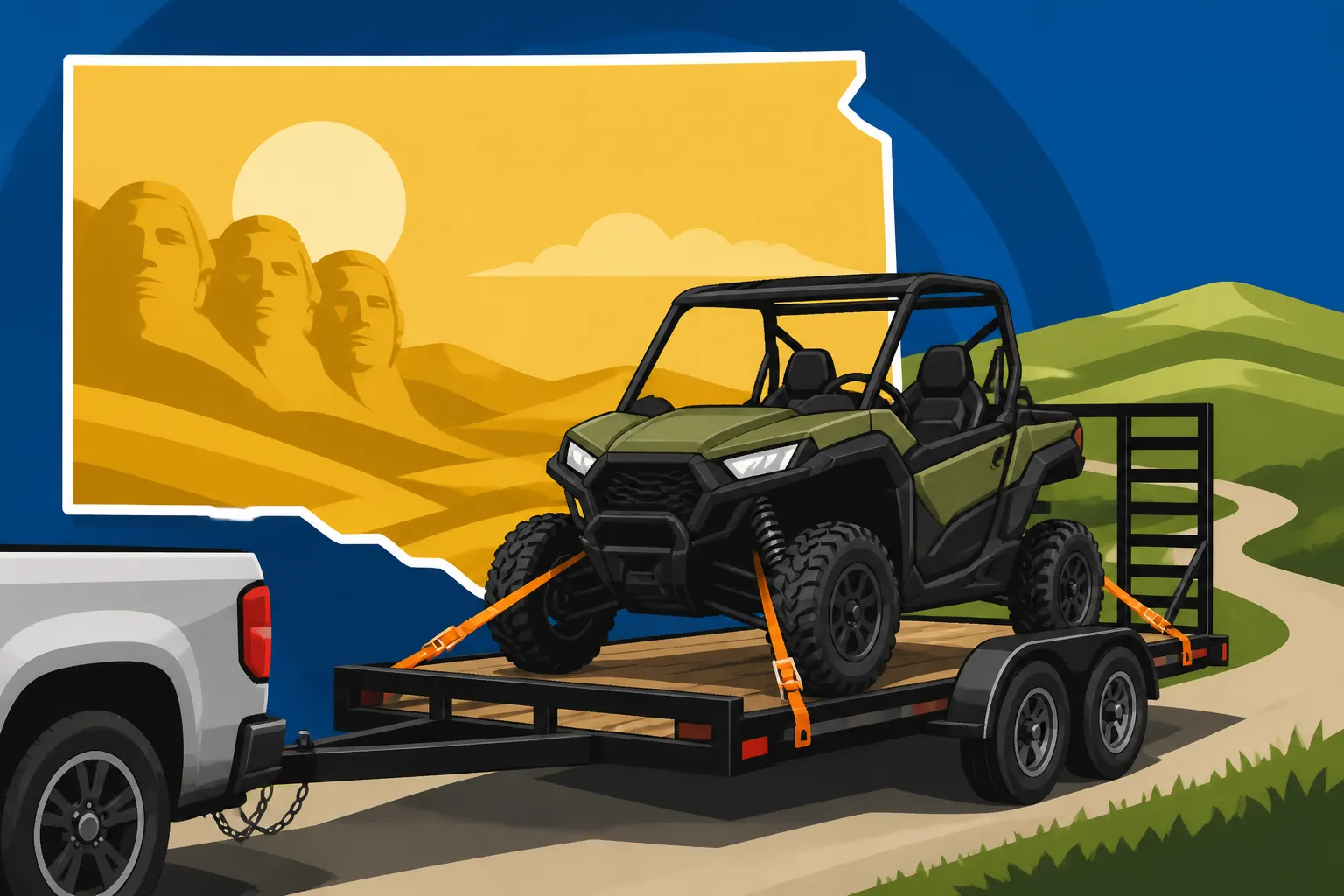
South Dakota, like every state, has rules about what a trailer needs to have to be on public roads, regardless of what's pulling it. And yes, these apply when your street-legal UTV is doing the pulling. First off, let's talk about brakes. If your trailer, or the combination of your UTV and trailer, exceeds a certain weight threshold, the trailer will need its own braking system. This is a critical safety feature, as your UTV’s brakes alone might not be sufficient to stop a heavily loaded trailer effectively, especially in an emergency. Always check current South Dakota vehicle codes for the exact weight at which trailer brakes become mandatory.
Next up, lighting. Just like your UTV, your trailer needs to be visible and communicate your intentions to other drivers. This means functional taillights, brake lights that illuminate when you hit your brakes, and turn signals that correspond with your UTV’s signals. You'll also need safety chains, which are a non-negotiable backup connecting your trailer to your UTV in case the primary hitch connection fails. These chains should be crossed under the tongue and attached securely. Reflectors are also generally required, especially on the sides and rear of the trailer, to enhance visibility at night. These rules are in place to make sure that even a small utility trailer is easily seen and understood by others on the road, day or night.
Finally, don't forget about licensing and registration for the trailer itself. While smaller, lighter utility trailers might be exempt, many trailers in South Dakota will require their own registration and a license plate. This is separate from your UTV's registration. It's a common oversight, but pulling an unregistered trailer on public roads, even with a properly plated UTV, can land you in trouble. Always ensure your trailer meets all the state's requirements, just as your UTV does.
Speed Limits and Road Types for Towing
Even with a street-legal UTV and a fully compliant trailer, you can't just drive like you would in a pickup truck. UTVs are not designed for sustained high-speed travel, and adding a trailer further impacts their dynamics. While your UTV might be capable of reaching certain speeds, towing often necessitates a slower, more cautious approach. There might not be specific statewide speed limits just for UTVs towing trailers, but general towing recommendations and common sense prevail.
You’ll need to be mindful of the type of road you're on. South Dakota's vast network includes everything from dirt county roads and gravel section lines to state highways and interstates. While a plated UTV can legally operate on many public roads, including most state highways, towing adds another layer of consideration. For example, while a plated UTV can technically be on some state highways, they are absolutely prohibited from interstates. For more on this, check out [South Dakota's Interstate Ban]. Towing a trailer on a high-speed state highway, even if legal, might not be the safest or most comfortable experience in a UTV.
Your best bet is to stick to lower-speed county roads, gravel roads (like those discussed in [South Dakota Rules for Riding a Gravel Road] or [South Dakota Rules for Riding a Section Line]), and town streets where traffic moves slower. Defensive driving becomes even more critical when you have a trailer attached. Your stopping distances will be longer, your acceleration will be slower, and turns will require more space. Always anticipate traffic, leave plenty of room, and be extra vigilant, especially when other vehicles aren't expecting a UTV with a trailer.
| Feature | Private Land (with permission) | Public Road (with plated UTV) |
|---|---|---|
| Legal Oversight | Minimal, landowner rules apply | Strict South Dakota traffic laws apply |
| UTV Plate Req. | No | Yes, UTV must be street-legal |
| Trailer Reg. | No | Yes, if over a certain weight/size |
| Speed Limits | Set by landowner/common sense | Posted speed limits apply |
| Brakes (Trailer) | Recommended for safety | Required for heavier trailers |
| Lights (Trailer) | Recommended for visibility | Required (taillights, brake, turn) |
| Safety Chains | Recommended for security | Required |
| Maximum Weight | UTV manufacturer limits apply | UTV manufacturer limits + legal limits |
| Consequences | Property damage, injury | Fines, tickets, potential impoundment |
Towing on Private Land and Designated Off-Road Areas
Away from the public road system, the rules for towing with your UTV become much more flexible, offering a clearer path for utility work and recreational hauling.
Freedom on Private Property
This is where your UTV truly shines as a utility vehicle without the layers of state regulation. On your own land, or on private property where you have explicit permission from the landowner, the rules regarding towing are significantly relaxed. As long as you're not operating unsafely or negligently, you're generally free to tow what you need, within the mechanical limits of your UTV. For more on the importance of landowner permission, you can refer to [South Dakota Landowner Permission Rules].
Think about the myriad uses: you can haul feed out to your livestock, transport tools to various worksites around your ranch, or move brush and debris for cleanup. Many UTV owners use their machines to tow small trailers with camping gear to a secluded spot on their property or drag deer out of the woods during hunting season. The key here is common sense and respect for your machine's capabilities. Even though there aren't legal repercussions from the state, exceeding your UTV’s weight limits can still damage it or, worse, cause an accident resulting in injury.
So, while the state won't ticket you for a lack of trailer brakes or lights on private land, you should still prioritize safety. Always keep an eye on your UTV's towing capacity and tongue weight recommendations, and make sure your load is balanced and secured. It’s about being responsible, even when the law isn’t looking over your shoulder.
Towing in National Forests and OHV Areas
When you're out exploring the vast public lands, especially places like the Black Hills National Forest, your UTV can still be a valuable asset for hauling, though with some caveats. Designated OHV areas and the extensive network of forest roads in places like the Black Hills typically allow UTVs, and often, towing is permissible within these areas. However, it's never a bad idea to double-check the specific rules for the particular area you plan to visit, as regulations can vary by managing agency or even by individual forest district. For a general overview of riding areas, take a look at [Where to Ride an ATV in South Dakota].
The Black Hills National Forest, a popular destination, has a comprehensive motorized trail system. While your UTV might need a Black Hills Motorized Trail Permit to ride these trails and roads (which you can learn more about in [South Dakota's Motorized Trail Permit] and [The Black Hills National Forest in South Dakota]), the permit typically applies to the UTV itself, not necessarily the trailer you're towing. You're generally allowed to tow small utility trailers for things like camping gear, firewood, or hunting equipment on these designated roads. However, there may be width restrictions on certain trails that would preclude towing a wider trailer. Always consult current Motor Vehicle Use Maps (MVUMs) for the specific area to understand what's permitted.
It’s important to distinguish between designated OHV trails and forest roads. While you might be able to tow on many forest roads, some tighter, more technical OHV trails might not be suitable or even permissible for a UTV with a trailer. The intent in these areas is often recreational riding, not utility hauling, so using your UTV to tow could be challenging or lead to unexpected fines if you’re on a restricted trail. When in doubt, call the local Forest Service office or check their website for the most up-to-date information before you head out with a trailer in tow.
Penalties and Best Practices for Towing with a UTV
Understanding the rules is one thing, but knowing the consequences of breaking them and having a solid safety routine are just as vital for any UTV owner who plans to tow.
Potential Fines and Enforcement
Ignoring South Dakota's towing regulations, whether knowingly or unknowingly, can lead to more than just a stern talking-to. The potential penalties can range from significant fines to having your UTV or trailer, or both, impounded. Imagine being out on a beautiful Black Hills day, towing a small trailer, and suddenly you see flashing lights in your rearview mirror. If your UTV isn't properly plated, or if your trailer lacks required lights or safety chains, you're likely facing a costly ticket. These fines can quickly add up, especially if multiple violations are found.
Beyond the immediate financial hit, there’s the inconvenience and stress. Having a vehicle impounded means you'll have to pay impound fees, daily storage fees, and potentially other administrative costs to get your property back. This could put a serious damper on your weekend plans or your ability to get work done. Furthermore, operating a plated UTV without a valid driver's license, which is required for road use (even when towing), could result in a Class 2 Misdemeanor, as detailed in [What a Class 2 Misdemeanor Costs a Rider]. This isn't just a traffic ticket; it's a criminal offense that can carry more severe consequences.
I remember a friend who thought he could just quickly move some landscaping rocks across town using his UTV and a small, unlit trailer. He was stopped, and the officer issued him multiple citations—one for the unplated UTV being on a public road, another for the unlit trailer, and a third for lacking safety chains. What started as a quick chore ended up costing him several hundred dollars and a lot of headaches. It really drives home the point that cutting corners isn't worth it.
Essential Pre-Tow Checks and Safety Tips
To avoid those frustrating and potentially dangerous situations, integrating a thorough pre-tow check into your routine is paramount. Before you even pull out of your driveway, do a walk-around. First, inspect your tires – both on the UTV and the trailer. Check for proper inflation, visible damage, or excessive wear. Underinflated tires can lead to instability and blowouts, especially with the added weight of a trailer.
Next, focus on the hitch connection. Ensure the hitch ball is securely fastened to your UTV and that the trailer coupler is properly seated and latched onto the ball. Connect those essential safety chains, making sure they’re crossed and secured to the UTV frame. Test all your trailer lights: taillights, brake lights, and turn signals. Have a helper stand behind the trailer while you activate each one. If your trailer has brakes, ensure they are functioning correctly. Consider using a quality hitch from a trusted brand like SuperATV, as their robust construction can provide added peace of mind for the connection point itself.
Finally, think about your cargo. Is it balanced over the trailer axle? Is it securely tied down to prevent shifting during transit? Shifting cargo can drastically alter the trailer's balance and lead to dangerous sway. It's also wise to practice turning, backing up, and braking in a safe, open area before you head out onto public roads, especially if you're new to towing with your UTV or using a new trailer. Adjust your driving style to account for the increased length, weight, and reduced maneuverability. A little preparation goes a long way in ensuring a safe and legal towing experience in South Dakota.
Disclaimer
This article is for general informational purposes only and does not constitute professional advice. Laws, prices and regulations vary by location and change over time. Consult a qualified professional for guidance on your specific situation.