Riding Home After a Prairie Sunset
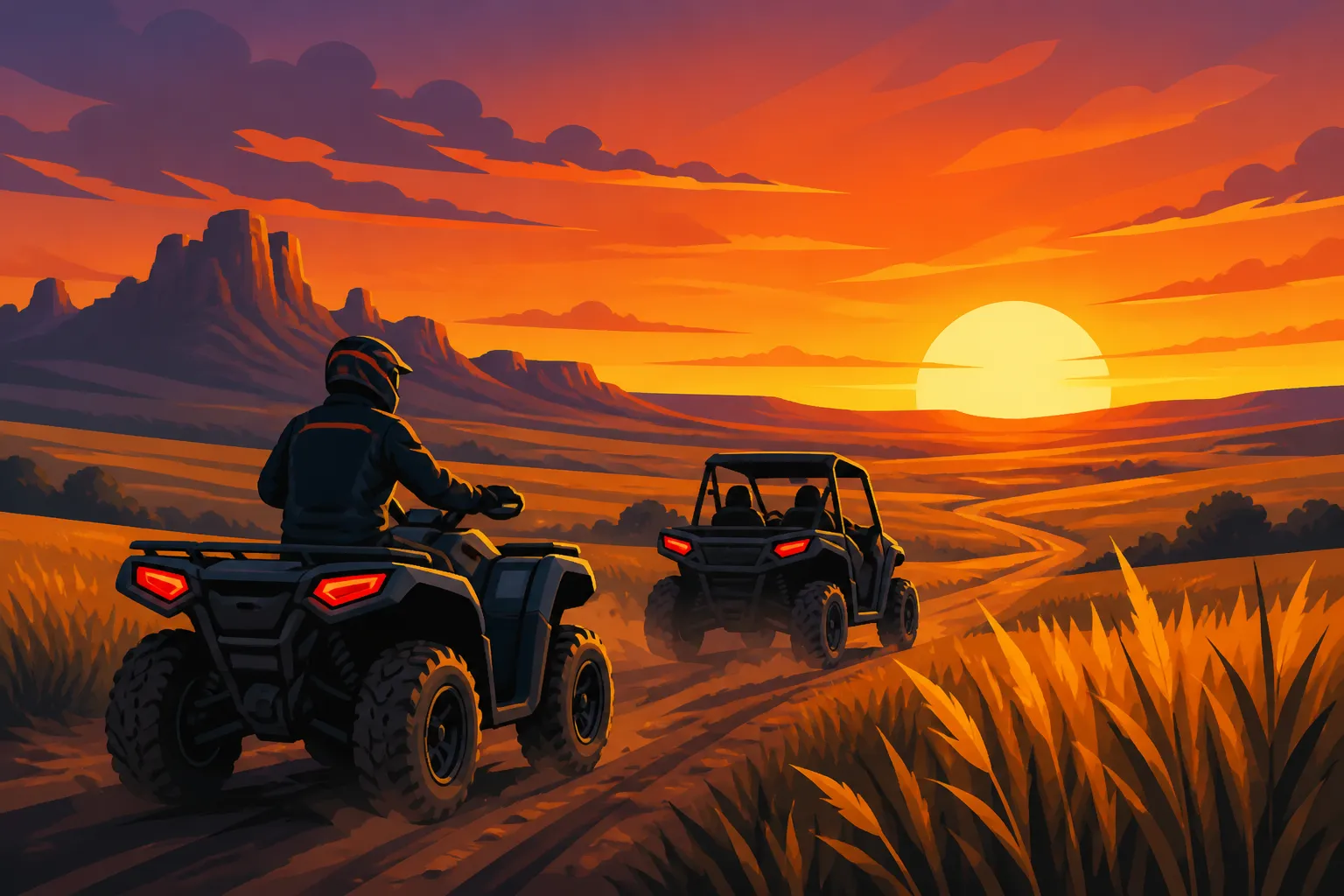
There’s something truly special about watching a South Dakota prairie sunset, the vast sky painting itself in hues of orange and purple. But when those vibrant colors fade, and you’re still miles from home, riding an ATV or UTV can quickly turn from picturesque to precarious. This guide is here to walk you through the real-world considerations for riding your machine safely back to the homestead once the sun dips below that endless horizon.
Navigating the Prairie After Dark: Essential Gear and Legalities
As beautiful as a prairie sunset is, it’s a clear signal that visibility is about to plummet. Being prepared for the diminishing light isn’t just about comfort; it's about safety and staying on the right side of South Dakota’s regulations.
Lighting Up Your Ride for South Dakota Roads
When you’re out on the prairie, especially on county roads or section lines, your lights are your lifeline. South Dakota has clear expectations for machines sharing the road. You’ll absolutely need functioning headlights and brake lights, just like any other vehicle. Think about it: if a pickup truck is coming your way, or approaching from behind, they need to see you clearly, and you need to see where you're going. Flimsy stock lights often don't cut it once true darkness settles in, particularly on unlit backroads where streetlights are just a distant memory.
Beyond the legal minimums, consider upgrading your lighting. Many riders, especially those who frequently find themselves out late, invest in auxiliary lighting like LED light bars. Brands like SuperATV offer a range of powerful light bars that can transform your nighttime visibility, casting a wider and brighter beam than standard lights. This isn't just for seeing obstacles; it’s about alerting other drivers to your presence from a greater distance. When you’re miles from the nearest town, the difference between seeing a deer a hundred feet away and seeing it at thirty feet can be everything. Remember, the goal is to make your machine as conspicuous as possible. For more on what your machine needs, check out [Equipment a South Dakota Road Machine Needs] and [Headlights and Brake Lights in South Dakota].
Reflective Gear and Rider Visibility
Your machine's lights are crucial, but don't forget about yourself and any passengers. Wearing reflective clothing or adding reflective accents to your helmet, jacket, or even your machine can make a significant difference. Imagine you're on a two-track, and an oncoming vehicle's headlights momentarily blind you. If you're wearing reflective gear, their lights will bounce right off you, making you a much clearer target for them to avoid. This is especially true on section lines or minimum maintenance roads where drivers might not expect to encounter an ATV or UTV.
Think about cyclists on a highway; they often have reflective tape on their bikes and clothing. The same principle applies here, but perhaps with even greater urgency given the speed and size difference between your machine and a full-size pickup. Every little bit of visibility helps when you’re out where the coyotes howl and the stars truly pop.
South Dakota's Rules for Riding After Dark
South Dakota doesn’t typically impose a blanket curfew for ATVs and UTVs on public roads, assuming your machine is properly equipped and you're adhering to all other traffic laws. However, the requirement for appropriate lighting becomes non-negotiable once it’s dark. If your machine is plated for road use, it needs to meet the same basic lighting standards as any other motor vehicle. This means a functional headlight that illuminates the road ahead and a taillight that is visible from a specified distance to the rear.
Beyond the physical requirements, common sense and good judgment are paramount. Riding after dark means slower speeds, increased scanning for hazards, and perhaps even avoiding unfamiliar routes altogether. A trail that's a blast during the day might hide unseen dangers once night falls. Always prioritize safety over making good time. If you want a deeper dive into these regulations, you can find more information under [South Dakota Rules for Riding After Dark] and [South Dakota Street Legal ATV Requirements].
Riding the Unpaved Path: Gravel Roads and Section Lines at Dusk
The prairie is crisscrossed with gravel roads and section lines, often the quickest routes home, but they present unique challenges when the sun goes down. What seems like a familiar path by day can become a maze of unseen hazards at night.
Aiming a Headlight for a Gravel Section Line
Picture this: you're cruising down a gravel section line, the last light of the day barely illuminating the path ahead. Suddenly, a dip in the road or a patch of fresh gravel appears out of nowhere. This is where headlight aim becomes critical. If your headlights are pointed too high, you might blind oncoming traffic, or your beam might skip over close-range obstacles like deep ruts or rocks. If they're too low, your effective viewing distance is severely limited.
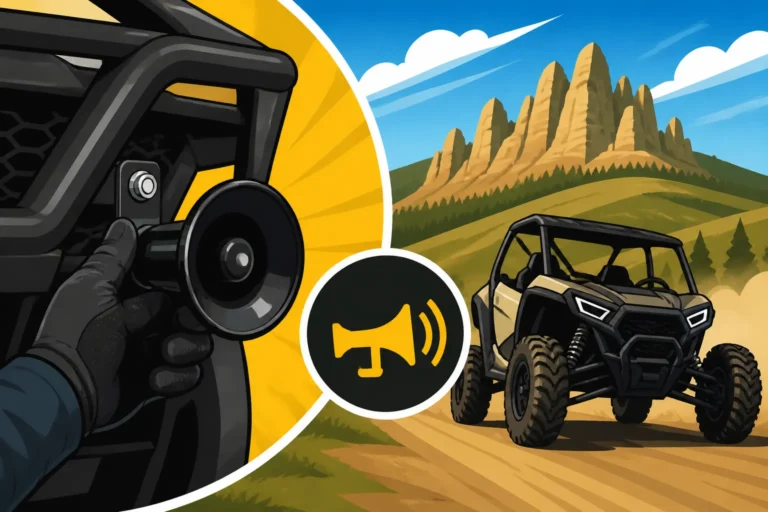
The uneven surface of a gravel road, with its washboards and loose patches, can make your machine bounce, causing your headlight beam to jump around. This makes it incredibly difficult to consistently see what's directly in front of you. You'll need to significantly reduce your speed to give yourself more time to react to hazards that might only appear in your light for a fleeting moment. A horn, which is also a requirement for road-legal machines, comes in handy here. For more on this, check out [South Dakota Horn Requirement].
Meeting Traffic on a One-Lane Ranch Bridge
Many of South Dakota’s gravel roads, especially those that wind through ranch land, are punctuated by narrow, one-lane bridges or culverts. By day, you might barely notice them, but at dusk, they become significant pinch points. Imagine approaching one of these bridges just as a massive combine or a cattle truck is also making its way across. With limited visibility, judging distances and speeds becomes incredibly difficult.
It's a good practice to slow down significantly well before any known narrow passage. Flash your headlights a couple of times as you approach a blind curve or bridge to alert anyone on the other side. Be ready to pull over to the side, or even back up, to yield to larger vehicles. Many of these roads are used by local farmers and ranchers who are familiar with them, so courtesy and caution are key. Respect for private land is also important; review [South Dakota Landowner Permission Rules] if you’re riding on or near private tracts.
Dust and Dim Light: Visibility Challenges
Riding a gravel road in dry conditions always kicks up a plume of dust. In full daylight, it's an annoyance; at sunset, it becomes a dangerous visual barrier. The fading light combines with the swirling dust to create a hazy, almost disorienting environment. Not only does your own dust cloud obscure your rear view, but if you're following another vehicle, their dust can completely engulf you.
If you find yourself in a dusty situation as night falls, increase your following distance dramatically. If you’re leading, be mindful of those behind you. Consider pulling over to let the dust settle if visibility becomes too poor. And if you're meeting traffic, be prepared for their dust cloud to momentarily blind you. This is where your peripheral vision and slowing down become critical. For more on navigating these surfaces, see [South Dakota Rules for Riding a Gravel Road] and [South Dakota Rules for Riding a Section Line].
Wildlife Encounters and Unexpected Hazards
The prairie is teeming with life, and many of its inhabitants become most active during the twilight hours. What seems like a serene environment by day can become a dynamic and unpredictable landscape once the sun sets.
Deer, Pheasants, and Other Prairie Critters at Dusk
This is perhaps one of the biggest dangers of riding at sunset in South Dakota. Deer, in particular, are notorious for moving at dusk and dawn. One minute the road ahead is clear, the next a deer bursts from the ditch, seemingly out of nowhere, often drawn by your headlights. But it's not just deer; pheasants, coyotes, badgers, and even smaller critters like rabbits and raccoons can suddenly dart across your path.
Your best defense here is vigilance and reduced speed. Continuously scan the shoulders and ditches for any movement or reflective eyes. Be extra cautious near tree lines, creek beds, or areas with dense cover. If you see one deer, assume there are more nearby. A solid set of SuperATV rock sliders might protect your machine if you hit something, but avoiding the collision altogether is always the goal. A sudden swerve to avoid a critter can be just as dangerous as hitting it, especially on loose gravel. You might also want to review [South Dakota ATV Insurance Requirement] for details about covering potential damage.
Unmarked Obstacles and Changing Terrain
Daylight reveals all the nuances of the terrain: that subtle dip, the pile of rocks, the section of washboard. At night, these details vanish. A seemingly smooth stretch of gravel might hide a significant pothole or a patch of deep, soft sand that could throw your machine off balance. Farm implements left near field entrances, cattle guards, or even fallen branches can become invisible traps.
If you’re riding a route you don't know like the back of your hand, assume there are unseen obstacles. This means sticking to lower speeds and maintaining a ready posture on your machine, prepared to react quickly. Products like robust skid plates, often available from SuperATV, can offer some protection against unseen rocks or stumps, safeguarding critical components under your machine. However, the best protection is a cautious approach.
Emergency Preparedness for a Night Ride
Even with the best planning, things can go wrong. A flat tire, a mechanical issue, or an unexpected turn of events can leave you stranded miles from anywhere as darkness descends. Being prepared is not just smart; it’s essential for peace of mind.
Essential Tools and Supplies for the Unexpected
Never head out on a long ride, especially one that might stretch into the evening, without a basic emergency kit. This should include:
- Tire Repair: A plug kit and a small air compressor or CO2 cartridges for flat tires.
- Basic Tools: A multi-tool, duct tape, zip ties, and a few essential wrenches for minor repairs.
- Lighting: Beyond your machine's lights, a reliable flashlight or, even better, a headlamp, is crucial. Imagine changing a tire in pitch-black conditions without one.
- Communication: Your cell phone, fully charged. However, don't rely solely on it, as cell service can be notoriously spotty on the South Dakota prairie. Consider carrying a satellite messenger or a two-way radio if you frequently ride in remote areas.
- Navigation: A physical map of the area or a GPS device with downloaded maps. Your phone’s GPS might work even without cell service, but a dedicated device is often more reliable.
- Warmth and Sustenance: Even on a warm day, temperatures can drop significantly after sunset. Pack an extra layer of clothing, some non-perishable snacks, and plenty of water.
- First-Aid: A compact first-aid kit for minor injuries.
Being self-sufficient can turn a potential disaster into a minor inconvenience. If you are considering carrying extra fuel, be sure to know the rules for [Carrying Fuel on a South Dakota Ride].
Sharing Your Route: Staying Connected
This is perhaps one of the simplest, yet most overlooked, safety measures. Before you head out, tell someone your planned route and your estimated return time. Let them know what machine you’re riding, who you’re with, and what to do if they don’t hear from you by a certain hour. This creates a vital safety net.
In areas with limited or no cell service, which is common across much of the South Dakota prairie, this step becomes even more critical. If you were to have an accident or a breakdown and couldn't contact anyone, knowing someone is aware of your general whereabouts and will eventually start looking can be a huge comfort. While South Dakota doesn't typically mandate a safety course, knowing how to plan and execute a safe trip is paramount.
Riding home after a prairie sunset is an experience that can fill you with awe, but it demands respect for the environment and meticulous preparation. With the right gear, a cautious mindset, and a good understanding of the local conditions and rules, you can ensure that your ride under the fading light is both memorable and safe. If you’re considering riding on private land, ensure you understand [South Dakota Rules for Riding Private Land]. And if you plan on towing anything with your UTV, you should check out [South Dakota Rules for Towing With a UTV].
Disclaimer
This article is for general informational purposes only and does not constitute professional advice. Laws, prices and regulations vary by location and change over time. Consult a qualified professional for guidance on your specific situation.