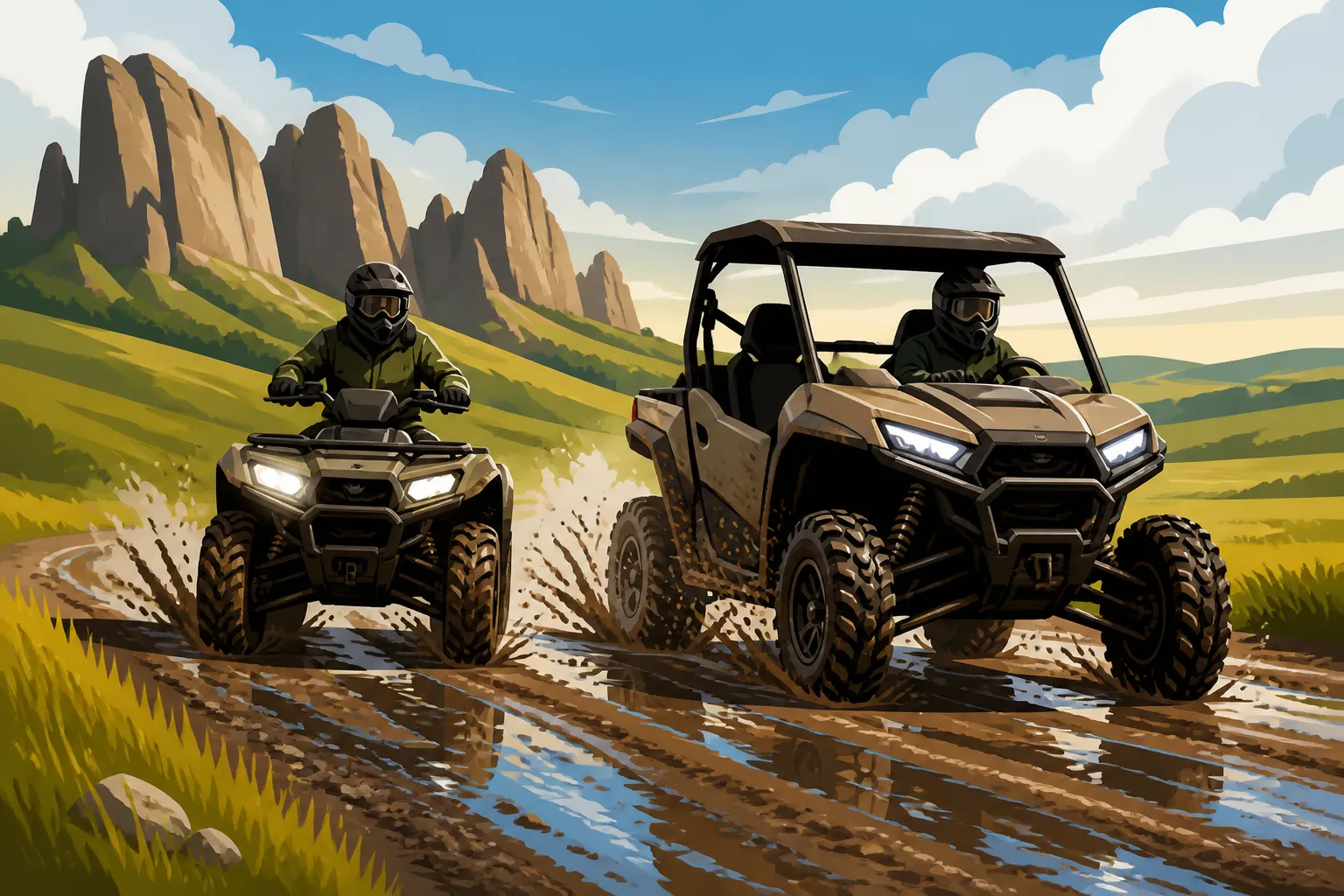
Riding a South Dakota Gravel Road After Rain
Riding a South Dakota gravel road right after a rain shower can be a completely different animal than cruising along on dry, dusty conditions. What was once a predictable, if sometimes bumpy, path can transform into a slick, rutted, and surprisingly treacherous route, often catching riders off guard. This guide is here to help you understand these changes, prepare yourself and your machine, and navigate those wet gravel roads safely and confidently, ensuring your South Dakota ATV or UTV adventure doesn't get bogged down in the mud.
Understanding How Rain Transforms South Dakota's Gravel Roads
When a downpour hits South Dakota's vast network of gravel roads, it's not just about a little bit of moisture. The very nature of the road surface changes dramatically, altering traction, creating new hazards, and demanding a different kind of respect from riders. It's a fundamental shift in how your machine interacts with the terrain, and understanding this transformation is the first step toward a safer ride.
The Immediate Aftermath: Standing Water and Slick Surfaces
As soon as the rain starts to fall, or immediately after it stops, those gravel roads become a different beast. Initially, the fine dust and loose aggregate on top of the road mix with the water to create a surprisingly slick, almost greasy film. This layer dramatically reduces the friction your tires usually rely on, making corners more prone to sliding and braking distances much longer. It's not just a damp surface; it's a layer of slippery slurry that can feel incredibly unstable under your tires.
Beyond the general slickness, you'll inevitably encounter standing water. Puddles, ranging from innocent splashes to surprisingly deep, axle-challenging pools, will collect in every dip, pothole, and low spot. These aren't just minor inconveniences; they are potential hidden hazards. A seemingly shallow puddle might conceal a sharp rock, a significant drop-off, or a bone-jarring pothole that could easily damage your suspension or even flip your machine. The water obscures the actual road surface, making it nearly impossible to judge the depth or what lies beneath. In areas with higher clay content, particularly common in eastern South Dakota, this mix can quickly turn into a sticky, heavy gumbo mud that not only reduces traction but also clogs your wheel wells and tires, making steering a real workout.
The Long-Term Effects: Washboards, Ruts, and Erosion
Even as the standing water begins to recede and the sun peeks out, the lingering effects of rain on South Dakota's gravel roads can be profound and sometimes worse than the initial slickness. Water is an incredibly powerful agent of erosion, and it mercilessly exploits any weaknesses in the road surface. Those annoying washboards that already form on heavily traveled gravel roads become deeper and more pronounced as water flows through the troughs, carrying away loose material. Hitting these exaggerated washboards at speed, especially when they're still wet and loose, can lead to a violent loss of control and a very uncomfortable, teeth-rattling ride.
Then there are the ruts. The combined weight of ATVs, UTVs, trucks, and other vehicles driving through softened gravel creates deep channels, particularly on turns, hillsides, and areas with poor drainage. These ruts can be a nightmare for riders. If your tires drop into them, you might find yourself struggling to climb out or, worse, high-centering your machine if the ruts are deeper than your ground clearance. Over time, especially with repeated rain events and traffic, these ruts can deepen into veritable trenches, making sections of the road impassable for some machines or requiring extreme caution to navigate. Erosion can also carve away soft shoulders, turning what looked like safe ground into a sudden drop-off. This is particularly true in the Black Hills, where steep grades and natural drainage patterns combine to channel water with significant force. Being aware of [South Dakota Rules for Riding a Gravel Road] is crucial, as some local regulations might even dictate how you can approach or avoid damaged areas, emphasizing responsible riding.
Essential Gear and Machine Prep for Wet Gravel Rides
Tackling South Dakota's gravel roads after a rain shower isn't just about adjusting your riding technique; it absolutely requires a careful look at your gear and how you've prepared your machine. A little bit of foresight and investing in the right equipment can dramatically improve your comfort, safety, and the longevity of your ATV or UTV, turning a potentially miserable, muddy experience into a manageable and even thrilling one.
Tire Choice and Pressure for Maximum Traction
Your tires are the single most important component connecting you to the ground, and their performance is exponentially more critical on slick, wet gravel. While a standard all-purpose tire might get you by on dry dirt, after a rain, you'll profoundly appreciate a tire specifically designed to shed mud and find tenacious grip. Look for tires with an aggressive, open tread pattern, often referred to as "mud" or "all-terrain" tires, that feature widely spaced lugs. This design allows the tire to dig into soft earth for traction and, crucially, to self-clean by shedding mud and debris as the wheel rotates, preventing the treads from packing up and turning your knobbies into slicks.
Beyond the tread pattern, proper tire pressure is absolutely paramount. Running slightly lower tire pressure than you would on pavement (but still within your machine's manufacturer's recommended range for off-road use) can increase the tire's contact patch with the ground. This wider footprint distributes the machine's weight more broadly, often providing superior traction on loose, slick, or soft surfaces. However, you must be cautious not to go too low, as this can dramatically increase the risk of a pinch flat, a tire coming off the bead, or damage to your rims if you hit a rock hidden beneath a puddle. It's a delicate balance to find that sweet spot, and knowing your specific machine and the typical terrain you ride will help you dial it in. Some seasoned riders even specifically seek out robust all-terrain tires from brands like SuperATV, which are known for their durable construction and a wide variety of tread options that can offer a significant advantage when the going gets sloppy and slick.
Protecting Yourself and Your Machine from the Elements
If you're riding wet gravel, you can bet on one thing: mud. And a lot of it. Investing in high-quality, waterproof riding gear is not just about comfort; it's about maintaining focus and preventing hypothermia in cooler weather. A good waterproof jacket, pants, and gloves will keep you dry, allowing you to concentrate on the trail, not on shivering. Goggles are not merely recommended; they are an absolute necessity. Mud, grit, and water spray can instantly obscure your vision, making [Goggles or a Windscreen on a South Dakota Quad] a critical piece of safety equipment. And, of course, regardless of whether [Why South Dakota Exempts Adults From Helmets] applies to your age, a properly fitted helmet is always the most essential piece of protective gear you can wear.
Protecting your machine from the relentless onslaught of mud and water is equally vital. Mud flaps can drastically reduce the amount of spray that gets thrown up onto you, your passenger, and your machine's critical components. Skid plates and A-arm guards are invaluable for shielding the underside of your ATV or UTV from sharp rocks, hidden debris, and the violent impacts that can occur when hitting an obscured pothole or washout. Consider using dielectric grease to seal any exposed electrical connections to prevent water intrusion, which can lead to costly and frustrating breakdowns. If your adventures include tackling deeper mud holes or planned water crossings, a robust winch, often found on well-equipped machines or available as an accessory from companies like SuperATV, is an invaluable piece of recovery gear. Don't forget that carrying a [Carrying a Spare Can on a Hills Loop] can also be crucial if you find yourself using extra fuel to extract your machine from a sticky situation. No one wants to be stranded miles from civilization with a fouled electrical system or a machine buried up to its frame in South Dakota gumbo.
Pre-Ride Checks: Lights, Brakes, and Fluids
Before you even dream of pointing your ATV or UTV down a rain-soaked South Dakota gravel road, a thorough pre-ride inspection of your machine is absolutely paramount. Visibility can often be significantly reduced after rain, whether due to lingering mist, ongoing drizzle, or heavy mud spray. Therefore, ensuring all your lights – headlights, taillights, and, crucially, your brake lights – are fully functional and clean is a non-negotiable step. You need to be seen by other road users, whether it's an oncoming pickup truck around a blind corner or another rider following behind you.
Your brakes are another critical component that demands extra attention. Wet conditions inherently demand longer braking distances and require much more precision in their application. Check your brake pads for wear; if they're thin, wet conditions will only make them less effective. Ensure your braking system feels firm and responsive – any sponginess or excessive squealing needs to be addressed before you ride. Finally, verify that all fluid levels, including engine oil, coolant, and brake fluid, are topped off and that there are no visible leaks anywhere on your machine. A well-maintained machine is a safer, more reliable machine, especially when you're facing challenging conditions like slick, wet gravel roads. A quick check of your air filter is also wise; a dirty filter can quickly become waterlogged or clogged in a wet, muddy environment, severely impacting engine performance and potentially leading to damage.
Safe Riding Techniques for Slick South Dakota Gravel
Riding on slick, wet gravel is less about brute force or raw speed and far more about finesse, anticipation, and smooth control inputs. The core objective is to minimize any sudden movements that could upset your machine's balance and maximize your tires' ability to maintain precious traction. This requires a heightened sense of awareness and a deliberate approach to every twist of the throttle and squeeze of the brake.
Managing Speed and Maintaining Control
The most fundamental rule for riding on wet gravel is unequivocally to slow down. What feels like a perfectly comfortable speed on dry gravel can quickly become dangerously fast on a slick, rain-soaked surface. The reduced traction means your braking distances will dramatically increase, and the likelihood of your tires losing grip, especially in corners or when encountering unexpected bumps, rises significantly. Instead of slamming on the brakes, which will almost certainly lock up your tires and send you into an uncontrolled slide, learn to anticipate turns and hazards well in advance. Slow down gradually and smoothly before you even enter the tricky section. Engine braking can be an excellent ally here, offering a smoother, more controlled deceleration than relying solely on your mechanical brakes.
When you do need to use your brakes, apply both the front and rear brakes gently, progressively, and in a balanced manner. Avoid any sudden, jerky movements. Similarly, smooth throttle inputs are crucial. Resist the urge for sudden bursts of acceleration, which will inevitably cause your rear wheels to spin wildly, further reducing control and tearing up the road surface. On an ATV, actively use your body weight by leaning into turns and shifting your center of gravity to help the machine maintain traction. For UTVs, maintaining a consistent, moderate speed will help keep the vehicle stable and prevent fishtailing. If you feel your machine starting to slide, don't panic. Maintain a relaxed grip, look where you want to go, gently ease off the throttle, and make small, controlled corrective steering inputs. Your goal is to guide the machine through the slide, not to fight it.
Reading the Road and Anticipating Hazards
After a rain, a gravel road is a constantly changing, dynamic environment that demands your complete attention. You need to develop a very keen eye for reading the road ahead and anticipating potential hazards before they become immediate dangers. Look for changes in color or texture in the gravel; darker patches almost always indicate deeper moisture, slicker mud, or even standing water. Actively avoid areas with deep ruts, or if you must traverse them, do so excruciatingly slowly and carefully, trying to keep your tires out of the deepest parts to prevent high-centering your machine.
Pay extremely close attention to the shoulders of the road, particularly after heavy rains. Soft or eroded shoulders can give way unexpectedly, potentially causing you to lose control, veer off the road, or even roll your machine if you get too close to the edge. Be acutely wary of hidden obstacles: rocks, fallen branches, or even sections of washed-out road that might be completely obscured by standing water. Critically, keep your eyes up and scanning far ahead down the road, not just fixated on your front tire. This forward vision provides you with precious extra seconds to react to unexpected changes, identify the safest line, and prepare for what's coming. This proactive, observational approach is absolutely key, whether you're expertly navigating a [Riding a Forest Road] in the dense Black Hills or traversing a long, straight [Riding a Section Line] across the expansive open prairie. Furthermore, consulting resources like [South Dakota Trail Maps and MVUMs] can be incredibly helpful in understanding the underlying terrain and potential water features, even for gravel roads, giving you an advantage before you even set tire to dirt.
Riding Etiquette and Environmental Responsibility
Riding on wet gravel roads extends beyond just your personal safety; it also encompasses being a responsible steward of the land and a considerate user of public access roads. Excessive wheel spin, while sometimes tempting, can quickly tear up a soft, saturated road surface, creating deeper ruts and more pronounced washboards. This degrades conditions for everyone, including subsequent ATV/UTV riders, local farmers, and general public traffic. Always strive to use smooth, controlled power to maintain forward momentum rather than resorting to aggressive wheel spin.
Be exceptionally mindful of other road users, especially on narrow, one-lane gravel roads. Wet conditions mean mud and spray can be flung a considerable distance, coating everything and everyone nearby. Significantly reduce your speed when passing pedestrians, bicyclists, or any oncoming vehicles to avoid drenching them in mud. This courtesy is particularly important when you might be [Meeting a Motorcycle Pack in August] during peak riding season or simply encountering a local rancher's pickup. Always respect private property boundaries; wet, muddy conditions can make it easy to inadvertently stray off designated public access roads onto someone's land. Remember that [South Dakota Rules for Riding Private Land] explicitly require permission from the landowner. Avoid causing damage to ditches, culverts, or bridge approaches, as these structures are vital for proper road drainage and maintaining the integrity of the route. By riding responsibly and courteously, you help preserve access to these incredible South Dakota riding areas for yourself and for everyone else for years to come.
Navigating Specific South Dakota Scenarios After Rain
South Dakota is a state defined by its vast and varied landscapes, meaning how a gravel road reacts to rainfall can differ dramatically based on your location. Whether you're winding through the Black Hills or traversing the endless prairie, understanding these distinct environmental responses is key to a successful ride.
Black Hills Forest Roads vs. Prairie Section Lines
In the rugged terrain of the Black Hills, gravel roads often carve their way through dense forests, presenting a unique set of challenges after a rain. These roads can be notably rockier, and the combination of steep inclines with increased moisture makes both climbs and descents particularly treacherous due to drastically reduced traction. You might encounter more instances of loose rocks, thick mud formed from decomposed granite, and rapid elevation changes that lead to swift, powerful water runoff, which readily carves out channels and deep ruts in the road surface. Drainage in these areas can be tricky, often resulting in surprisingly deep puddles and severe washouts in dips and valleys. When traversing these routes, remember that [Riding a Forest Road] brings its own specific set of difficulties, distinct from the more open areas of the state.
In stark contrast, consider the wide-open prairie section lines that crisscross the rest of South Dakota. Here, the soil composition often includes a much higher clay content. When this clay gets wet, it famously transforms into a notoriously slick, heavy, and incredibly sticky "gumbo" mud. This material has a unique tendency to pack into your tire treads, effectively turning your knobbies into slicks, and cling stubbornly to your machine, adding significant weight and making steering heavy and laborious. While the terrain might be generally flatter, the sheer stickiness and unpredictability of prairie mud can pose a far greater challenge, often leading to riders getting severely bogged down. Visibility can also become a significant factor on the prairie, as mud thrown up by your own tires or passing vehicles can quickly coat your windshield or goggles. When you're out [Riding a Section Line], being prepared for this unique and challenging type of mud is essential.
| Feature / Location | Black Hills Forest Roads After Rain | Prairie Section Lines After Rain |
|---|---|---|
| Gravel/Soil Type | Rockier, decomposed granite, varied aggregate | Finer aggregate, high clay content, loamy soil |
| Mud Texture | Can be soupy, loose, sometimes sandy | Extremely sticky "gumbo," very slick and heavy |
| Terrain | Hilly, winding, steep grades, forested | Flatter, open, long straightaways |
| Drainage Characteristics | Rapid runoff, potential washouts in dips, culverts | Poor drainage, large and persistent standing puddles |
| Common Hazards | Loose rocks, deep ruts on grades, hidden washouts, slick roots/leaves, steep drop-offs | Deep, long ruts, tire-packing mud, soft shoulders, unexpected deep puddles, reduced visibility from mud spray |
| Visibility Impact | Can be reduced by fog, dense tree cover, mud spray | Can be significantly reduced by mud spray, open exposure to wind/rain |
Crossing Water and Muddy Washes
Encountering water crossings or long, muddy washes after rain is an almost certainty on South Dakota's gravel roads. Before you even think about attempting to cross any standing water or navigate a particularly muddy section, always, always stop your machine and carefully assess the situation. How deep is the water? How long is the stretch of mud or water? Is there a current if it's a flowing wash or creek? Never, ever assume a puddle is shallow; what appears to be a minor dip could easily be axle-deep or even deeper, potentially capable of submerging your machine's air intake or critical electrical components. If it's safe and practical, consider walking the crossing on foot to accurately gauge the depth, identify any hidden obstacles, and test the firmness of the bottom.
If you decide to proceed, enter the water or mud slowly and steadily. Maintain a consistent, moderate throttle to create a slight "bow wave" in front of your machine. This helps to push water away from the front of your ATV or UTV, reducing the chance of water washing over your hood, into your engine compartment, or splashing onto sensitive electronics. Critically, avoid any sudden changes in speed or direction while in the water, as this can easily lead to a loss of traction and control. Be particularly mindful of your machine's air intake and exhaust system. In deeper water, you risk severe engine damage from hydrolocking if water gets sucked into the air intake, or your engine could stall if the exhaust is completely submerged. For UTVs, ensure you know the location of all sensitive electronics and avoid submerging them. While this guidance is generally applicable to dedicated trails, the principles apply equally to [Water Crossings on a Hills Trail] that might intersect a gravel road. If at any point you feel unsure about the depth, the bottom, or your machine's capabilities, it is always, always better to turn around and find an alternate route than to risk your safety, your machine, and a potentially dangerous recovery situation.
When to Stay Home: Recognizing Unsafe Conditions
Sometimes, the absolute smartest riding decision you can make after a rain isn't to ride at all. There are definitely specific conditions where even the most experienced riders with the best-equipped machines should seriously reconsider heading out. If there's been exceptionally heavy, continuous rainfall, or if local authorities have issued flash flood warnings for the specific area you plan to ride, staying off the roads is paramount. Flash floods can transform small creeks into raging rivers in mere minutes and can wash out entire sections of road without any warning whatsoever, creating impassable and life-threatening conditions.
Similarly, if the gravel roads you intended to ride are already known to be severely degraded, highly rutted, or notoriously muddy even in dry conditions, then heavy rain will only exacerbate these existing issues, potentially rendering them completely impassable or dangerously unstable. Consider your specific riding circumstances: are you riding solo in a remote area, far from reliable cell service? Getting stuck in deep, sticky mud, breaking down due to water intrusion, or facing unexpected washouts in severely adverse conditions can quickly escalate into a serious and dangerous emergency. Always make it a habit to check [South Dakota Trail Closures to Check] before you head out, as closures due to severe weather, fire danger, or maintenance can apply to gravel roads as well as dedicated trails. Pay close attention to local weather forecasts, advisories, and any public safety announcements. A little bit of patience and prudence can prevent a tremendous amount of trouble, ensuring that you can save your adventure for a safer, much more enjoyable day.
Disclaimer
This article is for general informational purposes only and does not constitute professional advice. Laws, prices and regulations vary by location and change over time. Consult a qualified professional for guidance on your specific situation.