Titling a Machine Bought at a South Dakota Dealer
Buying a new or used off-road vehicle (ORV) from a South Dakota dealer is an exciting moment, but the paperwork process can feel like hitting a mud bog if you're not prepared. Many folks think that because they're buying from an established business, everything will magically be handled, only to find themselves scrambling when they realize there are still crucial steps they need to take personally. This guide is here to walk you through exactly what to expect when titling a machine bought at a South Dakota dealer, ensuring you navigate the process smoothly and get out on the trails faster.
The Initial Hand-Off: What Your South Dakota Dealer Provides
When you seal the deal on that shiny new ATV or rugged UTV at a South Dakota dealership, you're not just getting the keys and a handshake. The dealer plays a critical role in providing the foundational paperwork that allows you to legally title your new machine. It's their job to get certain documents in order, and knowing what to expect from them can save you a world of headache down the line.
Manufacturer's Statement of Origin (MSO) or Existing Title
For a brand-new machine, the dealer will provide you with a Manufacturer's Statement of Origin, often abbreviated as MSO. Think of this as the birth certificate for your ATV or UTV. It proves the vehicle is new, hasn't been titled before, and identifies its unique characteristics, like the Vehicle Identification Number (VIN). Without this document, you simply cannot title a new machine in South Dakota.
If you're purchasing a used machine from a dealer, they should provide you with the existing South Dakota title, properly signed over to you. In some cases, if the machine was recently traded in from another state, the dealer might have an out-of-state title. Either way, this document is paramount. Always, always check the VIN on this document against the VIN on the machine itself before you drive away. It might seem like overkill, but discrepancies can cause major delays and frustration when you get to the county treasurer's office. A dealer should have a clear chain of title for any used machine they sell, so don't hesitate to ask questions if something looks unclear.
The Bill of Sale: Your Proof of Purchase
Every sale, especially one involving a high-value item like an ATV or UTV, requires a bill of sale. This is your official receipt, detailing the buyer and seller, the purchase price, the date of sale, and the vehicle's description, including its VIN. This document is crucial for calculating the [South Dakota's 4 Percent Excise Tax] you'll owe. Make sure every detail is accurate and legible.
Sometimes, a dealer's bill of sale might be a standard form, but it's always wise to ensure it's comprehensive. While a reputable dealer will have their own robust forms, for your own peace of mind, it’s good to have a record that clearly outlines the terms. While not directly for titling, having a well-documented sale protects both parties. Services like LawDepot offer templates for various legal documents, which can sometimes provide insight into what details should be included, even if you’re relying on the dealer’s form for the actual transaction. This ensures you have a clear, undeniable record of the transaction amount, which directly impacts the sales tax you'll pay.
Your Crucial Next Steps: The County Treasurer's Office
Once you've left the dealer's lot, the ball is firmly in your court. South Dakota doesn't typically have dealers handle the final titling for you in the same way some other states might. You, the new owner, must complete the process yourself at your local county treasurer's office. This step is non-negotiable and time-sensitive.
The Forty-Five Day Deadline: Don't Delay
South Dakota is pretty firm about its titling deadlines. You have exactly [South Dakota's Forty-Five Day Title Deadline] from the date of purchase to get your new machine titled at your county treasurer's office. This isn't a suggestion; it's a rule with financial consequences. Missing this window can lead to penalties that quickly add up, turning your exciting new purchase into an unexpected financial burden.
Imagine you bought your machine in Rapid City, perhaps from a dealer in Pennington County, and then life got busy. A family emergency, a big project at work, or maybe you just got swept up in riding your new rig. Before you know it, day 46 rolls around. That's when the penalties kick in. So, mark your calendar, set reminders, and make that visit a priority.
Gathering Your Documents for the Treasurer
Before you head to the [Titling at a South Dakota County Treasurer], double-check that you have all the necessary paperwork from the dealer. This typically includes:
- The Manufacturer's Statement of Origin (MSO) for a new machine, or the properly signed-over existing title for a used machine.
- The original bill of sale, showing the purchase price.
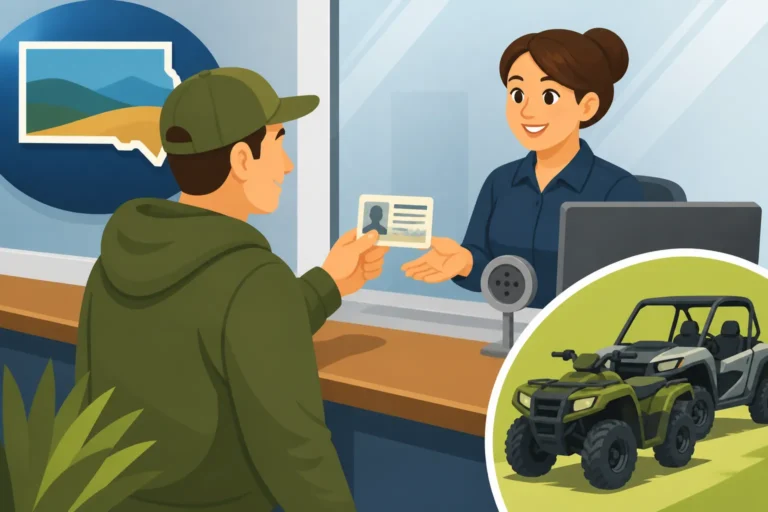
- Your South Dakota driver's license or state-issued ID.
- Proof of your current South Dakota address.
- Cash, check, or credit card for the fees and taxes (confirm acceptable payment methods with your county treasurer beforehand).
It’s always a good idea to make copies of everything for your own records before you hand over the originals. While the treasurer's office is highly organized, having your own backup can provide peace of mind. Some buyers even use services like LawDepot to create a personal digital archive of their important documents, ensuring easy access to copies should they ever need them.
Understanding the Financial Side: Taxes, Fees, and Penalties
Titling an ATV or UTV in South Dakota involves more than just handing over a few pieces of paper. There are several fees and taxes involved, and being aware of them upfront helps you budget accurately and avoid surprises. These costs are consistent whether you buy from a dealer or a private seller, though the dealer ensures you start with the correct initial documentation.
The Excise Tax: A Significant Portion of Your Cost
The biggest chunk of change you'll pay at the treasurer's office is the [South Dakota's 4 Percent Excise Tax]. This tax is calculated on the net purchase price of your machine, after any trade-in allowance. So, if you bought a UTV for $15,000, and traded in an old ATV for $3,000, your excise tax would be calculated on $12,000. It's a significant amount, so make sure you factor it into your budget when considering a purchase.
It's common for buyers to miscalculate this or forget about it entirely, thinking the price they paid the dealer is the final word. But no, the state wants its share. This tax goes into state coffers to fund various programs, similar to how sales tax on other goods works. Always ask your dealer for a clear breakdown of the sale price and any trade-in value on the bill of sale to ensure this calculation is transparent.
Other Required Fees: The Smaller Stings
Beyond the excise tax, there are several smaller but mandatory fees you'll encounter. These include:
- Title Fee: There's a set fee for issuing the actual title document. This fee is standard across the state.
- [South Dakota's $2 Technology Fee]: This fee helps fund improvements to the state's motor vehicle titling and registration systems. It's a relatively new addition but now a standard part of the process.
- [South Dakota's $10 Lien Notation]: If you financed your ATV or UTV, the lender will have a lien on the title. There's a small fee to record this lien. The county treasurer handles this, but it's important to ensure the lienholder's information is correct on the application.
- Solid Waste and Patrol Dollars: A small portion of your fees goes towards funding solid waste management and supporting the Highway Patrol. These might seem like minor additions, but they contribute to broader public services.
Here's a quick look at the typical fees you might encounter when titling your machine:
| Fee Type | Description | Impact on Cost |
|---|---|---|
| Excise Tax | 4% of net purchase price (after trade-in) | Potentially hundreds of dollars |
| Title Fee | Standard state fee for issuing the title | Fixed, modest |
| Technology Fee | Funds state's motor vehicle system improvements | Fixed, very small |
| Lien Notation Fee | If financed, records lender's interest on title | Fixed, small |
| Solid Waste/Patrol Dollars | Contributes to public services | Fixed, very small |
Penalties for Procrastination
As mentioned, missing the [South Dakota's Forty-Five Day Title Deadline] carries penalties. The state applies a [South Dakota's 1 Percent a Month Penalty] for every month, or part of a month, that you're late. This penalty is assessed on the excise tax due. If you drag your feet for an extended period, it gets worse. Once [South Dakota's 10 Percent Penalty at Sixty Days] passes, a hefty additional fee kicks in.
These penalties are designed to encourage prompt compliance. It's not a scare tactic; it's just how the system works. Don't let a simple oversight turn your new machine into an expensive lesson in state regulations.
Common Hurdles and How to Smooth the Path
Even with all the right information, sometimes things can go awry. Knowing what common issues crop up and how to navigate them can save you stress and ensure your titling process remains as smooth as possible.
Missing or Incorrect Paperwork from the Dealer
While reputable dealers strive for perfection, mistakes can happen. You might find a typo on the MSO, an incorrect VIN on the bill of sale, or a missing signature on the existing title for a used machine. These seemingly small errors can bring your titling process to a screeching halt at the county treasurer's office. The treasurer's office cannot accept documents with errors or omissions; they'll simply send you back to the dealer.
What to do: Always thoroughly review all documents before you leave the dealership. Don't be afraid to ask questions if something looks off. If you discover an error later, contact the dealer immediately. They are typically motivated to rectify mistakes quickly, as it reflects poorly on their business if customers can't title their purchases. Keeping a clear communication trail can be helpful, and having a general understanding of legal documents, perhaps even from resources like LawDepot, can make you a more informed consumer.
Understanding the Role of Liens
If you financed your purchase, the bank or credit union will hold a lien on your ATV or UTV. The dealer will typically inform the lender, and the lender will then communicate with the county treasurer's office to ensure their lien is noted on your title. Your physical title might be mailed directly to the lienholder or, in some cases, you might receive it with the lien clearly indicated. [Titling a Machine With a Lien in South Dakota] is a standard procedure, but it's important to confirm that the lien is correctly recorded to avoid future headaches when you eventually pay off the loan and need to get a clear title.
When You Move After Purchase
Life happens, and sometimes you might move to a different South Dakota county shortly after buying your machine. Generally, you should title your vehicle in the county where you reside. If you purchased in one county and then moved to another before titling, you'll still process your title in your new county of residence. The state system is designed to handle this, but it’s still your responsibility to present your current address documentation.
Always double-check the requirements with your new county treasurer's office, as local procedures might have minor variations. However, the core documents and fees remain consistent statewide.
Planning for the Long Haul
Titling is just the first step in responsible ORV ownership. Remember that your title is a crucial document for proving ownership. Keep it in a safe, secure place—not on your ATV or UTV! If you ever lose it, you'll need to apply for a [South Dakota's $10 Duplicate Title] at your county treasurer's office, which is an extra step and another small fee you'd rather avoid. Treat that title like gold; it's your definitive proof that your machine is legally yours.
Disclaimer
This article is for general informational purposes only and does not constitute professional advice. Laws, prices and regulations vary by location and change over time. Consult a qualified professional for guidance on your specific situation.