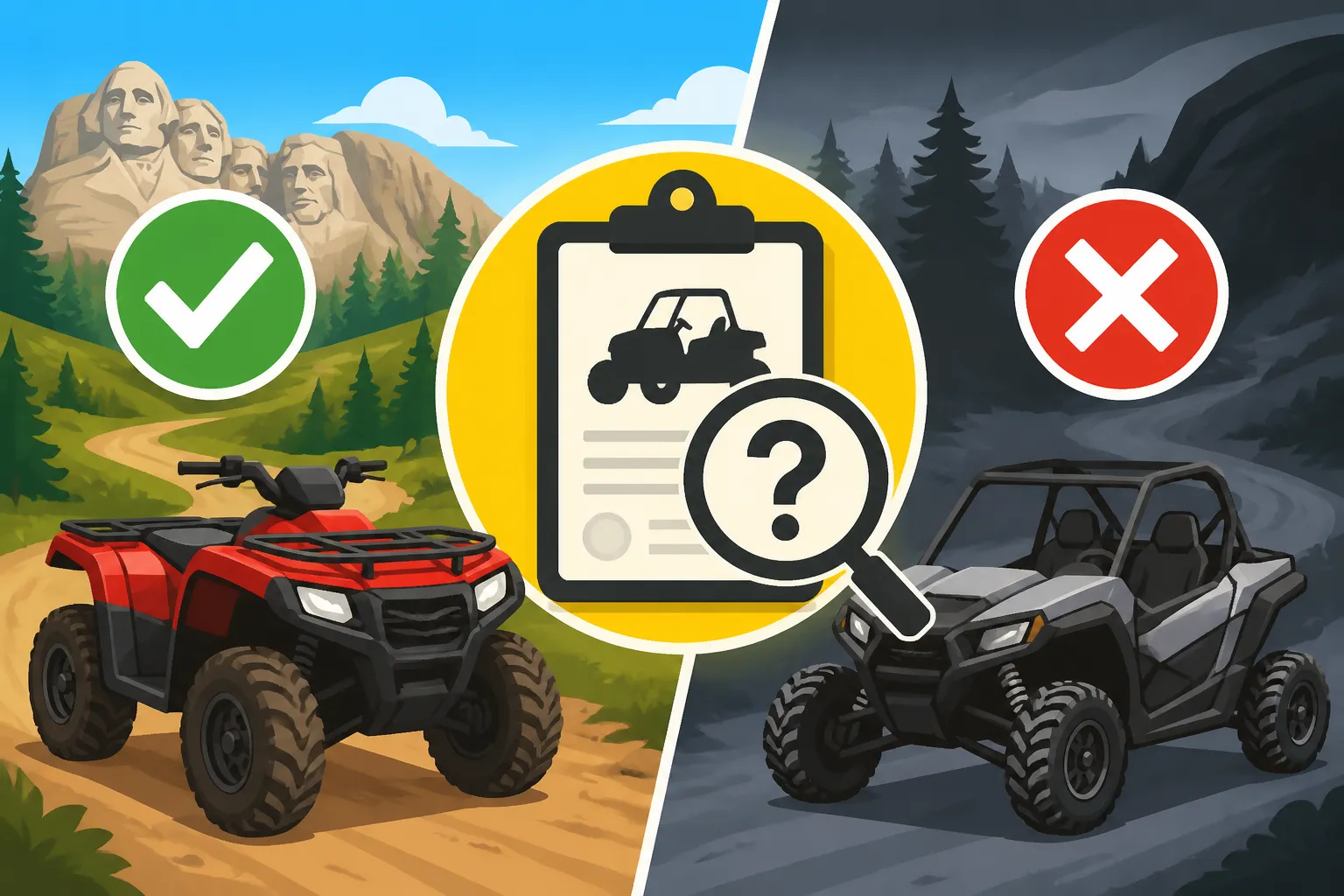
Do You Need a Permit on a Black Hills Road?
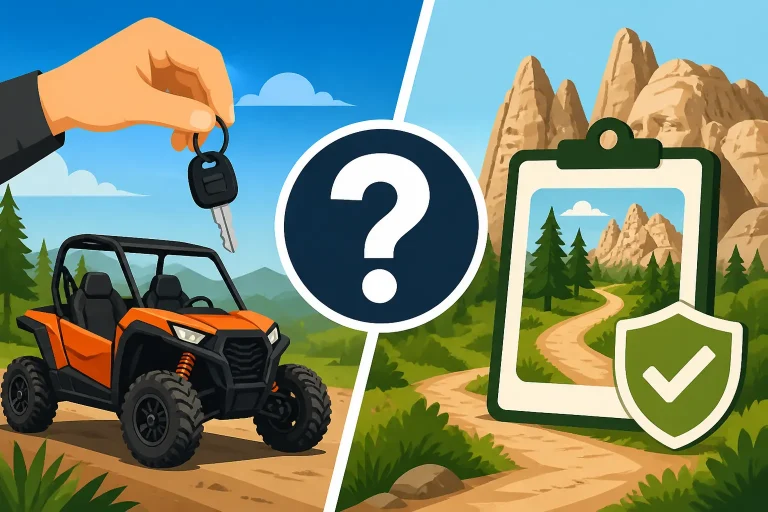
A Black Hills ride can shift from a Forest Service road to a motorized trail without much warning, and the permit rules change with the route. The key is not simply whether your ATV or UTV has a decal: you need to know what kind of route you’re on, whether it’s open to your machine, and what registration or permit applies.
First, identify what “road” means
“Black Hills road” can describe several different things: a paved public road, a gravel county road, a Forest Service road, or a route that is legally classified as a motorized trail. They may look similar on the ground, but one machine’s permission to use one type of route doesn’t automatically carry over to another.
On an ordinary public road, the central question is whether the ATV or UTV is properly registered or plated for road use and meets the applicable road-use requirements. A Black Hills motorized trail permit is not a road-registration substitute, and having a trail decal does not make a machine street legal. For road equipment and plate eligibility, see South Dakota Street Legal ATV Requirements.
A Forest Service road is a different case. Some roads are open to motorized vehicles, while others are restricted or closed to certain vehicle types. A route’s location in the Black Hills National Forest does not, by itself, mean you can ride it. Check the current Forest Service motor vehicle use map and posted signs before setting out. A road shown as open may still have limits on vehicle class, width, or seasonal access.
A designated motorized trail is not simply a narrow road. Trail access has its own permit requirement, even when the machine is plated. This is the distinction behind Do You Need a Permit on a Black Hills Trail? A valid road plate and a trail permit solve different problems.
| Route type | What to check | What a trail permit does |
|---|---|---|
| Public paved or gravel road | Road registration, road-use eligibility, equipment, and local rules | Does not make an otherwise ineligible machine road legal |
| Forest Service road | Whether the route is open to your machine, plus applicable registration or permit requirements | Does not authorize travel on a closed road |
| Designated motorized trail | Trail access, machine-width limits, seasonal closures, and required decal | Required for trail use; a plate alone does not replace it |
| Private road or ranch route | The owner’s permission and any applicable access conditions | Does not grant permission to cross private land |
When you’re unsure which category a route falls into, pause and check the map or sign rather than relying on its appearance. A wide, well-maintained dirt route might still be a designated trail; a rough gravel route might be a road with different access rules.
When the Black Hills trail permit applies
South Dakota’s motorized trail permit is for riding on designated motorized trails covered by the permit program. If your route includes one of those trails, plan on needing the decal even if your ATV or UTV already has a plate. A plate can matter for road use, but it does not generally take the place of the trail permit on a designated trail. See Why a Plate Does Not Replace a Trail Permit.
The practical challenge is that a ride can combine route types. You might leave a staging area on a road, turn onto a motorized trail, and later use another road to reach a different section. The permit requirement follows the route, not the length of your ride or the machine’s registration status. If any part of your planned ride uses a designated trail, make sure the machine has the required permit before you enter that section.
Keep these points in mind:
- A trail permit is for the machine, not for each person riding it. Each machine that needs a permit must have its own decal.
- An out-of-state plate does not automatically exempt a machine from the trail permit requirement.
- A permit decal does not authorize riding outside open routes or outside a trail’s permitted vehicle-width category.
- A decal is not a substitute for checking closures, signs, or other land-use restrictions.
- If you rent, ask the outfitter whether the machine already has the required permit. Do not assume it is included just because the machine is ready to ride.
The decal requirement is separate from the machine’s road status. For more detail on how those rules fit together, read Why a Road Needs a Plate or a Permit and Why South Dakota Honors Only a Plated Machine.
Out-of-state plates and permit reciprocity
Visitors often ask whether a plate from their home state means they can skip South Dakota’s requirements. The answer depends on where they plan to ride. Out-of-state registration may be relevant to legal travel on roads, but it should not be treated as an automatic exemption from the Black Hills motorized trail permit.
Think of these as two separate checks:
- Road access: Is the machine properly registered for road use, and is it allowed on this particular road?
- Trail access: Does the route require a South Dakota motorized trail permit, regardless of where the machine is registered?
A machine that passes the first check can still need the trail permit for the second. Likewise, holding a trail permit does not automatically satisfy road-registration requirements. For visitors, Out-of-State Plates on South Dakota Roads explains the road-use question, while Does South Dakota Honor Out-of-State Registration? addresses the wider reciprocity issue.
Be careful not to confuse the motorized trail permit with a separate nonresident ORV permit or title-related paperwork. Similar names can refer to different requirements and purposes. If you are bringing a machine into South Dakota, confirm which paperwork applies to your situation rather than assuming that one permit covers registration, road use, and trail access.
A useful way to prepare is to list the roads and trails in your planned loop, then verify each route on the current map. If a route changes designation, crosses onto a different type of land, or has a closure notice, the access rules may change too. For Forest Service routes, use the current motor vehicle use map rather than relying on an old screenshot, a general recreation map, or a line on a navigation app.
A practical pre-ride check
A few minutes of checking before unloading can prevent a wrong turn from becoming a citation or an unsafe ride. Use this sequence:
- Mark the route. Identify whether each segment is a public road, Forest Service road, designated motorized trail, or private route.
- Check current access information. Confirm the route is open for your machine type and width. Look for seasonal dates, temporary closures, and posted restrictions.
- Confirm road status. If you plan to use a public road, verify that the machine is eligible and properly registered for that use. Do not rely on the trail decal to establish road legality.
- Confirm trail-permit coverage. If the ride enters a designated motorized trail, make sure each machine has the required permit and that the decal is properly displayed.
- Ask about uncertain routes. If a map, sign, or route description is unclear, check with the relevant land manager or local authority before riding it.
If you are trailering a machine, do this before the ride rather than at the trail entrance. A route that looks like a road on a phone map may be a trail with a permit requirement, and a road that appears open may have restrictions that are easy to miss at speed. Keep the permit and registration documents accessible, but remember that paperwork does not override a closure or authorize travel on a route that is not open to your machine.
The short answer is: you do not need the trail permit merely because a route is called a road, but you should not assume that a road is exempt from all permits or access rules. Road legality depends on the route and the machine; designated motorized trails have a separate permit requirement. Verify the route classification and current restrictions before you ride.
Disclaimer
This article is for general informational purposes only and does not constitute professional advice. Laws, prices and regulations vary by location and change over time. Consult a qualified professional for guidance on your specific situation.