South Dakota Rules for a Visiting Rider
A visiting rider can bring an ATV or UTV into South Dakota and still run into rules that depend on where the machine is ridden. A plate, a trail permit and permission to use a route are different things. Sort those out before you unload, especially if your trip includes both public roads and Black Hills trails.
Start With Where You Plan to Ride
South Dakota does not have one permission that covers every place an ATV or UTV might go. The rules can change between a public road, a designated trail, a state recreation area, federal land and private property. Before a trip, list the places you expect to ride and check each one’s requirements.
The Black Hills are a common destination, but “riding in the Black Hills” can mean very different things. A route may be a public road, a Forest Service road or a designated motorized trail. A machine that may use one route is not automatically allowed on another. Check the land manager’s current map and notices rather than relying on a general map app or an old route description.
For motorized trails in the Black Hills National Forest, check the current trail permit rules before leaving home. A vehicle’s home-state registration and the forest trail permit serve different purposes. A plate may satisfy a road-use requirement without replacing a permit needed on a designated trail. See South Dakota Rules for Riding Federal Land and Do You Need a Permit on a Black Hills Trail? for the distinction.
A state or federal recreation area may have its own rules, too. Riding in a permitted area does not mean you can ride off the signed routes, cross a closed section or assume that nearby land has the same access rules. Respect gates and closure signs, and check for temporary restrictions caused by weather, fire danger or maintenance.
Private land is a separate matter. A public road or trail running near a ranch does not grant permission to ride across the ranch. Get the landowner’s permission before entering private ground, including when a route appears to connect with a public access point. [South Dakota Landowner Permission Requirements] explains why access should be confirmed directly.
| Where you ride | What to check before unloading |
|---|---|
| Public road | Whether the machine and its home-state credentials qualify for that road, plus South Dakota road-use rules |
| Designated Black Hills motorized trail | Current trail opening, allowed machine width and required trail permit |
| Federal or state recreation area | The managing agency’s access, route and permit rules |
| Private property | Permission from the landowner |
| A route with unclear status | The land manager’s map or office before riding |
Check Your Home-State Plate and Registration
A visiting rider should not assume that an ATV or UTV is road-legal in South Dakota just because it has a plate in another state. Equally, do not assume the plate has no value: valid home-state registration may matter when operating on roads. The key is to confirm what South Dakota recognizes and where that recognition applies.
First, identify what the plate represents. Some states issue road-use plates; others register an off-road vehicle for limited purposes, or issue a decal that is not a road plate. Carry the registration card or other proof that explains the credential. If the plate is temporary, recently issued or tied to a particular use, carry the paperwork that shows it is valid.
Then check the route. A plate does not grant blanket access to every public road, right of way or trail. South Dakota has specific rules for ATV and UTV road use, including restrictions that can depend on the road, the machine and the type of use. Riding South Dakota With an Out-of-State Plate and Does South Dakota Honor Out-of-State Registration? are useful starting points, but confirm details with the relevant state or land agency before relying on them.
Also distinguish road credentials from trail access. A plated machine may be treated differently from an unplated one for some road or permit purposes, but that does not establish that it can use a particular trail. Check the rules for the exact route you intend to ride. Why South Dakota Honors Only a Plated Machine covers why the type of credential can matter.
Keep the original registration documents with the machine or in a secure place where you can produce them. A photo can be handy as a backup, but do not count on it being accepted wherever an original document is requested. If the machine is borrowed, rented or owned by someone else in your group, make sure the operator has the documents and permission needed to use it.
Do not confuse permits with title paperwork
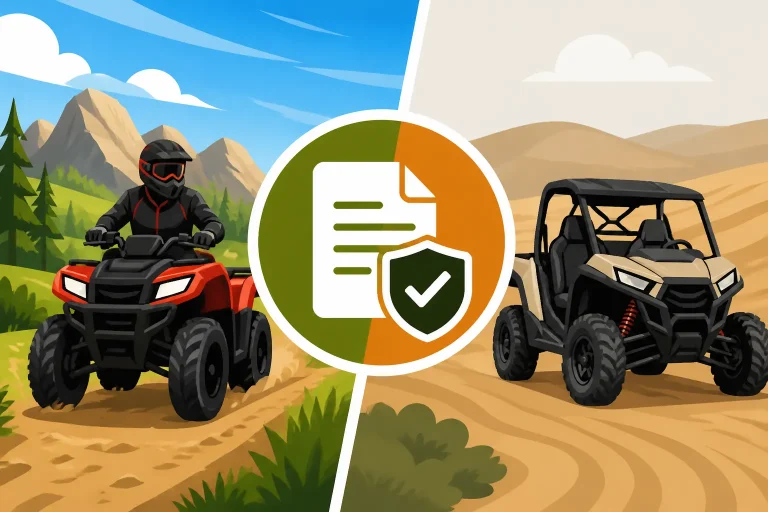
South Dakota has more than one permit-related topic, and similar names can cause confusion. A nonresident ORV permit or a nonresident title and registration issue is not necessarily the same thing as a visitor’s trail permit. The fact that a permit exists does not prove that every visiting rider must obtain it, nor does a trail permit make a machine street legal.
If you are trying to determine whether a particular nonresident permit applies to your situation, identify the activity it covers and the issuing agency. South Dakota’s Nonresident ORV Permit discusses a separate state process. For a recreational trip, separately check the permit requirements of the land where you plan to ride.
Understand the Black Hills Trail Permit
A Black Hills motorized trail permit is about riding on the trail system, not simply bringing an ATV or UTV into South Dakota. Check the current rules for which machines need a permit, whether a road plate affects the requirement and how the permit must be displayed. Requirements and fees can change, so use current information from the issuing authority rather than an old receipt or a friend’s previous-season advice.
Think of a permit as applying to a machine and its authorized use, not as a pass for every person in a group. If several machines are traveling together, check whether each one needs its own permit. A rider should not assume one permit covers the whole group or that a permit attached to a rental machine can be moved to another vehicle.
If you are buying a permit before arrival, confirm when it becomes valid, which land it covers and whether it must be physically displayed. Some permits are issued as decals rather than print-at-home documents. Mailing time can also affect trip planning. If you are close to departure, check whether an authorized in-person purchase option is available and whether the seller has permits in stock. Where to Buy a Black Hills Trail Permit and Black Hills Trail Permit Decal Placement address those practical details.
A permit is not permission to ride a closed route. Before each ride, check the current map and closure notices. Seasonal opening dates, weather, fire restrictions and maintenance can affect access. If the route is not clearly marked open, pause and verify its status instead of following tracks left by another vehicle.
A trail permit also does not replace the machine’s registration or legal equipment where those are required. Nor does it authorize off-route riding, private-land access or use of a route limited by width. Measure the machine the way the managing agency specifies, particularly if you are bringing a wide side-by-side. South Dakota Trail Width Limits explains why the measurement can determine which routes are available.
Prepare the Machine and Documents Before You Go
A little document preparation can prevent a frustrating stop at a trailhead or roadside. Keep the machine’s registration and any permit information together, and make sure the vehicle identification number on the machine matches the paperwork. If a machine is rented, ask the outfitter which permits and documents are included and which are the renter’s responsibility. Do not assume the rental company’s decal covers every area or every kind of use.
Before departing, check the following:
- Confirm the route type. Determine whether each planned segment is a public road, forest road, designated trail, recreation area route or private road.
- Verify the machine’s credentials. Check that the plate or registration is current and that the paperwork identifies the machine and its authorized use.
- Check permit rules by land manager. Confirm the current permit requirement for the specific trails and areas on your itinerary.
- Review route restrictions. Check opening dates, width limits, closures and any rules that apply to the route.
- Check road-use requirements. Do not treat a trail permit as a road license. Verify applicable equipment and operating rules before using a public road.
- Carry proof of permission. If you will ride private property, get permission from the landowner and keep any written confirmation accessible.
- Recheck before riding. Conditions and closures can change after you make plans, so check notices shortly before heading out.
For road use, a plate alone may not settle every question. The machine may need to meet applicable equipment requirements, and the route may have restrictions even when the vehicle is otherwise eligible. A trail permit does not make an ATV or UTV street legal, and registration does not override a posted closure. Review South Dakota Street Legal ATV Requirements and South Dakota Rules for Riding a Highway Shoulder if your planned route includes roads or rights of way.
For a trip focused on designated trails, make the permit and route checks before you tow. For a mixed trip, treat road legality and trail access as separate checks. That approach is more reliable than relying on a single plate, decal or assumption to cover the whole itinerary.
Disclaimer
This article is for general informational purposes only and does not constitute professional advice. Laws, prices and regulations vary by location and change over time. Consult a qualified professional for guidance on your specific situation.