South Dakota Fines for No Trail Permit
A missing trail permit can turn a ride into a costly interruption, but the rule does not apply to every road, trail or piece of private land in the same way. The key is knowing where a permit is required, whether your plate changes anything, and what to do if you realize the decal is missing.
When a South Dakota Trail Permit Is Required
South Dakota’s motorized trail permit is associated with riding designated motorized trails in the Black Hills. It is not a universal permit for every place an ATV or UTV can go in the state. A road, a trail, a state recreation area and private ground can each have different access rules, so check the requirements for the specific route before unloading.
On a designated motorized trail where the permit is required, each machine needs its own valid permit. The permit is attached to the machine as a decal; it is not a pass that one rider can use for several ATVs or UTVs. A passenger does not need a separate decal for the same machine, but a second machine does. For an overview of what the permit covers, see How the Black Hills Motorized Trail Permit Works.
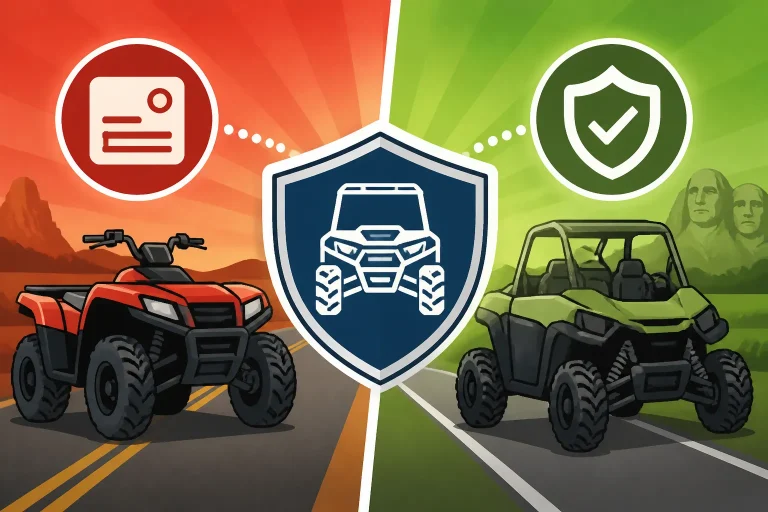
Do not assume that a vehicle’s registration or plate replaces the trail permit. A plate can matter for road use, but it is not automatically a substitute for the required trail decal. Likewise, a visitor’s out-of-state registration may not satisfy the trail-permit requirement. These are separate issues: a machine may need to meet road-use rules and still need the permit to ride a designated trail. Why a Plate Does Not Replace a Trail Permit explains that distinction, and Does South Dakota Honor Out-of-State Registration? covers the separate question of out-of-state credentials.
| Where you plan to ride | What to check | Why it matters |
|---|---|---|
| Designated motorized trail in the Black Hills | Whether the trail requires the motorized trail permit and whether the decal is mounted correctly | A plate or registration may not replace the trail permit |
| Forest road | Whether the route is open to your type of machine and whether it requires a plate or permit | Road rules can differ from trail rules |
| Private property | The landowner’s permission and any conditions they set | Public trail-permit rules do not grant access to private land |
| State or other managed recreation area | That area’s own access and vehicle rules | A trail permit may not cover every separate park or area requirement |
| Route shown on an old map or app | Current closures, signs and route status | A permit does not authorize riding on a closed or restricted route |
The word “trail” can be misleading on a map. Some routes may be roads, some may be designated motorized trails, and some may be closed to motorized use. A valid decal does not give permission to ride off-route, past a closure sign or through land where access is prohibited. Check the current map and signs at the trailhead, and review [South Dakota Rules for Riding Off a Route] if your planned route leaves a marked corridor.
A useful starting point is Do You Need a Permit on a Black Hills Trail?. If your trip includes both roads and trails, do not treat one credential as covering the whole ride. Confirm requirements for each type of route, including any separate requirements that apply to riding on roads.
What Can Happen if You Ride Without One
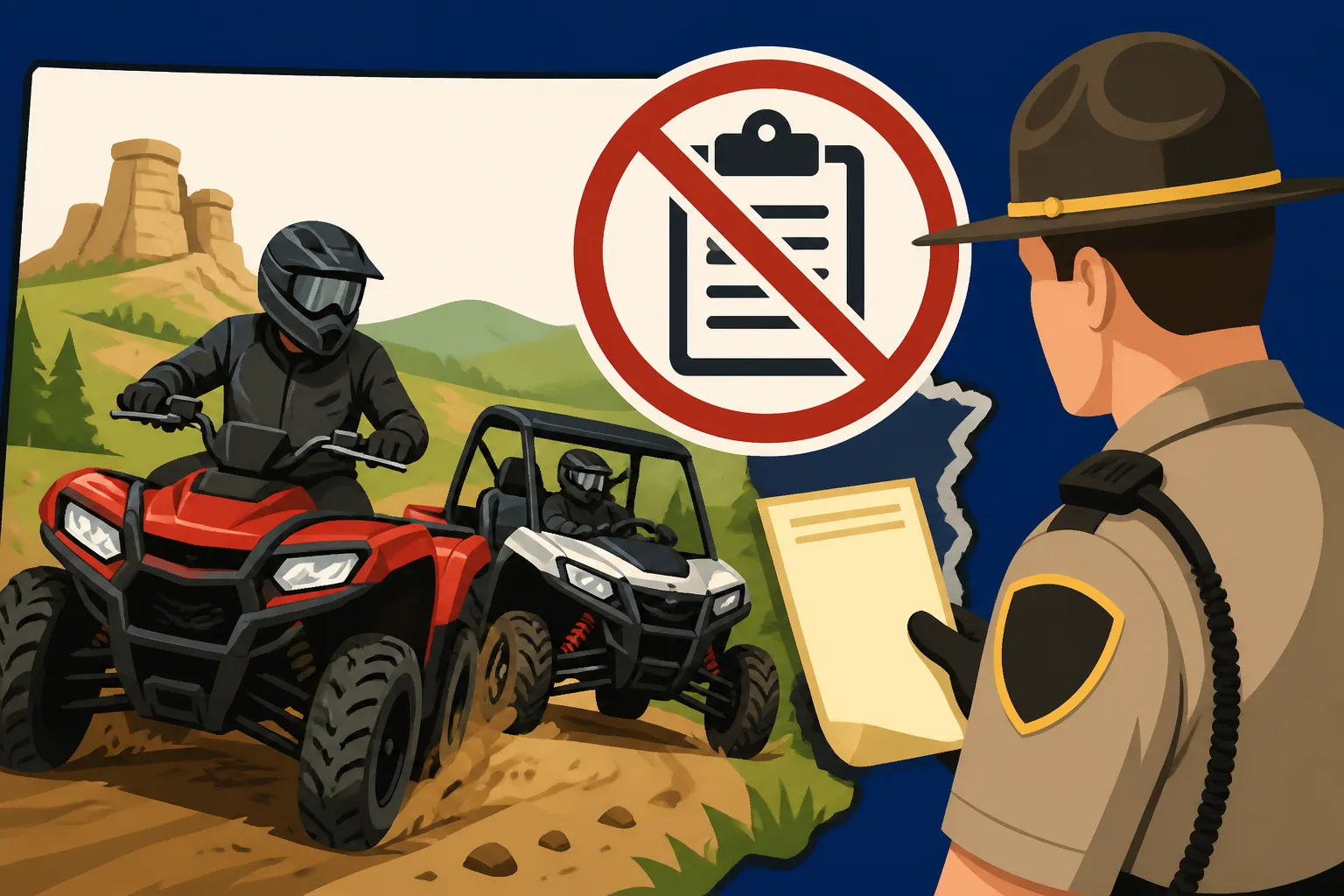
Riding a trail that requires a permit without displaying a valid one can lead to an enforcement contact and a citation. The exact fine is not safe to assume from a general rule of thumb. The amount and consequences can depend on the applicable rule, the enforcement authority, the circumstances of the stop and any court-related costs. Check current official information rather than relying on a figure from an old forum post, a friend’s recollection or a rental listing.
A citation is not the only practical cost. An officer or land manager may require you to stop riding until the permit issue is resolved, which can disrupt a day’s route or a group outing. If the ride involves several machines and only some have permits, the group may need to split up or change plans. A late start, a long trip to a permit seller or a closed sales location can make the fix harder than arranging the decal before leaving home.
The permit question can also sit alongside other violations. A decal does not make a closed trail open, excuse riding off the designated route or resolve a separate registration or equipment issue. If a machine is on a road, the relevant road-use requirements still matter. Think of the permit as one part of being authorized to ride, not as an all-purpose pass.
If you receive a citation, read it carefully and follow the instructions and deadlines printed on it. Do not assume that buying a permit afterward automatically cancels a citation. Keep any proof of purchase, registration documents, photos of the machine and decal, and notes about where the stop occurred. If the citation is unclear or you are considering contesting it, ask the issuing authority or a qualified local professional about the proper process.
For a closer look at possible consequences, see South Dakota Fines for Riding Without a Permit. Because enforcement and penalty information can change, confirm the current rule with the relevant land manager or official agency before relying on a particular amount.
Plates, Visitors and Areas Where the Rule Differs
A common source of confusion is treating “registered,” “plated” and “permitted” as interchangeable. They are not necessarily the same thing. Registration or a plate concerns the machine’s legal status for certain types of use; a motorized trail permit concerns access to a particular trail system. A machine may need both, depending on where it is ridden and how it is being used.
This matters especially for visitors. An out-of-state plate should not be treated as proof that a South Dakota trail permit is unnecessary. Check the permit requirement for the destination even if the machine is fully registered at home. If the trip includes riding on roads as well as trails, check the road rules separately. Out-of-State Plates on South Dakota Roads is useful for the road side of that question.
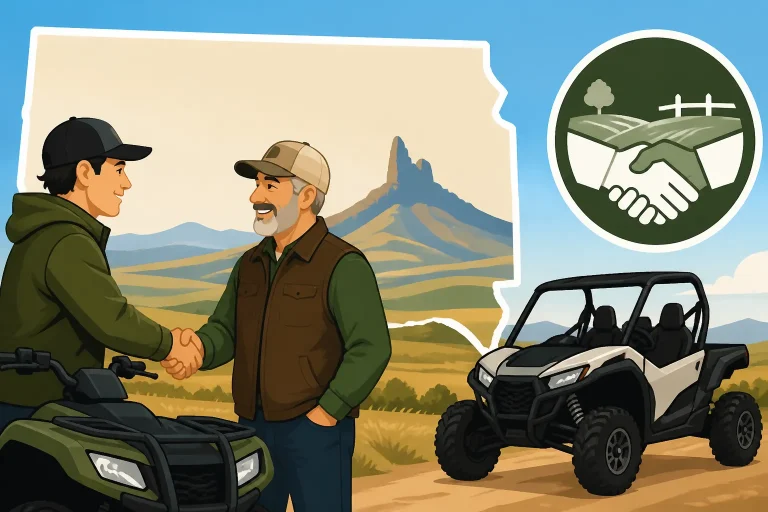
Renters should ask the outfitter directly whether the machine has a valid trail permit and whether the decal is already attached. Do not assume the rental price includes every credential needed for every route. Confirm which areas the rental company authorizes, and follow any limits in its agreement. The permit for one machine does not cover another machine in the group.
The rule can also differ away from designated motorized trails. Private land access depends on permission from the landowner. Some managed areas have their own requirements, and a permit for one trail system may not count as an entrance pass or authorize use elsewhere. A route may also be temporarily closed even though the trail system generally allows motorized riding. Before your trip, check both the permit rules and the current route status.
| Situation | Do not assume | Safer approach |
|---|---|---|
| Your ATV has a home-state plate | That the plate replaces a South Dakota trail permit | Check the destination’s permit rule and road-use requirements separately |
| You are renting a UTV | That the permit is included or covers every route | Ask the rental provider what is included and where the machine may be ridden |
| You have a permit for one machine | That it covers the other machines in your group | Confirm that every machine has its own required decal |
| A route appears on a map | That it is open and legal for your machine today | Check current maps, closure notices and signs |
| You have permission to ride private ground | That public-trail permit rules are the only rules that matter | Follow the landowner’s conditions and verify any applicable local requirements |
If you are unsure which category a route falls into, identify the exact trail or road name and contact the managing agency before riding. General advice about “the Black Hills” may not resolve a question about a particular route, because permitted use and closures can vary by location. South Dakota Trail Maps and MVUMs can help with route planning, but a map should be read alongside current notices and on-the-ground signs.
How to Avoid a No-Permit Problem
The most dependable fix is to settle the permit question before the machine reaches the trailhead. Check whether the specific route requires a permit, obtain the required decal through an authorized seller, and make sure it is attached as instructed. Information about sellers and purchase options is available in Where South Dakota Trail Permits Are Sold.
Use this checklist before your ride:
- Name the route. Identify the trail system and the specific route you intend to use. Avoid relying only on a town name or a broad “Black Hills” destination.
- Check current access. Confirm that the route is open to your machine and that no temporary closure or restriction applies.
- Confirm the permit rule. Find out whether the route requires a motorized trail permit and whether any separate road or area credential applies.
- Arrange one permit for each machine. Do not count on a group permit or a friend’s decal covering additional machines.
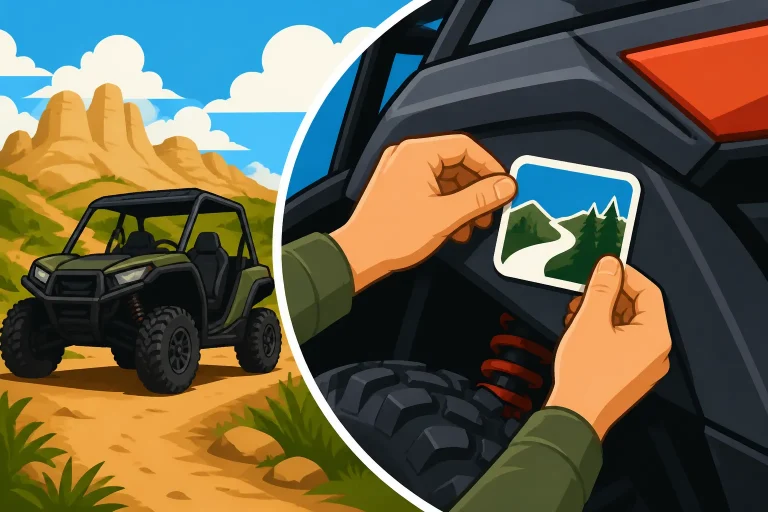
- Mount the decal correctly. Follow the current placement instructions and keep it visible as required. A receipt may be useful proof of purchase, but do not assume it replaces a required decal on the machine.
- Ask early if you are renting. Confirm whether the permit is included, attached and valid for the planned route before booking or picking up the machine.
- Carry useful documents. Keep purchase confirmation and relevant registration paperwork accessible, while remembering that documentation does not authorize use of a closed route.
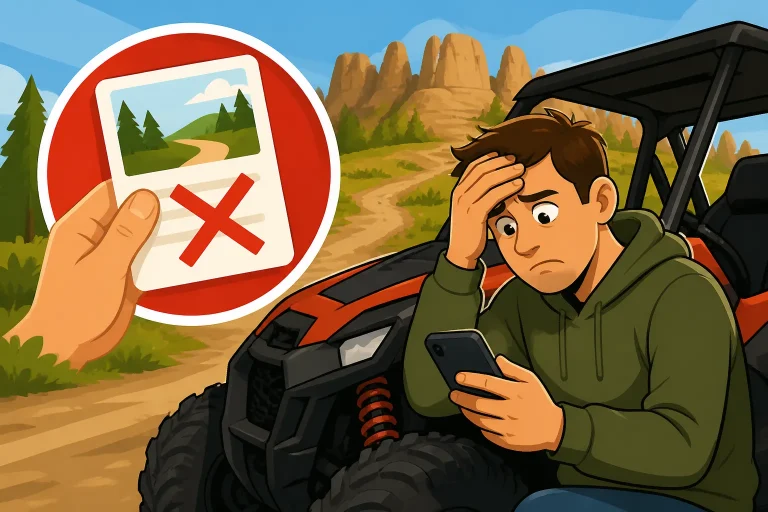
If you arrive at the trailhead and notice that the permit is missing, do not start riding a route that requires it and hope to sort it out later. Check whether an authorized seller is open or contact the relevant agency for current instructions. If you discover the problem after riding, stop and find out what steps are available; purchasing a permit after the fact does not guarantee that any citation or enforcement issue will disappear.
If the decal is lost, damaged or stuck somewhere that makes it hard to see, do not assume that a photo or a purchase receipt is enough. Ask the permit provider or managing agency how to replace it or confirm compliance. For the situation where the permit was purchased but left behind, What Happens If You Leave Your Permit at Home offers a useful related explanation.
The main takeaway is straightforward: the permit requirement depends on where you ride, but a plate, an out-of-state registration or a rental agreement should not be assumed to replace a required trail decal. Confirm the exact route, check current conditions and make sure every machine is properly permitted before setting out.
Disclaimer
This article is for general informational purposes only and does not constitute professional advice. Laws, prices and regulations vary by location and change over time. Consult a qualified professional for guidance on your specific situation.