Who You Ask Before Riding a Grazing Lease
A grazing lease can make a South Dakota riding map look deceptively simple: the land is open, but it may be managed by an agency, leased for livestock, or privately owned. The person whose cattle are there may not control public access, and agency permission may not cover every route. Here’s how to identify whom to ask before unloading your ATV or UTV.
First identify who controls the land and the route
A grazing lease is an agreement allowing someone to use land for livestock. It does not, by itself, tell you whether motorized recreation is allowed or who can authorize it. The answer depends on the land’s ownership, the lease terms and the rules for the route you want to ride.
Start by finding out whether the ground is private, state-managed or federal. Then identify the specific road or trail—not just the general area. A route can cross more than one parcel or management boundary, and permission for one part does not necessarily cover the next.
If the land is private
Contact the landowner, or a person the owner has authorized to grant access. A ranch employee or grazing tenant may be able to help you reach the owner, but do not assume that the tenant can approve ATV or UTV use. A lease for grazing does not automatically grant authority to invite riders onto the property.
Ask directly who can give permission for motorized riding and whether it covers the route, dates and machines in your plan. For more on permission for privately owned land, see South Dakota Landowner Permission Requirements and South Dakota Rules for Riding Private Property.
If a rancher says the land is leased, ask who owns it and who controls recreational access. If you cannot confirm that the person giving permission has authority, pause and contact the owner. A friendly verbal invitation can still leave you uncertain about the boundaries or conditions of access.
If an agency manages the land
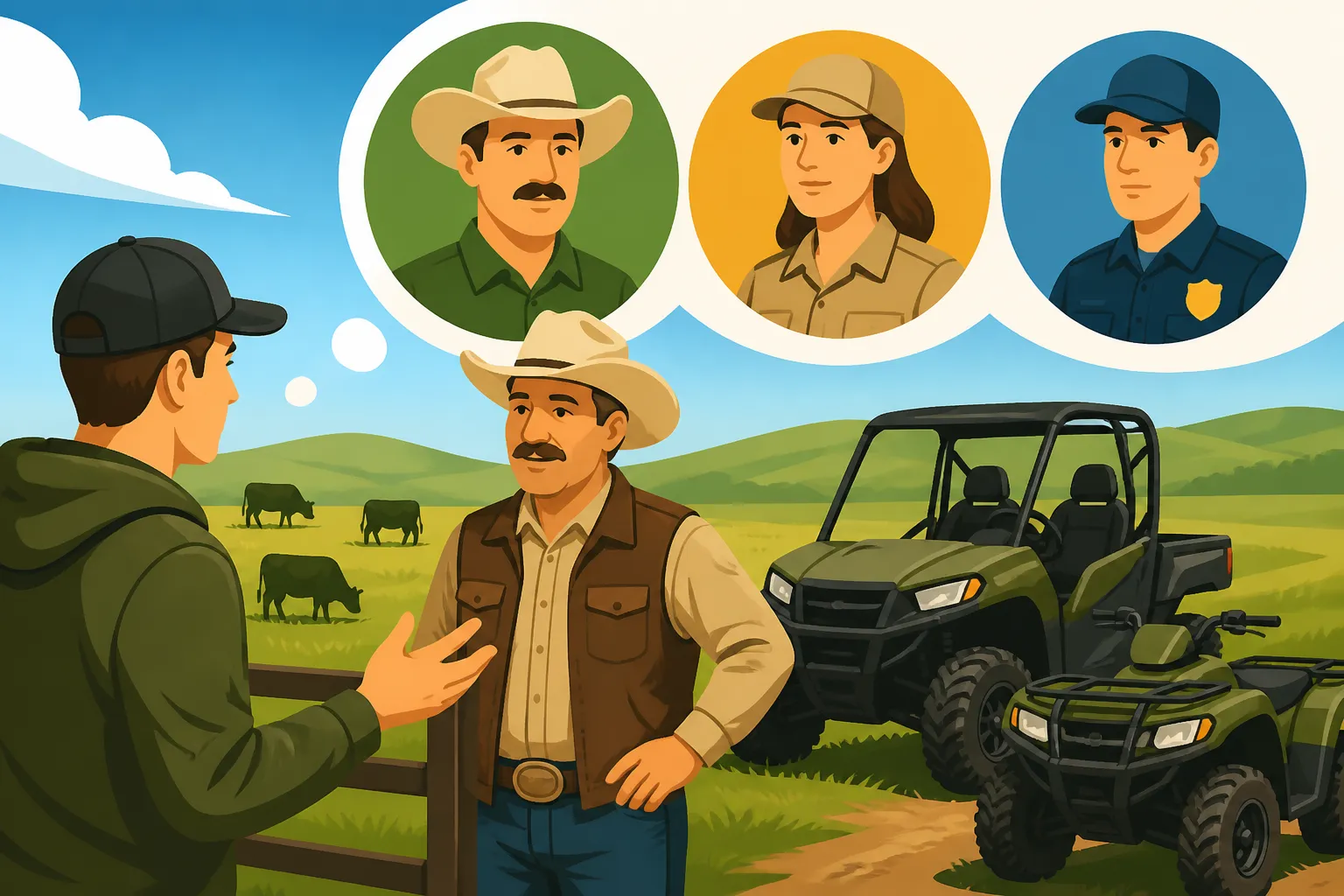
On public land, contact the agency responsible for that particular parcel or route. The grazing permittee may know where livestock are, which gates should remain closed, or where riders create problems, but that person may not have authority to change public land rules or approve a route that is otherwise closed.
Ask the agency whether motorized riding is allowed on the exact route, whether seasonal or temporary closures apply, and whether the grazing lease adds conditions. For broader context on land-management rules, see South Dakota Rules for Riding Federal Land and South Dakota Rules for Riding a Wildlife Area.
A map, online listing or trail sign can be useful, but it may not reflect a temporary closure, a boundary change or a route restriction. If the map and what you see on the ground do not match, don’t guess. Contact the land manager before riding farther.
If you are unsure who manages it
Use the parcel or trail location to ask the relevant public office which agency or owner has jurisdiction. If you have a map pin, route name, nearby road, and the starting and ending points, provide those details. “Can I ride around this ranch?” is much harder to answer than “Is this numbered route open to an ATV from this access point to this road?”
A county office may help identify local contacts or boundaries, but don’t treat a general answer about an area as permission to ride a specific track. The goal is to identify both the person who controls access and the rules that apply to the route.
What to ask before you ride
Be specific and describe your plan plainly. Explain that you want to ride an ATV or UTV, where you plan to enter, which roads or trails you intend to use, and when you expect to be there. Ask whether your machine’s width or type affects which routes you may use.
A useful conversation covers more than “Is the land open?” Ask:
- Who has authority to approve this ride: the landowner, the leaseholder, a managing agency or someone else?
- Is motorized riding allowed on the exact route I’m considering?
- Are there boundaries, gates, or connecting sections where I need separate permission?
- Are there dates, hours, seasonal closures or temporary restrictions to know about?
- Do I need to stay on a marked route, and are there any posted signs I should follow?
- Are there livestock or ranch operations that affect when or where I can ride?
- What should I do if I encounter cattle, a closed gate, a damaged fence or a new closure?
- Does the permission apply to every rider in my group and to both ATVs and UTVs?
This is also the time to ask how permission should be documented. A text or email confirming the route and conditions can prevent misunderstandings later. If permission is given verbally, repeat the key details back and ask whether the person can send a short written confirmation.
| Land or route situation | Who to contact first | What to confirm |
|---|---|---|
| Private ranch or pasture | Landowner or authorized representative | That the person can approve riding, and exactly where and when access is allowed |
| Public land under an agency | Managing agency or office responsible for the parcel | Whether the route is open to motorized use and whether closures or lease conditions apply |
| Grazing lease on public land | Managing agency; contact the permittee for livestock or on-the-ground concerns as directed | Who controls recreation access, route rules, gates and livestock precautions |
| Route crossing several parcels | Each owner or manager with authority over a segment | Permission and rules for every section, including the exit |
| Unclear boundary or conflicting information | Relevant land manager or owner before proceeding | Which parcel you are on and whether the proposed route is authorized |
A grazing permittee is often a valuable source of practical information, especially when cattle are in the area. You can ask where livestock are being moved, whether a gate is used for active operations, or whether a particular time would disrupt ranch work. But treat those questions separately from the formal question of access authority.
For private land, written permission should come from the owner or someone clearly authorized to provide it. Written Permission From a South Dakota Ranch Owner offers a useful way to think about keeping that approval clear. If the route goes beyond private property onto public land, permission from the rancher does not replace the public land manager’s rules.
Keep access permission separate from riding requirements
Permission to enter land is only one part of a legal and responsible ride. It does not automatically make a closed route open, authorize riding off the route, or replace any permit that applies to the area. Likewise, having a permit does not grant permission to cross private land.
Before departure, check the requirements for the land and route, not just the machine. South Dakota Trail Permits Explained can help you understand why a trail permit and land access are separate questions. For federal ground, confirm that the route itself is open and that your intended use is allowed. South Dakota Rules for Riding Off a Route is relevant when a route seems to end or an informal track appears to offer a shortcut.
Don’t rely on the grazing lease as a shortcut to permission
A common mistake is to see livestock, a ranch gate or a grazing lease and assume that the person tending the cattle can authorize any kind of recreation. The opposite assumption can also cause trouble: seeing public land and assuming every road across it is open to motorized use.
Instead, ask who manages the land and who has authority over recreational access. A leaseholder may have responsibilities for livestock without having the power to open a closed public route. On private land, a tenant may have permission to manage grazing but not to invite riders. The right contact depends on the arrangement, so verify rather than infer.
If the land manager directs you to speak with a permittee or local operator, ask whether that person is providing practical coordination or formal access approval. If the answer remains unclear, follow up with the manager and describe exactly what you were told.
Treat gates, cattle and posted signs carefully
Never assume an open gate means public access is allowed. It may be open for ranch work, livestock movement or another authorized use. If you have permission to ride and encounter a gate, follow the instructions you were given; when no instructions are clear, stop and ask. Do not leave a gate open behind you unless you have been explicitly told to do so.
Give livestock room and avoid driving through a herd. Keep your speed controlled, do not chase or crowd animals, and make room for ranch vehicles. If cattle are blocking the route, wait for a safe opportunity or turn back rather than pushing through. Report damaged fences or other problems to the contact who granted access or the managing agency.
Follow signs and barriers, including ones that appear after you received permission. Conditions can change, and an access invitation does not necessarily override a closure or a posted restriction. If a sign conflicts with what someone told you earlier, stop and get clarification before continuing.
Make a simple record of the answer
Before you ride, save the name and contact information of the person or office you spoke with. Keep any written permission and note the route, date, machine type and conditions. Share those details with everyone in your group so one rider does not assume that access extends somewhere the rest of the group has not been authorized to go.
A clear record is especially helpful when a route crosses more than one property or management area. If permission covers only one section, mark where it ends and plan a route that stays within the approved area. For a private ranch route, South Dakota Rules for Riding a Ranch Road may also help you distinguish access to a ranch road from permission to ride elsewhere on the property.
If you cannot get a clear answer, choose a route whose access rules you can verify. It is better to change the plan than to rely on a grazing lease, an old map, or an informal invitation that may not cover the ground you intend to ride.
Disclaimer
This article is for general informational purposes only and does not constitute professional advice. Laws, prices and regulations vary by location and change over time. Consult a qualified professional for guidance on your specific situation.