South Dakota Rules for Riding a Wildlife Area
A wildlife area may look like open country, but that does not mean an ATV or UTV can go wherever its tires fit. In South Dakota, the key questions are who manages the land, which routes are open to motor vehicles, and what permits apply to your machine. Here’s how to check those details before you ride and avoid mistaking a riding permit for permission to enter.
Start With the Land, Not the Machine
“Wildlife area” can describe land managed for wildlife and public recreation, but it does not automatically mean the same thing as a motorized riding area. South Dakota Game, Fish and Parks (GFP) manages many public lands for purposes such as wildlife habitat, hunting, and outdoor access. The rules for a particular property can limit motorized travel even when the land is open to visitors.
The practical starting point is to identify the exact parcel and its manager. A wildlife area may be state-managed, while nearby land could be federal, county, or private. Different managers can have different route rules, and a road that appears to continue across a boundary may not remain open to motor vehicles.
For GFP-managed land, check the property’s current information and signs at the entrance before unloading. Confirm whether motor vehicles are allowed at all, and if so, which roads or routes may be used. Do not assume that a visible two-track, field edge, or trail is open to ATVs or UTVs. A route can be present for management, farm, or emergency use without being open for public motorized recreation.
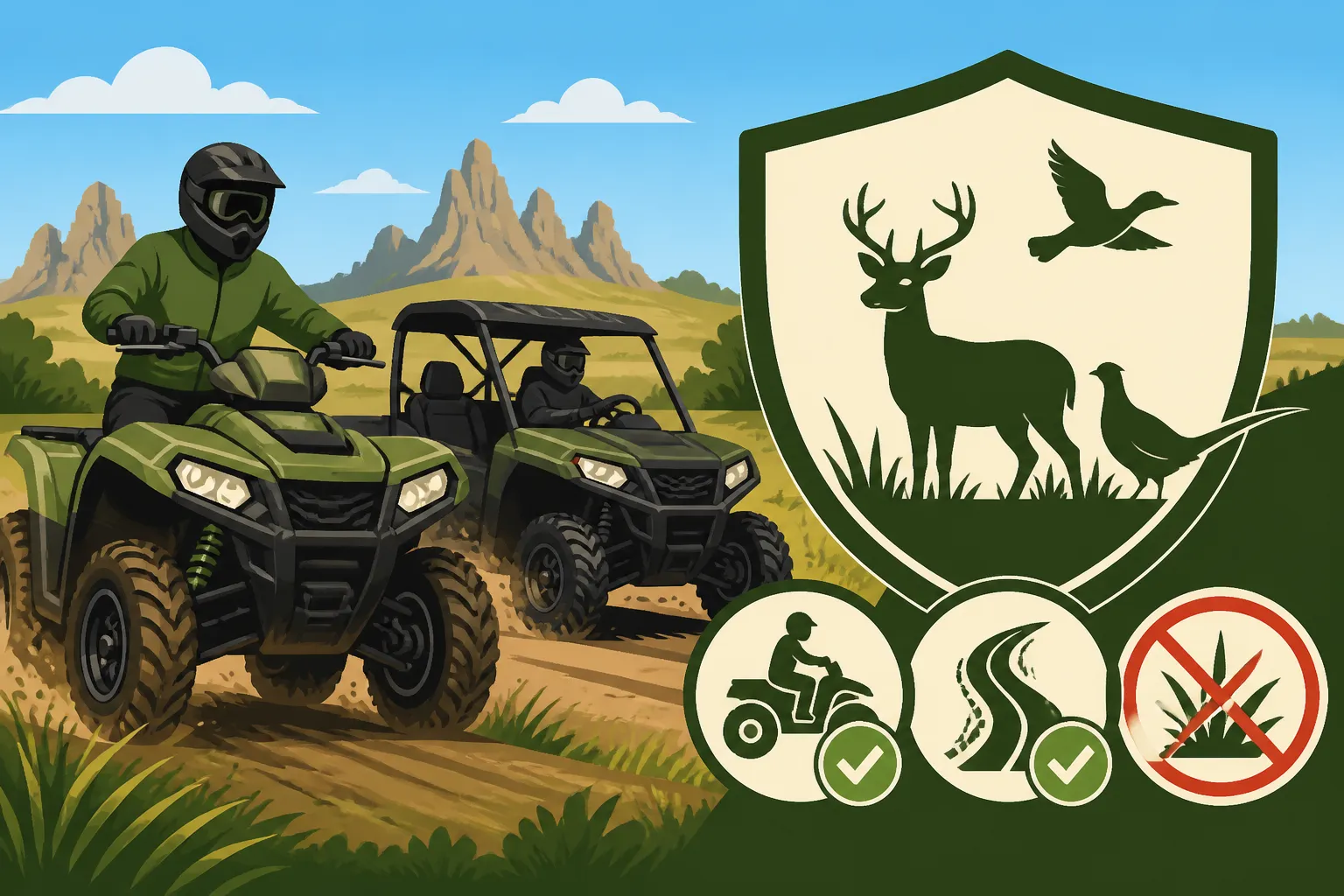
This distinction is especially important on land where the purpose is wildlife habitat. Driving off a permitted route can damage vegetation, disturb habitat, or create access problems for other visitors. Even where a vehicle may travel on an established road, that does not mean it can leave the road to reach a hunting spot, shortcut around a gate, or follow tracks made by someone else.
For a broader explanation of how public-land access differs from road riding, see South Dakota Rules for Riding GFP Land. The specific property’s posted rules still control your trip.
What a Permit or Out-of-State Plate Does and Does Not Allow
Riders often mix up two separate questions: whether the machine has the required permit or registration, and whether the land allows that machine on a particular route. Having the right paperwork does not itself open a wildlife area to motorized use.
South Dakota’s motorized trail permit applies to designated riding opportunities where that permit is required. It is not a general pass to ride on every public parcel. A trail permit, plate, or registration does not override a wildlife area’s closure, a signed route restriction, or a manager’s rules. Check South Dakota’s Motorized Trail Permit and South Dakota Nonresident ORV Permit for the permit questions that apply to your situation.
The same separation matters for visitors with machines registered or plated in another state. Reciprocity can affect whether a visiting machine is accepted for certain road or riding requirements, but it does not grant access to land that is closed to motorized travel. Confirm what your home-state plate covers and whether South Dakota requires an additional permit for the specific kind of riding you plan to do. Then check the land manager’s route rules separately.
| Question | What to verify | What it does not establish |
|---|---|---|
| Is my machine registered or permitted? | Requirements for your machine, home-state credentials, and the area where you plan to ride | That a wildlife area is open to motorized use |
| Is this wildlife area open to vehicles? | Current property rules, route map, and posted signs | That every visible track is an authorized route |
| Can I ride beyond the road? | Whether off-route travel is specifically allowed | Permission based on having a permit or plate |
| Does a route continue across a boundary? | The rules and signs for the land on the other side | Continued access based on the route’s appearance |
There are exceptions to broad assumptions about permits. For example, particular GFP riding areas may have their own access arrangements, and some areas may not require the same credentials used on designated trail systems. But an exception tied to one named riding area should not be applied to a different wildlife property. Why No Plate Is Needed Inside a GFP Area explains why requirements can differ by location; it does not turn all GFP land into an open riding area.
How to Check a Wildlife Area Before Riding
Before heading out, verify the property and route rather than relying on a general map or an old trip report. Rules and access conditions can vary between properties and can change. Use the relevant land manager’s current information, and treat entrance signs, gates, and route markers as important instructions.
A reliable check can follow this order:
- Pin down the parcel. Identify the wildlife area by its name and location. If the boundary is unclear, do not assume the neighboring road or field is part of the same property.
- Confirm who manages it. Look for the property owner or agency. A GFP area, federal forest, and private parcel may sit close together but follow different rules.
- Check the manager’s current rules. Look for vehicle restrictions, route maps, closures, and any conditions specific to that property. If the information is unclear, contact the manager before making the trip.
- Read signs at the entrance. Follow posted restrictions, gates, and route designations. A map cannot replace a sign that closes a route or marks a boundary.
- Stay on the route that is actually open. Do not drive around a gate, cross a closed area, or follow an unmarked track because it appears to lead somewhere useful.
- Check your machine’s paperwork separately. Confirm whether your registration, plate, or permit is sufficient for the type of riding and location involved.
- Recheck close to departure. Weather, land management needs, and seasonal restrictions can affect access. A route that was available on an earlier visit may not be open now.
A motorized route shown on a general map is not necessarily permission to ride every connecting track. Maps can show roads used for different purposes, and boundaries may be difficult to see on the ground. If your route crosses onto federal land or another manager’s property, check that manager’s rules too. South Dakota Rules for Riding Federal Land covers the separate access question for federal ground.
If you are unsure whether a road is open, the conservative choice is to stop and confirm rather than ride farther in. That is particularly important near a gate, a posted boundary, or a route that appears to enter a habitat area. For more on the distinction between an authorized route and off-route travel, see South Dakota Rules for Riding Off a Route.
A Practical Plan for Visitors and Local Riders
A good wildlife-area ride starts with a route that is clearly allowed, not with a machine that is ready to go. Plan a separate destination if the property does not permit the kind of riding you want. Designated motorized trails and areas intended for motorized recreation are a better fit than trying to turn wildlife access land into a riding area.
Visitors should not assume that an out-of-state registration settles every issue. Check the applicable South Dakota credential for your machine and the rules for the specific riding area. The permit and reciprocity questions are separate from the land-access question. A permit may satisfy a riding requirement where it applies, but the property manager still determines where vehicles may travel.
Local riders should take the same care. Familiarity with a road or a previous season’s access is not a substitute for current signs and closures. If you notice a new barrier or restriction, do not treat it as optional because the route was previously passable.
Before loading, make sure everyone in the group knows the planned route and boundary points. Carry a current map or reliable navigation information, but do not rely on a device to overrule a sign. If a route is closed or its status cannot be confirmed, turn around and choose an authorized alternative. Ask permission before entering private land; a public wildlife area nearby does not imply access to adjoining property. See South Dakota Landowner Permission Rules for that separate issue.
The safest summary is straightforward: confirm the land manager, verify that motorized use is allowed on the exact route, and check your machine’s paperwork independently. Wildlife access and riding access are not interchangeable. A plate or permit can help satisfy vehicle requirements, but it cannot create permission to ride where motorized travel is restricted.
Disclaimer
This article is for general informational purposes only and does not constitute professional advice. Laws, prices and regulations vary by location and change over time. Consult a qualified professional for guidance on your specific situation.