Guiding Riders for Pay in the Hills
Guiding ATV or UTV riders for pay in the Black Hills is more than leading a group down a route. The land manager may require authorization for commercial guiding, while riders and machines may need separate permits. The key is to identify who controls each part of your route and confirm the requirements before advertising trips or taking bookings.
Paid guiding can require land-manager authorization
If you take customers onto public land as part of a paid tour, do not assume that a trail permit or a business registration gives you permission to operate there. Land access and commercial use are separate issues. On federal land, a paid outfitting or guiding activity may require authorization from the land manager, even when the route itself is open to the public.
For a route on the Black Hills National Forest, contact the Forest Service office responsible for the area before you sell or lead trips. Explain what you plan to do: where you expect to ride, how often, how many customers will be in each group, whether you supply machines, and whether you will provide instruction, transportation, or other services. The agency can tell you which authorization applies and whether the activity can be accommodated in the proposed location.
The distinction matters because different activities can have different review paths. A one-time organized ride, a recurring commercial tour, and a business that rents machines may not be treated alike. A permit intended for an organized event may not authorize an ongoing guiding business. For background on that distinction, see When a Special Recreation Permit Is Needed and South Dakota Rules for an Organized Ride.
Permission to guide is also not a promise that every route will remain available. Routes can have seasonal restrictions, closures, or other conditions. A commercial authorization may limit where you can take customers, when you can operate, how large groups can be, or what kinds of services you can offer. Ask for the conditions in writing and make sure your advertising and customer itineraries match them.
Do not begin taking paid customers onto public land while an application is still under review. If approval is required, an application receipt or an informal conversation should not be treated as operating authority. Ask the land manager when you may begin, what documents must be carried, and how changes to routes or operations should be approved.
Separate the guide’s authorization from each rider’s permit
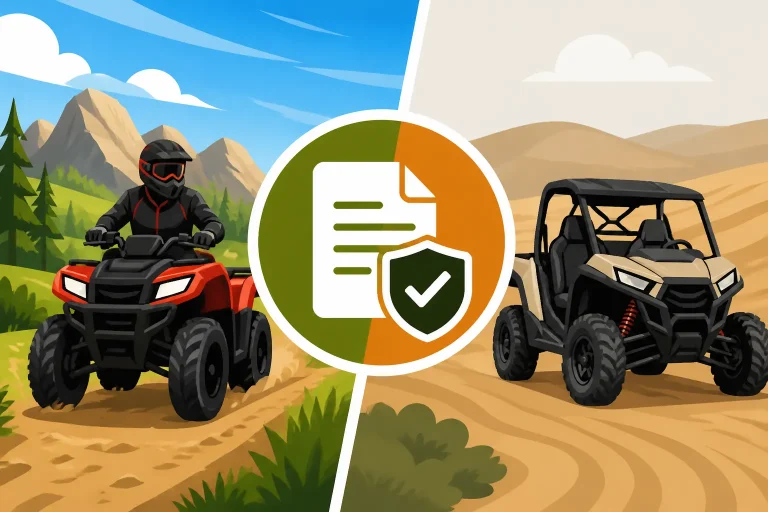
A guide’s commercial authorization, when required, covers the business activity under its stated conditions. It does not automatically satisfy every machine’s trail-access requirements. Likewise, an individual rider’s trail permit does not grant a business permission to sell guided trips on public land.
For riding on South Dakota motorized trails, check the current rules for the specific area and machine. The state trail permit system and the rules for roads or other land types are not interchangeable. A route may include several kinds of land, and the requirement can change as the group moves from one segment to another. South Dakota Trail Permits Explained provides a broader overview of the trail-permit system, while South Dakota Rules for Riding Federal Land helps frame the federal-land side of trip planning.
| Requirement | Who or what it applies to | What to confirm |
|---|---|---|
| Commercial land-use authorization | The guide or outfitting business, if required for the proposed operation | Whether paid guiding is allowed, approved routes, operating dates, group limits, and reporting conditions |
| Trail permit or decal | The machine using a trail where a permit is required | Whether each machine has the correct current permit and where it must be displayed |
| Road-use requirements | A machine and rider using a road or other route open to that use | Whether the machine and rider meet the requirements for that route |
| Landowner permission | The business and group on private land | Who has authority to grant access and what uses, dates, and routes are allowed |
| Event authorization | An organized event, when required | Whether the planned ride qualifies as an event and whether separate approval is needed |
Check requirements machine by machine, not just customer by customer. A customer may bring a personal ATV or UTV, or the business may provide the machine. Those arrangements can affect who needs to obtain, display, or verify a permit, but the guide should have a clear process either way. Before departure, match the machine to the intended route and verify the permit rather than relying on a booking form or a customer’s recollection.
Be careful with out-of-state plates, too. A plate or registration from another state does not automatically settle every South Dakota trail-permit question. Check the current reciprocity rules and the specific route. Does South Dakota Honor Out-of-State Registration? and Riding South Dakota With an Out-of-State Plate address common visitor questions, but a commercial guide should verify the rules for the actual operation rather than assume that a customer’s home-state paperwork covers every situation.
If a trip includes private property, get permission from someone authorized to grant it. A route that crosses a ranch or other private parcel is not open to commercial use just because it connects two public routes. Confirm whether the permission covers paid guiding, customer groups, vehicle types, and the dates you plan to operate. Keep the permission and any restrictions accessible to the people planning and leading the trip.
Build compliance into the trip, not just the application
A permit is only useful if the actual tour follows its conditions. Before each operating period, review the approved route, access restrictions, seasonal openings, and any closure notices that could affect the trip. Do not rely on a route displayed on an old map or on what was open during a previous visit. South Dakota Trail Closures to Check First and South Dakota Trail Maps and MVUMs can help riders understand why route verification belongs in the planning process.
Write a simple operating plan that answers practical questions:
- Which routes are approved for the business, and which are off limits?
- How many machines and riders can be in a group?
- Where can the group stop, stage, or regroup?
- What happens if a route closes or a customer cannot complete the ride?
- Who checks permits and machine condition before departure?
- How will guides communicate if the group separates?
- Who has authority to cancel or reroute a trip?
The plan should match the land manager’s conditions. If the authorization limits a group size or operating area, do not treat the limit as a suggestion. A customer’s request to take a shortcut or visit a closed route does not change the guide’s responsibility to stay within approved boundaries.
Insurance is another item to settle before taking customers out. Ask an insurance professional whether the policy covers commercial guided riding, the machines used, customer injuries, and the locations where the trips will operate. Personal recreational coverage may not be designed for paid tours. The land manager may also specify insurance or documentation as part of an authorization. Insurance a South Dakota Outfitter Carries can help identify questions to raise, but the actual coverage needs to fit your business and authorization.
Set expectations with customers before they arrive. Explain what the trip includes, what skill level is suitable, what clothing and protective equipment to bring, and what the group can and cannot do on the route. Make sure riders understand that a guide cannot guarantee a trail will stay open or that weather and conditions will remain unchanged. If the business rents machines, check whether the rental arrangement and the guiding authorization both cover the intended activity; they are not necessarily the same permission.
Keep records that let you show how the operation is being managed. Depending on the authorization and your business practices, useful records may include approved routes, customer and machine lists, permit checks, maintenance notes, incident reports, insurance documents, landowner permissions, and communications about closures. Follow any specific recordkeeping or reporting terms in the authorization rather than assuming a generic checklist is enough.
Plan for approval before setting a launch date
Commercial permissions can involve review and coordination, so build in time before promising customers a specific route or opening date. Ask the relevant land manager what application materials are needed, whether the proposal is suitable for the area, and how long review may take. If your plan involves an event, multiple land managers, or a route crossing different property types, ask whether separate approvals are needed. See Lead Time on a Black Hills Event Permit for why timing questions should be settled early.
A practical planning sequence is:
- Map the proposed route. Identify which segments are on federal, state, county, or private land. Check that the route is open to the type of machine and use you intend to offer.
- Describe the business accurately. Tell the land manager whether trips are guided, how often they will run, what customers pay for, and whether you supply or rent machines.
- Ask what authorization applies. Do not choose a permit based only on its name. Confirm that it covers recurring paid guiding, the planned routes, and the services offered.
- Submit the required information and wait for approval. Ask about review timing, fees, insurance documents, maps, operating limits, and any conditions that must be met before operations start. Fees and application requirements can change, so confirm current details with the responsible office.
- Set up a rider and machine check. Decide who verifies each machine’s permit and whether it is suitable for the planned route. Give customers clear instructions before the trip.
- Recheck conditions before each ride. Confirm openings, closures, and any temporary restrictions. Have a compliant alternative or a cancellation process rather than improvising onto an unapproved route.
- Review changes with the land manager. If the business adds routes, changes group size, begins renting machines, or substantially changes the service, ask whether the existing authorization still applies.
A conversation with an agency employee can help you understand the process, but keep a record of formal approvals and operating conditions. When a route crosses more than one jurisdiction, one office’s permission may not cover the whole trip. Confirm each segment with the authority responsible for it.
For a business, the most reliable approach is to treat authorization, machine permits, access permission, insurance, and customer preparation as connected but separate checks. Confirm them before taking payment for a trip that depends on public-land access. That reduces the chance of having to cancel, reroute, or explain at the trailhead why a permit held by one party does not cover the operation as a whole.
Disclaimer
This article is for general informational purposes only and does not constitute professional advice. Laws, prices and regulations vary by location and change over time. Consult a qualified professional for guidance on your specific situation.