Why South Dakota Interstate Ditches Stay Closed
You've just loaded up your ATV or UTV, map in hand, ready to explore the vast expanse of South Dakota. Maybe you've heard tales of ditch riding being legal here, and you're wondering if that includes those wide-open stretches alongside the interstate. It's a common question, and frankly, a frustrating one when you see what looks like prime riding territory lying dormant. This guide is here to clear up that confusion, explaining precisely why those interstate ditches are off-limits for your machine and where you can legally and safely enjoy the ride in our beautiful state.
Understanding South Dakota's Ditch Riding Rules and Their Limitations
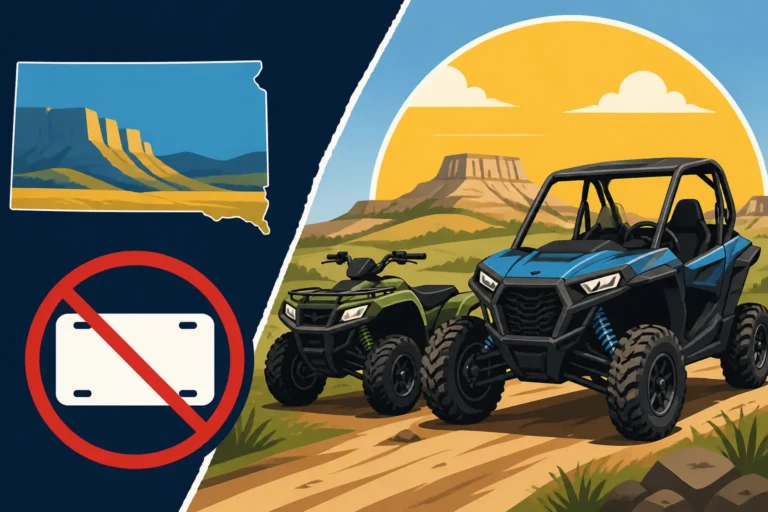
South Dakota holds a unique place in the hearts of off-road enthusiasts because, unlike many states, it does generally permit riding off-highway vehicles (OHVs) in the ditches of public roads. This can be a huge perk for locals and visitors alike, offering miles of accessible terrain. But it's not a blanket rule that applies everywhere, and knowing the nuances is absolutely key to avoiding fines and staying safe. The frustration often comes from knowing the possibility exists, but not understanding the specific boundaries.
The General Ditch Riding Principle
In many parts of South Dakota, you can legally operate an ATV or UTV in the ditch bottom or on the back-slope of a public highway's right-of-way. This generally applies to state highways, county roads, and even section lines, which are those grid-like roads crisscrossing our prairie. The key often revolves around what's called the "outer edge rule," meaning you need to stay on the outer edge of the right-of-way, away from the paved or graveled travel lanes. This allowance opens up thousands of miles for riders to connect trails, access private property, or simply enjoy a scenic cruise. It's a fantastic feature that sets South Dakota apart, offering a unique blend of accessibility and adventure.
However, this freedom often comes with local caveats. While the state might allow it, counties have the option to "opt-out" and ban ditch riding within their borders. This creates a patchwork quilt of regulations that can be incredibly confusing if you're not checking local ordinances or looking for posted signs. Imagine planning a long trip, only to discover a crucial stretch of ditch is closed because you crossed into a new county that has opted out. It's enough to make any rider sigh in exasperation. For more on the specifics, you can always check out [South Dakota Ditch Riding Rules Explained].
The Core Difference: Interstates vs. Other Roads
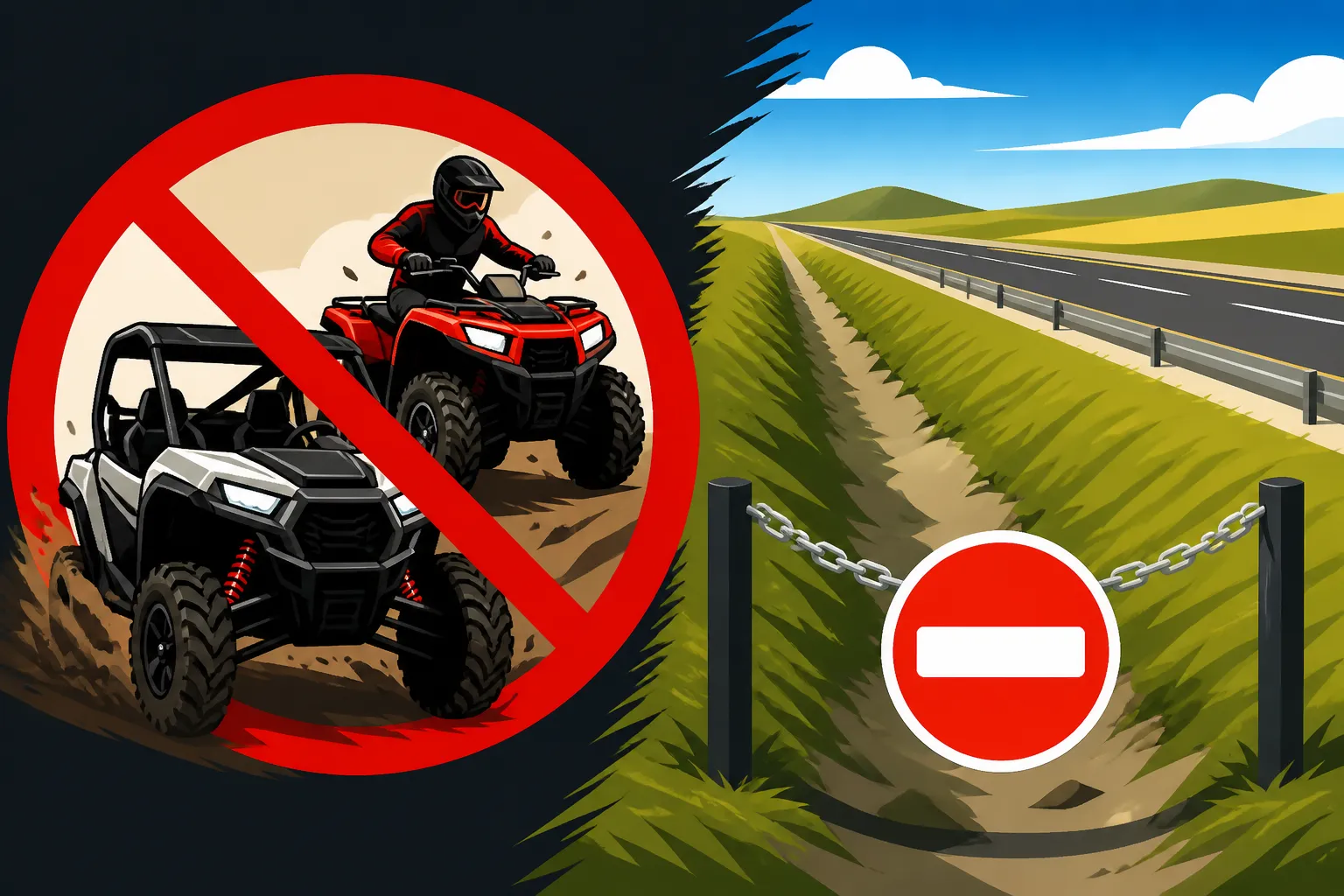
Here’s where the rubber meets the road, or rather, where the knobby tire doesn't meet the interstate ditch. Despite the general allowance for ditch riding on many other types of roads, interstate ditches are a distinct exception. You simply cannot ride your ATV or UTV there. This isn't just a minor technicality; it's a fundamental difference in how these specific rights-of-way are managed and regulated. The reasons are multifaceted, stemming from federal regulations, unique safety concerns, and the very design and purpose of the interstate system itself.
It's completely understandable to feel confused when you see what appears to be a perfectly rideable ditch running alongside I-90 or I-29. You might think, "If I can ride it next to a state highway, why not here?" The visual similarities can be deceptive, leading to assumptions that, if acted upon, could result in serious legal trouble or, even worse, dangerous situations. The rules for interstate rights-of-way are far more stringent and less flexible than those for other public roads, and this distinction is crucial for every rider to grasp.
The Legal Framework Behind Interstate Restrictions
When we talk about interstates, we're stepping into a different legal arena altogether. These aren't just bigger versions of your local county road; they are part of a federally funded and regulated system, which brings with it a whole different set of rules that impact what you can and cannot do within their rights-of-way. This legal overlay is the primary reason why interstate ditches remain off-limits, regardless of South Dakota's more lenient approach to other road ditches.
Federal Highway Administration Regulations
The interstate highway system is a marvel of engineering and a critical component of national transportation. Because these roads receive substantial federal funding and are designed for high-speed, controlled-access travel across state lines, they fall under the strict oversight of the Federal Highway Administration (FHWA). These federal regulations dictate many aspects of interstate design, maintenance, and permissible uses, often overriding state-level allowances for activities like off-road vehicle operation within the right-of-way.
The FHWA's focus is squarely on maintaining the safety, efficiency, and integrity of this national network. Allowing recreational vehicles in interstate ditches would run counter to these objectives. Interstates are defined as "limited access" facilities, meaning that access points are strictly controlled to maximize safety and traffic flow. Opening up the ditches to ATVs and UTVs would inherently undermine this limited access principle, creating uncontrolled entry and exit points and potential conflicts with traffic that is traveling at much higher speeds. These federal guidelines are the foundation of why [South Dakota's Interstate Ban] exists, regardless of what the state might allow on other types of roads.
South Dakota's Specific Laws on Interstate Use
Even though South Dakota is relatively friendly to ditch riding on other roads, the state's own laws align with federal guidelines when it comes to interstates. South Dakota Codified Law (SDCL) explicitly prohibits the operation of off-road vehicles within the right-of-way of an interstate highway. This isn't just an implied rule; it's a clear legislative mandate. The state recognizes the unique nature and inherent risks associated with interstate corridors and has legislated accordingly.
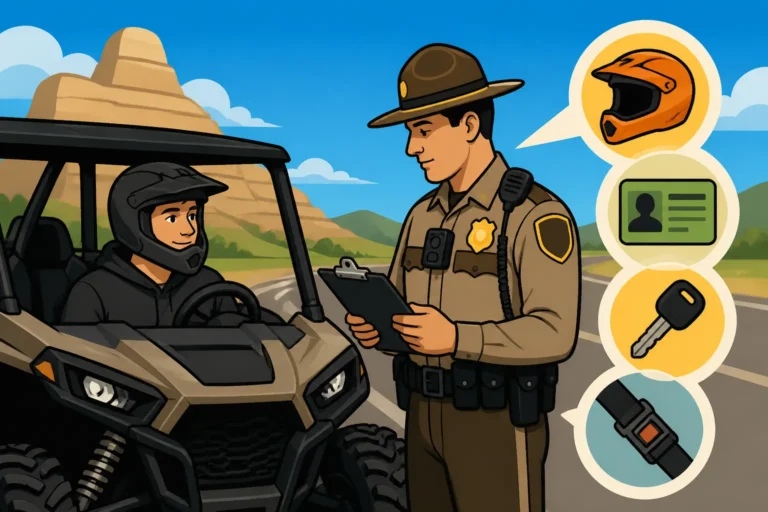
This distinction is often a source of confusion for riders, particularly those new to the state or those who haven't delved into the specifics of the law. They might correctly understand that [South Dakota Ditch Riding Rules] allow them to ride beside a state highway, and then logically but incorrectly extrapolate that to the interstate. However, the legal text makes a firm boundary. Ignoring this specific prohibition could lead to significant fines and legal consequences, making it a critical piece of information for any ATV or UTV owner in South Dakota. A quick roadside check by a trooper, who is well-versed in these distinctions, would quickly confirm that your machine does not belong there. It’s part of [What a South Dakota Trooper Checks Roadside].
Safety Concerns: Why Interstates Are Different
Beyond the legal framework, the most compelling reasons for keeping ATVs and UTVs out of interstate ditches boil down to fundamental safety concerns. The environment around an interstate highway is inherently different from a quiet county road or a remote section line. The speeds, traffic volume, and sheer scale of operations create a hazard level that is simply incompatible with recreational off-road vehicle use.
High-Speed Traffic and Limited Visibility
Imagine an ATV or UTV traveling at 15-20 mph in an interstate ditch, directly adjacent to cars and semi-trucks hurtling by at 75-80 mph. The speed differential alone is a recipe for disaster. This isn't merely about the risk of a rider veering into traffic; it's about the limited visibility and reaction time for everyone involved. Drivers on the interstate are not expecting to see slow-moving vehicles in the ditch, and their focus is on the high-speed traffic lanes. A sudden, unexpected presence in their peripheral vision could trigger a dangerous reaction, leading to accidents involving many vehicles.
Furthermore, entering and exiting the right-of-way, especially near on-ramps and off-ramps, would create incredibly hazardous situations. Picture trying to cross an exit lane from a ditch, or even just riding parallel to one. The blind spots, the speed of merging traffic, and the unpredictable nature of off-road vehicle movement make it an unacceptably high-risk scenario. Even a small misjudgment could have catastrophic consequences, not just for the rider but for innocent motorists on the interstate. The minimal protection offered by an ATV or UTV simply doesn't stand a chance against a speeding semi.
Maintenance and Emergency Access Needs
Interstate ditches and shoulders aren't just empty spaces; they are integral parts of the highway's operational infrastructure. They serve vital roles in maintenance, ensuring the smooth and safe functioning of the road itself. For example, during winter, snowplows often push massive amounts of snow into these ditches, and crews need unimpeded access for snow removal and de-icing operations. Throughout the year, maintenance teams use these areas for mowing, litter removal, and repairing signage or guardrails.
Crucially, interstate rights-of-way are also critical corridors for emergency services. In the event of an accident or breakdown, law enforcement, ambulances, and tow trucks need clear and immediate access to the shoulder and ditch areas. An ATV or UTV operating in these spaces could inadvertently obstruct emergency personnel, delaying crucial response times or even causing additional accidents. These areas are designed for practical, operational purposes related to the highway, not for recreational riding. Having to navigate around recreational vehicles would compromise safety for everyone.
Environmental and Infrastructure Considerations
While safety is often the first concern that comes to mind, there are also significant environmental and infrastructure reasons why interstate ditches must remain clear of recreational vehicle traffic. These areas are carefully managed ecosystems and engineered systems that play a crucial role in maintaining the integrity of the highway and its surrounding environment.
Erosion Control and Drainage Systems
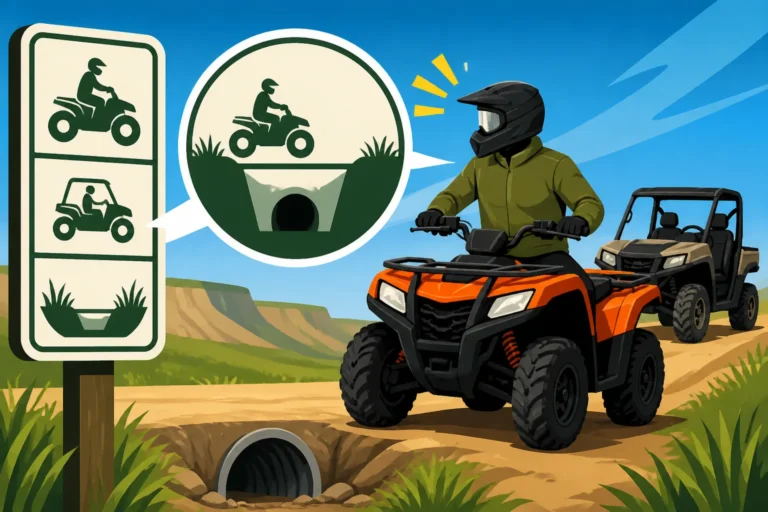
Interstate ditches are meticulously engineered to manage stormwater runoff, prevent erosion, and protect the structural integrity of the roadway. They incorporate sophisticated drainage systems, including culverts, retention ponds, and carefully graded slopes, all designed to funnel water away from the highway and prevent washout. The soil stability in these areas is often critical to the roadbed itself.
Operating ATVs and UTVs in these ditches can cause significant damage to these delicate systems. The repetitive churn of tires, especially in wet conditions, can quickly compact soil, create ruts, and disrupt vegetation, leading to increased erosion. This erosion can then clog culverts, undermine bridge abutments, and wash away vital road base material, leading to costly repairs and potential safety hazards for interstate travelers. Organizations like SuperATV, known for their heavy-duty parts, might provide excellent solutions for tackling challenging trails, but their products are designed for legal off-road adventures, not for tearing up carefully engineered highway drainage systems.
Protection of Sensitive Areas
Despite their proximity to major highways, interstate rights-of-way can sometimes contain surprisingly sensitive ecological or archaeological zones. Depending on the terrain and historical use, these strips of land might host wetlands, unique plant communities, or even undiscovered archaeological artifacts. Highway planners often route interstates through less sensitive areas, but the right-of-way itself can still encompass valuable natural resources that require protection.
Allowing uncontrolled ATV and UTV access could lead to the disturbance or destruction of these areas. The spread of invasive species, disruption of wildlife habitats, or inadvertent damage to cultural sites are all potential consequences. Environmental regulations often protect these areas, and unauthorized entry by motorized vehicles could lead to penalties. The preservation of these sensitive zones is another compelling reason for the strict prohibition of off-road vehicle use in interstate ditches.
What Are Your Alternatives? Finding Legal Riding Spots
So, the interstate ditches are out. That might feel like a letdown, but the good news is South Dakota is absolutely brimming with incredible, legal places to ride your ATV or UTV. The trick isn't finding places to ride, but understanding where you're permitted and ensuring you have the right gear and permits for the job. You'll find a welcoming community and endless miles of trails once you know where to look.
Designated Off-Road Riding Areas
South Dakota boasts fantastic designated off-road riding areas that are specifically designed for machines like yours. These are prime locations where you can truly let loose, tackle challenging terrain, and enjoy the camaraderie of fellow riders without worrying about legal ambiguities.
The jewel in the crown for many is the Black Hills National Forest. It offers hundreds of miles of motorized trails and forest roads, catering to all skill levels. You'll find everything from scenic cruises to challenging technical routes. You'll definitely want to look into [Where to Ride an ATV in South Dakota] for a comprehensive list. Specific gems include:
- Oahe Downstream OHV Area near Pierre: This area offers a unique riding experience with bluff and shale terrain. It's an excellent spot for honing skills and enjoying some challenging climbs and descents. It's truly a gem for those east of the Hills.
- Revheim Bay OHV Area: Another great spot, offering varied terrain for riders to explore. While perhaps smaller than some areas, it provides dedicated space for off-road fun.
Remember, riding in the Black Hills National Forest often requires a [South Dakota's Motorized Trail Permit]. It's a small investment that helps maintain these trails for everyone. It's always a good idea to check the specific regulations and trail maps before you head out, as closures can occur due to weather or fire danger. Having durable components, perhaps from SuperATV, like heavy-duty winches or rock sliders, can really enhance your experience on these designated trails, giving you the confidence to tackle tougher obstacles and truly explore.
Exploring County Roads and Section Lines
Don't forget those countless miles of county and township roads, along with the section lines. As we discussed, many of these do allow ditch riding in South Dakota, provided the county hasn't opted out. These routes can be fantastic for connecting to smaller towns, accessing fishing spots, or simply enjoying the vast prairie landscapes.
Always keep an eye out for "No ATV Riding" signs, which indicate that a specific county or township has banned ditch riding. It's your responsibility to know the local rules. If you're exploring new territory, a quick call to the county sheriff's office or checking their website can save you a lot of hassle. Riding along a frontage road, which often parallels an interstate but is distinct from its right-of-way, is also a viable option if it's a county or township road and follows all other ditch riding rules. For more details on these alternative routes, check out [South Dakota Rules for Riding a Frontage Road].
Private Property with Permission
One of the most enjoyable and unrestricted ways to ride your ATV or UTV in South Dakota is on private land—with the landowner's explicit permission, of course. Ranchers and farmers often have vast tracts of land with trails, pastures, and wooded areas that are perfect for off-road adventures.
The key here is respect and communication. Always ask first, and be clear about where you intend to ride and for how long. Many landowners are happy to grant permission, especially if you demonstrate respect for their property, close gates, and don't disturb livestock or crops. Building a good relationship with a landowner can open up some truly unique riding opportunities. You can learn more about how to approach this by reading [South Dakota Rules for Riding Private Land]. A simple, signed permission slip can even be a good idea for peace of mind.
Gearing Up for All Terrain
No matter where you choose to ride – be it the rugged trails of the Black Hills or the winding section lines of the prairie – having the right gear is crucial for safety and enjoyment. This isn't just about protecting yourself; it's about equipping your machine to handle the varied terrain South Dakota offers.
Consider products from reputable brands like SuperATV. If you're tackling rocky trails in the Black Hills, a heavy-duty skid plate or A-arms can protect your machine's vital components. Need better ground clearance for crossing obstacles on a ranch road? A lift kit might be a game-changer. For those long hauls across varied terrain, a comfortable seat upgrade or an improved suspension system can make a world of difference. Investing in quality accessories from a trusted manufacturer ensures your ATV or UTV is ready for whatever legal adventure you seek, allowing you to maximize your enjoyment and minimize breakdowns far from home.
Here's a quick summary of where you can and cannot ride your OHV in South Dakota's ditches:
| Road Type | Ditch Riding Permitted? | Key Considerations |
|---|---|---|
| Interstate Highways | No | Federal regulations, high-speed traffic, safety risks |
| State Highways (Non-Int.) | Generally Yes | Stay on outer edge, check local county ordinances |
| County Roads | Generally Yes | Stay on outer edge, check local county ordinances |
| Township Roads | Generally Yes | Stay on outer edge, check local county ordinances |
| Section Lines | Generally Yes | Stay on outer edge, check local county ordinances |
| Private Property | Yes | EXPLICIT Landowner Permission is mandatory |
| Designated OHV Areas/Trails | Yes | Often requires permit, follow trail rules, width limits |
| Highway Shoulder | No | Shoulders are for emergencies/breakdowns, not riding |
Disclaimer
This article is for general informational purposes only and does not constitute professional advice. Laws, prices and regulations vary by location and change over time. Consult a qualified professional for guidance on your specific situation.