South Dakota Mirror Requirement
Riding your ATV or UTV on South Dakota's open roads and highways can feel incredibly freeing, but hitting the pavement brings a whole new set of rules and requirements you might not have considered when you were tearing up a trail. One of the most common oversights, and a crucial one for your safety and legality, revolves around mirrors. This guide will walk you through South Dakota's specific mirror requirements, ensuring your machine is not only street-legal but also as safe as possible for road use.
Why a Mirror is Non-Negotiable for South Dakota Road Use
It's easy to think of your ATV or UTV as a purely off-road machine, a beast designed for dirt, mud, and rocks. But if you plan to venture onto public roads in South Dakota, even for a short hop between trails or a quick run to the local store, the rules of the road apply, and that includes having proper mirrors. This isn't just about avoiding a ticket; it's fundamentally about your safety and the safety of everyone else sharing the road with you.
Understanding the "Street Legal" Hurdle
Converting your off-road vehicle into something that can legally navigate South Dakota's streets is often called making it "street legal," and it involves a series of mandatory equipment upgrades. Many riders focus on the obvious ones: headlights, brake lights, and turn signals. However, rear visibility is just as critical. Imagine trying to change lanes on a busy highway, or even just turning left on a county road, without any idea of what's coming up behind you. It's not just risky; it's practically impossible to do safely. South Dakota law, like that in many other states, recognizes this inherent danger and mandates mirrors specifically to address this blind spot. Without them, your machine isn't considered safe or compliant for road use, regardless of any other modifications you've made. The expectation is that you can see what's happening around you, just like any other vehicle operator.
The frustration often stems from the fact that most ATVs and UTVs aren't designed with road use in mind, so they don't come equipped with the necessary mirrors from the factory. You're left to figure out what's needed and how to install it, which can be a bit of a headache if you're not familiar with the requirements. But taking the time to get this right is an investment in your personal safety and in protecting yourself from potential liability in case of an accident. It's a small but mighty component of a much larger picture of responsible riding. You'll find that making your machine road-ready often means looking at a complete overhaul of its basic safety features, as detailed in our guide on [South Dakota Street Legal ATV Requirements].
What South Dakota Law Explicitly Requires
South Dakota statutes are pretty clear when it comes to what's needed for rear visibility. For any motor vehicle operating on a public highway, there's a specific requirement: "Every motor vehicle which is so constructed or loaded as to obstruct the driver's view to the rear thereof from the driver's position shall be equipped with a mirror so located as to reflect to the driver a view of the highway for a distance of at least two hundred feet to the rear of such vehicle." While this general motor vehicle law applies, ATVs and UTVs, when plated as motorcycles, fall under specific motorcycle mirror rules as well.
For motorcycles – which is how many street-legal ATVs and UTVs are classified for plating purposes in South Dakota – the rules are a bit more explicit. They generally require at least one mirror providing a view of the highway for a specified distance to the rear. This means that if your ATV or UTV is being ridden on the road, you absolutely need to have a functional mirror. Most riders opt for two side mirrors, one on each side, to give them the best possible field of view, especially on UTVs where the cabin structure can create significant blind spots. While the law might technically allow for just one in some interpretations, having two provides a much safer, more comprehensive view of traffic and other road users approaching from behind. Think of it this way: the more you can see, the safer you are, and two mirrors vastly improve your peripheral vision compared to one. This mirrors the requirements you'd find for a regular car, albeit often in a different form factor. For more on what your machine needs to have, check out [South Dakota Equipment List for Road Use].
Types of Mirrors That Meet South Dakota Standards
When you're looking to equip your ATV or UTV with mirrors for road use in South Dakota, you've got several options. The key is to choose mirrors that are durable, provide clear visibility, and can withstand the unique vibrations and conditions of off-road vehicles. It’s not just about slapping on any mirror; it’s about choosing the right tool for the job.
Traditional Handlebar and Side Mirrors
For ATVs, handlebar-mounted mirrors are the most common choice. These typically clamp onto your handlebars, offering a view over your shoulder. They're usually smaller than car mirrors but need to be robust enough to handle bumps and jostling. When selecting these, look for options with sturdy mounts that won't vibrate excessively, blurring your view, and that are made from impact-resistant materials. You'll want to ensure they're positioned so you can easily glance at them without taking your eyes too far off the road ahead. Some come with break-away features, which can be a real blessing if you still plan to hit the trails and risk snagging a mirror on a tree branch. Companies like SuperATV offer a range of handlebar and side mirrors designed specifically for the rugged demands of ATVs and UTVs, focusing on durability and a secure fit.
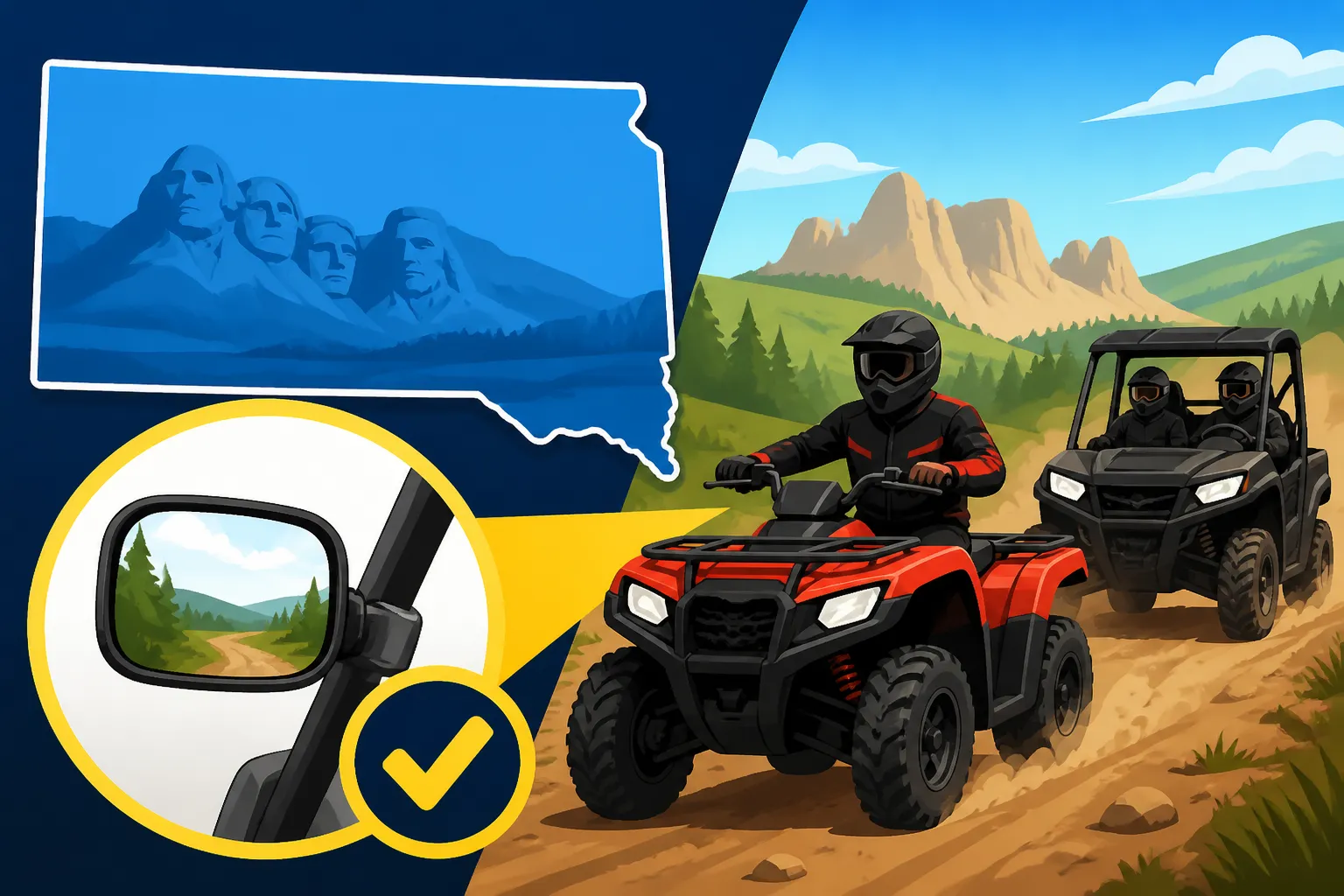
For UTVs, side mirrors are the go-to solution. These typically mount to your roll cage or door frame. Just like with ATVs, you want a mirror that provides a clear, stable image of what's behind you. Many UTV side mirrors are larger, offering a wider field of vision, which is great for these wider machines. Ensure the mounting system is solid and that the mirrors can be adjusted to suit different drivers. Some UTV mirrors offer convex lenses, which give a wider view but can make objects appear farther away, requiring a bit of adjustment for the rider. The most important thing is that they provide an unobstructed view behind you for at least 200 feet, as mandated by general South Dakota vehicle codes. A proper set of side mirrors can drastically reduce blind spots when you're merging or changing directions, making your UTV much safer for highway driving. You can learn more about mounting these effectively in our article on [Fitting a Mirror Before a Road Ride].
Rearview (Center) Mirrors for UTVs
While not always explicitly required in addition to side mirrors, a rearview or center mirror is an excellent safety enhancement for UTVs, especially since they often have a more enclosed cab structure that can mimic a car. A good center mirror, typically mounted to the top of the roll cage or windshield frame, gives you a quick, direct view of what's directly behind your machine. This is particularly useful for checking on trailers, cargo in the bed, or simply getting a quick glance at traffic without having to turn your head as much as you might with side mirrors.
Many UTV owners choose to run both side mirrors and a center rearview mirror for maximum visibility. The center mirror complements the side mirrors by providing a different perspective, often covering the gap directly behind the vehicle that side mirrors might miss. When choosing a rearview mirror, consider its size, the clarity of the reflection, and its mounting stability. Just like side mirrors, vibration can be an issue, so look for designs that minimize shake. Brands like SuperATV understand the specific needs of UTV riders and offer high-quality rearview mirrors that are easy to install and built to last, providing that crucial extra layer of visibility for navigating South Dakota's roads and beyond. This combined approach to visibility is what truly brings your machine up to snuff for road use, going above and beyond the minimum requirements to ensure you're as safe as possible. For more insights into what the state defines as an off-road vehicle and its various classifications, see [What South Dakota Counts as an Off-Road Vehicle].
Installation and Maintenance Tips for South Dakota Riders
Once you've decided on the right mirrors for your ATV or UTV, the next crucial step is proper installation and ongoing maintenance. A mirror is only as good as its mounting, and even the best mirror won't do you much good if it's dirty or improperly adjusted. Getting this right means you're not just street-legal, but genuinely safer on the road.
DIY Installation vs. Professional Help
Most ATV and UTV mirrors are designed for relatively straightforward installation, making them a common DIY project. For handlebar-mounted ATV mirrors, you'll typically clamp them directly onto the handlebars, often near your handgrips. Ensure they're tight enough to prevent rotation from vibration but not so tight that they damage your handlebars. For UTV side mirrors, they often attach to the roll cage with clamps, which usually just require a few bolts to secure. Rearview mirrors for UTVs typically mount to the top bar of the roll cage or directly to the windshield frame.
When doing it yourself, always read the manufacturer's instructions carefully. Use the right tools and don't overtighten bolts, which can strip threads or crack plastic components. Pay close attention to the positioning: you want a clear, unobstructed view without straining your neck. After installation, take your machine for a slow test ride on a safe, private area to check for stability and adjustability. If you find the mirrors vibrate excessively at speed, you might need to try a different mounting location, add some rubber dampeners, or even consider a different brand known for better stability.
However, if you're not confident with tools, or if your machine has custom handlebars or a unique roll cage design that makes standard installations difficult, don't hesitate to seek professional help. Many ATV/UTV dealerships or custom shops in South Dakota can install mirrors correctly and ensure they meet all legal requirements. While it might cost a bit more, the peace of mind knowing it's done right is often worth it. This is especially true if you’re doing a full street-legal conversion and want everything to be up to snuff from the start, like ensuring your [South Dakota Horn Requirement] is also met.
Keeping Your Mirrors Road-Ready
Installing your mirrors is only half the battle; keeping them functional and effective requires ongoing maintenance. The rugged environments ATVs and UTVs often traverse mean mirrors are constantly exposed to dust, mud, water, and debris.
- Cleanliness is Key: Regularly clean your mirror surfaces. Mud splatters, dust buildup, and water spots can significantly obscure your view, rendering the mirror useless. Use a soft cloth and a gentle cleaner, or just water, to wipe them down. Avoid abrasive cleaners or brushes that could scratch the mirror surface.
- Check Adjustments Frequently: Vibrations from riding, especially off-road, can cause mirrors to shift out of alignment. Before every road ride, take a moment to sit in the driver's seat and ensure your mirrors are correctly adjusted to give you the best possible rearward view. This quick check takes seconds but can prevent a dangerous situation.
- Inspect for Damage: Mirrors can get bumped, scratched, or even cracked, especially if your machine sees a lot of trail time. Regularly inspect the mirror glass for cracks and the housing and mounts for any signs of damage, looseness, or corrosion. A cracked mirror can distort your view, and a loose mirror can vibrate excessively or even fall off. Replace damaged mirrors promptly.
- Secure Mounting: Over time, bolts and clamps can loosen. Periodically check that all mounting hardware is tight and secure. If you notice a mirror is wobbling or difficult to keep in place, it’s usually a sign that the mounting needs attention.
By paying attention to these simple maintenance tips, you can ensure your mirrors are always ready to provide the clear, stable view you need to safely navigate South Dakota's roads. It's a small investment of time that pays dividends in safety. For instance, ensuring your mirrors are always clean and properly aligned is just as important as having your [South Dakota Lighting Requirements for ATVs] in working order for night riding.
Beyond the Mirror: Other South Dakota Road Requirements
While mirrors are a critical component for making your ATV or UTV street legal in South Dakota, they are by no means the only requirement. Converting your off-road machine for road use is a comprehensive process that touches on multiple aspects of vehicle safety and regulation. Neglecting any of these can lead to fines, safety hazards, and ultimately, your machine being deemed unfit for public roads.
The Full Equipment Checklist
Think of your street-legal conversion as ensuring your machine can interact safely and predictably with other vehicles on the road, much like a motorcycle or a small car. This means having a full suite of functional equipment beyond just mirrors. South Dakota law typically mandates:
- Headlights: You need at least one, but preferably two, fully functional headlights that illuminate the road ahead to a specified distance, especially during dusk, dawn, and nighttime conditions.
- Taillights and Brake Lights: A working taillight (visible from the rear) and brake lights (that illuminate when the brake is applied) are essential for visibility and signaling your intentions to traffic behind you.
- Turn Signals: Both front and rear turn signals are usually required to clearly indicate your turns and lane changes.
- Horn: A working horn is necessary to alert other drivers or pedestrians to your presence in emergencies.
- DOT-Approved Tires: Your knobby off-road tires might be great for mud, but they're often not rated for highway speeds and conditions. You may need to swap them for DOT (Department of Transportation) approved tires that offer better grip and durability on pavement.
- Windshield/Eye Protection: While not always a specific "vehicle equipment" item, the operator typically needs eye protection. For UTVs, a windshield is common.
- License Plate Mount and Illumination: Your machine will need a proper mount for its South Dakota license plate, and the plate itself must be illuminated at night.
For a comprehensive rundown, our article on [South Dakota ATV Plate Requirements] delves into the specifics of what's needed to get your machine legal for the road. Missing any of these items means your machine isn't truly street-legal, regardless of how well your mirrors function. Companies like SuperATV often provide comprehensive kits and individual components to help riders meet all these diverse requirements, from lighting to a proper [A Rear-View Mirror for South Dakota Road Use].
Driver's License and Age Considerations
Beyond the physical equipment on your machine, there are also crucial human factors to consider: who is legally allowed to operate a street-legal ATV or UTV on South Dakota roads. It's not just about the machine; it's about the operator's qualifications.
- Driver's License: If your ATV or UTV is plated for road use in South Dakota, the operator must possess a valid driver's license. This typically means a standard Class D driver's license, just as you would need to drive a car or truck. You cannot simply ride a street-legal ATV on public roads with an off-road permit or without any license at all. This aligns with the state's classification of these vehicles as similar to motorcycles when they are plated for road use.
- Age Requirements: The driver's license requirement inherently sets an age minimum for road operation, as you must be old enough to obtain a driver's license in South Dakota. Generally, this means at least 16 years old. While younger riders might be allowed to operate ATVs in off-road settings under supervision, these rules change dramatically when you hit the pavement. These vehicles, when road-legal, are treated as full-fledged motor vehicles, and their operators are expected to understand and follow all traffic laws.
Understanding these requirements is vital for both your safety and avoiding legal trouble. Driving an un-plated or improperly equipped ATV on public roads, or allowing an unlicensed driver to operate it, can result in significant fines and legal consequences. Always ensure both your machine and its operator meet all South Dakota regulations before venturing onto the asphalt. For more details on who can operate these machines on public roads, refer to our article on [South Dakota Driver's License Rules for ATVs].
Here’s a quick overview of key mirror requirements and common solutions:
| Requirement Aspect | South Dakota Standard (for Road Use) | Common ATV/UTV Solution | Notes
This article is for general informational purposes only and does not constitute professional advice. Laws, prices and regulations vary by location and change over time. Consult a qualified professional for guidance on your specific situation.