Brake Lights on a Plated Quad
Riding your quad on South Dakota's roads, whether it's for a quick trip to the mailbox or a longer cruise down a scenic gravel road, comes with a specific set of responsibilities. One of the most overlooked, yet absolutely critical, pieces of equipment for a plated off-road vehicle is its brake lights. It’s not just about avoiding a ticket; it’s about making sure every driver behind you knows your intentions, and that can literally be the difference between a smooth ride and a costly, dangerous collision. This guide will dive deep into why brake lights are essential, what the law expects, how to keep yours working, and what can happen if you don't.
The Essential Role of Brake Lights for South Dakota Road-Legal ATVs
Let's face it, when you're out on a plated quad, you're sharing the road with everything from farm trucks to family minivans. Unlike hitting the trails where everyone is more or less expecting the unexpected, road use requires clear communication, and your brake lights are your primary way of telling those behind you, "Hey, I'm slowing down or stopping!" Ignoring this crucial component isn't just taking a gamble with your finances; it's playing Russian roulette with your safety and the safety of others.
More Than Just a Courtesy: The Safety Imperative
Imagine you're cruising down a dusty county road outside of Sturgis, enjoying the wide-open spaces. You spot a deer just ahead and instinctively grab the brakes. If your brake lights aren't firing, the pickup truck loaded with hay following you might not realize you're stopping until it's far too late. That split-second delay in recognition is often all it takes for a rear-end collision, which can be devastating on a smaller, more exposed vehicle like an ATV or UTV.
Brake lights are your non-verbal communication with the vehicles behind you. They're especially vital in varying conditions – think about a sudden downpour on a gravel road, or when the sun is setting, casting long shadows. In these moments, your brake lights pierce through the dust, rain, or low light, screaming "I'm stopping!" This isn't just about protecting your machine from damage; it's about protecting yourself from serious injury and preventing other drivers from experiencing a traumatic accident. Without functioning brake lights, you're essentially riding blind in reverse, hoping no one is too close.
South Dakota's Specific Mandates for Plated Quads
When you decide to get a [South Dakota Motorcycle Plate for an ATV] – which is what makes your quad "plated" and legally allowed on many public roads – you're agreeing to abide by the same safety standards that apply to other motor vehicles. South Dakota doesn't mess around when it comes to road safety, and clear, functional lighting is a big part of that. The state mandates specific equipment for any off-road vehicle that intends to traverse public roads, and brake lights are high on that list.
For your quad to be truly street-legal, it needs to meet a comprehensive list of requirements, which includes everything from mirrors and horns to proper lighting. Brake lights fall squarely under the "proper lighting" umbrella. They need to be visible from a certain distance and, of course, they need to activate reliably every time you apply the brakes. It's not enough to have them installed; they must work. A non-functional brake light on a plated machine is akin to driving a car with a broken headlight—it's a clear violation. You'll want to check the full [South Dakota Equipment List for Road Use] to ensure every box is ticked, but know that functional brake lights are a foundational requirement that simply cannot be ignored.
Understanding Brake Light Functionality and Maintenance
It’s one thing to know you need brake lights; it’s another to understand what "functional" truly means and how to keep them that way. Your quad takes a beating out on the trails and roads, and that harsh environment can be tough on electrical components. Taking a few minutes to understand how they work and what often goes wrong can save you a lot of headache (and potential tickets) down the road.
What "Functional" Really Means on the Road
When a South Dakota Highway Patrol trooper pulls you over, they’re not just looking to see if you have brake lights. They’re checking if they work. "Functional" means a few key things:
- Activation: They must illuminate promptly when either the hand brake or foot brake is applied. Many quads have both, and both should trigger the brake light.
- Visibility: The light needs to be bright enough to be seen clearly by drivers behind you, even in bright daylight. It should emit a steady, clear red light, not a dim flicker or a pinkish glow.
- Condition: The lens should be clean and unbroken. A cracked, dirty, or missing lens can significantly reduce visibility and is itself an equipment violation.
During a routine stop, a trooper will often ask you to demonstrate your brake lights. They might even stand behind your machine and have you operate the brakes. This is part of [What a South Dakota Trooper Checks Roadside] to ensure your vehicle is safe and compliant. If they don't light up, or if they're too dim, you could be facing a citation. It’s not just a minor issue; it's a safety hazard that law enforcement takes seriously.
Troubleshooting Common Brake Light Problems
Brake lights are relatively simple systems, but they can suffer from a few common issues. Knowing what to look for can help you fix them quickly, often without needing a professional.
- Blown Bulbs: This is perhaps the most common culprit. The filament inside the bulb can break due to vibration, age, or a surge. Check your bulbs first. Sometimes, it's not totally broken but just loose in its socket, causing an intermittent connection.
- Wiring Woes: Off-road riding exposes wires to dirt, moisture, and abrasion. Wires can corrode, fray, or disconnect. Check the wiring leading to the brake light assembly and especially the connections at the brake switches (often located near the brake levers/pedals). Look for any pinched, cut, or corroded sections.
- Faulty Brake Switches: Most quads use either a mechanical switch (activated by the brake lever/pedal) or a hydraulic pressure switch (activated by fluid pressure when you apply the brakes). These switches can wear out, get gummed up with dirt, or simply fail. If your bulbs and wiring seem fine, but the brake lights still don't activate, a faulty switch is a prime suspect. For instance, if only your foot brake activates the light, but your hand brake doesn't, the hand brake switch is likely the problem.
- Fuses: A dedicated fuse protects your lighting circuit. If that fuse blows, your brake lights (and potentially other lights) will go out. Check your machine's fuse box and replace any blown fuses with one of the correct amperage. Never use a fuse with a higher amperage, as this can lead to serious electrical damage or even a fire.
When tackling these issues, sometimes you might find that you need replacement parts or even an upgrade. Brands like SuperATV offer a range of aftermarket lighting solutions and electrical components that can be more durable and brighter than original equipment, especially if you're frequently riding in challenging conditions. Investing in quality replacement parts can mean fewer headaches down the line.
Equipping Your Quad for Compliance and Enhanced Safety
Just having brake lights isn't enough; you need the right brake lights and they need to be working optimally. Whether you're upgrading an older machine or making sure a newer one is up to snuff, there are choices you can make to ensure compliance and boost your safety factor well beyond the bare minimum.
Choosing and Installing Brake Lights for Your Plated Quad
When it comes to brake lights, you typically have two main routes: sticking with OEM (Original Equipment Manufacturer) parts or exploring aftermarket options.
- OEM Parts: These are direct replacements, designed to fit perfectly and match your quad's original specifications. They are reliable but might not offer any performance improvements over your stock setup.
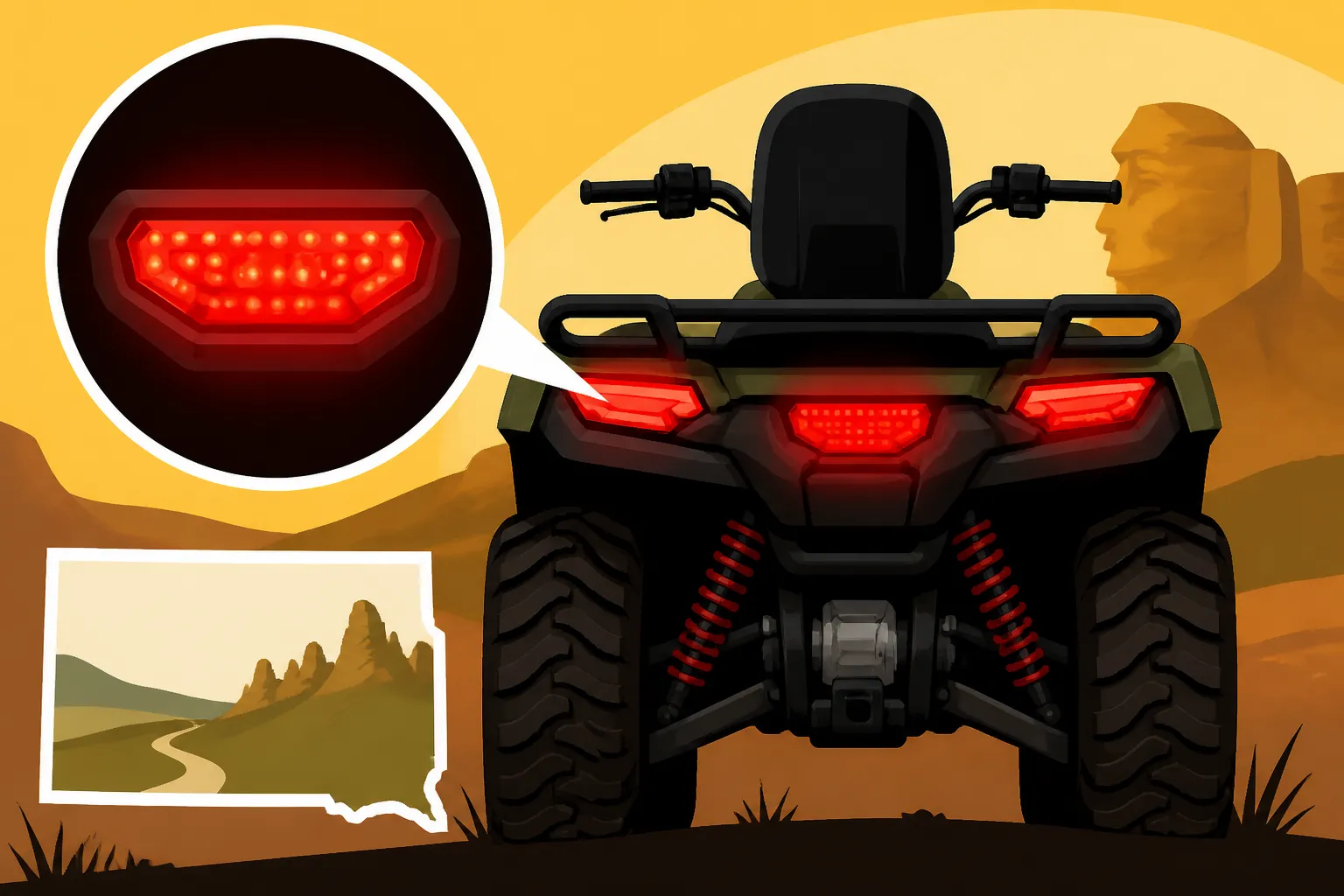
- Aftermarket Solutions: This is where you can often find significant upgrades. LED brake lights, for example, are a popular choice. They are usually much brighter than incandescent bulbs, draw less power, and last considerably longer. Their faster illumination time can also provide an extra fraction of a second of warning to drivers behind you, which could be critical. When looking at aftermarket options, consider products from reputable manufacturers like SuperATV, which are often designed for the rigors of off-road use, featuring enhanced weatherproofing and vibration resistance.
Installation Considerations:
- Wiring: Always ensure any new wiring is properly routed, secured, and protected from abrasion and heat. Use waterproof connectors where possible.
- Switches: If replacing switches, ensure they are compatible with your brake system (mechanical or hydraulic) and are installed correctly to activate reliably.
- Visibility and Placement: The brake lights should be clearly visible from the rear, unobstructed by luggage, flags, or other accessories. They should also be at an appropriate height to be seen by varying types of vehicles.
Making sure your machine meets [South Dakota Street Legal ATV Requirements] goes beyond just having the parts; it’s about their effective integration and functionality.
Beyond the Basics: Enhancing Visibility
While meeting the legal minimum is essential, why stop there when it comes to safety? On a quad, being seen is paramount, especially when you're sharing the road with larger vehicles.
- Supplemental Brake Lights: Consider adding a third brake light or even a small LED light bar that functions as an additional brake light. This can be particularly effective on larger UTVs or if your main brake light is obscured by mud or gear. More light sources mean more chances to be seen.
- Integrated Turn Signals: Many aftermarket tail light assemblies integrate turn signals, which further clarifies your intentions to other drivers. While turn signals are another required piece of [Equipment a South Dakota Road Machine Needs], having them combined with your brake lights can streamline your rear lighting.
- Reflectors and Conspicuity Tape: These passive safety measures significantly increase your visibility, especially when you're stopped or parked on the roadside, or if your electrical system fails. Strategically placed red reflectors and reflective tape can make your quad much easier to spot in low-light conditions or [Riding After a Prairie Sunset].
Think of it this way: the more visible you are, the safer you are. Each additional light or reflective element acts as another layer of protection, particularly important on a small vehicle like a quad.
The Ramifications of Non-Compliance
It's easy to dismiss a non-functioning brake light as a minor inconvenience, but the reality in South Dakota is that it can lead to a cascade of problems, from immediate legal penalties to significant financial and personal repercussions down the line. Ignoring these lights isn't just a gamble; it's an unnecessary risk that carries real consequences.
Tickets, Fines, and Roadside Encounters
Let's imagine you're riding your plated quad through Meade County, perhaps heading to the Black Hills for a scenic ride. A quick stop by law enforcement, and if your brake lights aren't working, that pleasant ride can quickly turn sour. The immediate consequence is usually a citation. Depending on the exact circumstances and the officer's discretion, this could range from a "fix-it ticket" (where you're given a period to repair the issue and show proof) to a straightforward fine.
However, repeated offenses or particularly egregious safety violations can escalate. Certain equipment violations, especially those impacting public safety, can fall under a Class 2 Misdemeanor in South Dakota. While we can't put a precise dollar figure on the fine, know that [What a Class 2 Misdemeanor Costs a Rider] can be substantial, often involving hundreds of dollars in fines, court costs, and potentially even points on your driving record. This isn't a small parking ticket; it's a serious legal matter that eats up your time and money.
Furthermore, getting stopped by law enforcement, like a Meade County Trooper, for an equipment violation means lost time. You'll be delayed, likely receiving a [What a Meade County Road Ticket Costs a Rider], and potentially facing the hassle of court appearances if you dispute it or fail to resolve the issue. It's a preventable headache that takes away from the enjoyment of your ride and can easily put a dent in your budget for other riding essentials.
Insurance, Liability, and Your Peace of Mind
Beyond the immediate legal ramifications, the absence of functional brake lights can have far-reaching effects on your insurance and personal liability, especially in the unfortunate event of an accident.
Consider a scenario where you're involved in a rear-end collision. If your brake lights were not working, even if the other driver was also at fault, your lack of functional safety equipment could be cited as a contributing factor. This can significantly complicate insurance claims. Your insurance company might deny or reduce payouts, arguing that you were negligent by operating a vehicle with known faulty safety equipment. This means you could be on the hook for substantial repair costs for your own quad, as well as potential damages to the other vehicle and medical expenses for anyone injured.
The legal and financial burden can be immense. Proving that your brake lights were functional before an accident can be incredibly difficult if they are damaged in the collision. Preventative checks are your best defense. Regular maintenance, ensuring all your lights, including brake lights, are fully functional, isn't just about avoiding a ticket; it's about safeguarding your financial well-being and maintaining your peace of mind. It’s an investment in your safety and a protective measure against unforeseen legal and monetary headaches.
| Feature | OEM (Original Equipment Manufacturer) | Aftermarket LED (Light Emitting Diode) |
|---|---|---|
| Initial Cost | Generally moderate | Often higher, but decreasing |
| Brightness | Standard, adequate for legal requirements | Significantly brighter, enhancing visibility |
| Lifespan | Good, but bulbs can burn out due to vibration/age | Excellent, LEDs last much longer and are more durable |
| Power Draw | Higher, can strain older electrical systems | Much lower, more efficient |
| Durability | Designed for general use | Often designed for specific off-road rigors (e.g., SuperATV products) |
| Activation Speed | Standard, incandescent bulbs have a slight delay | Instantaneous, providing quicker warning to following drivers |
| Ease of Install | Direct fit, usually plug-and-play | Can be direct fit; some may require minor wiring adjustments |
| Maintenance | Bulb replacement as needed | Generally maintenance-free once installed; check connections periodically |
Disclaimer
This article is for general informational purposes only and does not constitute professional advice. Laws, prices and regulations vary by location and change over time. Consult a qualified professional for guidance on your specific situation.