Why South Dakota Sets No Resident Discount
A South Dakota resident planning a Black Hills ride may expect to pay less for a trail permit than a visitor from out of state. That expectation is understandable, but residency does not create a discount on the South Dakota motorized trail permit. Here’s what that means, why the permit is best understood as an access charge rather than a local tax, and how to avoid confusing it with plates, registration, or other permits.
The short answer: residents and visitors pay the same permit rate
South Dakota does not set a lower motorized trail permit price for residents. The permit is required based on the machine’s use on covered trails, not the owner’s home address. In practical terms, a resident and an out-of-state visitor who need the same type of permit should expect the same permit charge.
The key distinction is between who the rider is and where the machine will be ridden. A permit gives access under its rules; it is not a resident benefit or a general vehicle registration. That is why having a South Dakota driver’s license, living nearby, or paying state taxes does not automatically change the permit price.
This can feel counterintuitive if you are used to resident discounts for hunting, fishing, camping, or other outdoor activities. Those programs may be designed around residency. The motorized trail permit works differently: it applies to qualifying use of designated trails, and the price does not change just because the rider lives in South Dakota.
The permit is also separate from the machine’s road credentials. A license plate or valid registration may matter on roads, but it does not automatically replace a required trail permit. Conversely, buying a trail permit does not make an unregistered machine street legal. For a broader overview, see South Dakota Trail Permits Explained.
| Question | Practical answer |
|---|---|
| Does a South Dakota resident pay less for the motorized trail permit? | No resident discount applies. |
| Does an out-of-state plate change the trail permit price? | Residency and plate origin do not create a different permit rate. |
| Does a plate replace the trail permit on a motorized trail? | No. A plate and a trail permit serve different purposes. |
| Is the permit tied to each rider or each machine? | It is generally issued per machine, not per rider. Confirm the current requirement before riding. |
| Does a trail permit authorize road use? | No. Road use has separate registration, equipment, and operating rules. |
| Are all public riding areas covered by the same permit? | No. Permit requirements depend on the land and the type of riding. Check the rules for the specific area. |
The table gives the basic picture, but the details matter. A visitor may need to confirm both that the home-state registration is recognized for the route and that the trail permit is in place. A resident may need the same trail permit even if the machine is already registered in South Dakota.
Why there is no resident discount
There is a straightforward way to understand the policy without guessing at a hidden rationale: the permit is structured as a charge for motorized trail access, not as a residency-based tax. The rules focus on whether a machine is being used on trails covered by the permit requirement. Since both residents and visitors can use those trails, both fall under the same permit structure.
That does not prove what any individual policymaker intended when the fee was set. It does explain the practical result. The permit is not a reward for living in the state, and it does not operate like a local membership. It is one of the requirements a rider must meet when using a covered trail system.
Equal treatment is simple to apply
A single rate is easier to understand at the trailhead and easier to apply when permits are sold. There is no need to determine whether a rider qualifies as a South Dakota resident, whether a seasonal home counts, or how long someone has lived in the state. The permit rule can instead be applied to the machine and its intended use.
That simplicity is useful for visitors, too. Someone arriving from another state does not have to work out a special nonresident trail rate before planning a ride. The same permit category is available, subject to its terms and the current rules for the riding area.
A uniform rate does not mean the whole system is free of distinctions. Permit duration and permit type may differ, and an annual option is not the same thing as a short-term option. The important point is that the difference is not a lower resident rate. For an annual option, review South Dakota’s Nonresident Annual Permit. For a shorter trip, A Seven-Day Permit for a Black Hills Trip is a useful place to start.
It is not a payment for every public service
A resident may reasonably ask why state taxes do not cover the cost of access. The answer is that taxes and permits are different kinds of charges. A resident may contribute to public services through taxes, but that does not automatically cover every permit, license, or activity-specific fee. Outdoor access systems often use a separate permit to support or manage a particular kind of use.
That distinction is especially helpful when comparing motorized trail access with ordinary travel. A resident does not generally need this permit simply to own an ATV or UTV, nor does the permit apply to every trip on every piece of public land. It applies where the specific permit rules say it does. The charge is connected to the activity and location, rather than to the owner’s address alone.
A discount would add a qualification question
A resident discount would require a way to define and verify residency. That can become less obvious for seasonal workers, students, people who have recently moved, owners with more than one home, or riders who keep a machine in South Dakota but live elsewhere. A single rate avoids turning a trail permit purchase into a residency review.
That is a practical explanation of how a uniform structure works, not a promise that the policy will never change. Fees and rules can be revised. Before a ride, check current requirements with the official permit seller or the land manager responsible for the trail.
Keep the trail permit separate from plates and other permits
A lot of confusion comes from the word “permit.” It can refer to different documents that solve different problems. Before paying, identify the exact document you need and the place you plan to ride.
A trail permit is not a title or registration
A title documents ownership. Registration and plates deal with a machine’s legal status for road use under the applicable rules. A motorized trail permit concerns access to trails where the permit is required. These documents are not interchangeable.
If your machine has a South Dakota plate, that does not automatically satisfy the motorized trail permit requirement. If your machine has an out-of-state plate, that does not automatically exempt it from the trail permit either. This is the distinction behind Why a Plate Does Not Replace a Trail Permit and Why South Dakota Honors Only a Plated Machine.
A road plate can still matter. For example, a route may include a public road, or you may need to travel between a staging area and a trailhead. The rules for that road segment are separate from the trail-access requirement. Make sure the machine is legal for the road you intend to use, and do not assume that a trail permit authorizes road travel.
A nonresident title fee is a different issue
Some people encounter an additional charge when titling or registering a machine in South Dakota and assume it is the same thing as a nonresident trail permit charge. It is not. Titling a vehicle, registering it, and buying a motorized trail permit are separate transactions with separate rules.
For example, a nonresident buying or titling a machine in South Dakota may need to understand state title and registration requirements. That does not mean the trail permit itself has a special nonresident price. See Why Out-of-State Owners Pay $100 Extra in South Dakota for the separate title-related issue, and do not use a vehicle-title explanation to estimate trail permit costs.
If you are bringing your own ATV or UTV from another state, check both sets of rules:
- Confirm the machine’s registration or plate status for any roads you will use.
- Confirm whether a South Dakota trail permit is required for the trails on your itinerary.
- Check whether your planned riding area has additional rules, closures, or access limits.
- Keep the required documents available while riding.
The home-state plate may solve one part of the trip, but it does not settle every access question.
Do not assume one permit covers every place
South Dakota has different kinds of public land and riding areas. A motorized trail permit requirement for one system does not automatically apply to every trail, state recreation area, federal road, or private route. The reverse is also true: having a permit for one system does not give you permission to ride anywhere else.
Before leaving, identify the land manager and the route. Check whether the route is open to your vehicle type, whether the permit applies, and whether there are limits on machine width or seasonal access. South Dakota Trail Closures to Check First can help you build that check into your planning.
On a multi-day trip, this matters even more. A rider might use a permit-covered motorized trail one day and a road or another managed area the next. Verify each segment rather than treating the permit as a general all-access pass.
Choose the permit that fits the trip, not the rider’s address
Because residents do not receive a lower rate, the useful comparison is usually permit duration and where you will ride—not whether the buyer is local. For a single weekend, a short-term option may fit better than an annual permit. For repeated visits or regular riding, an annual permit may be more practical. The right choice depends on the current options, validity dates, and your riding calendar.
Count actual riding days
Start with the number of days you expect to ride on trails that require the permit. A vacation may last a week, but the machine may only be used on qualifying trails for part of that time. Likewise, a local resident may ride repeatedly across a season. Compare the permit’s validity period with the dates you will actually use the machine.
Do not choose based only on the calendar length of your trip. Check when the permit becomes valid, how the period is counted, and when it expires. If the permit has an annual term tied to a calendar date, buying it late in the season may offer less usable time than you expect. Confirm the current term before purchasing.
Consider how many machines are going
The permit is generally associated with a machine rather than being a group pass for everyone in the party. If several ATVs or UTVs are coming, check the requirement for each one. One rider carrying a permit does not mean the whole group is covered.
That point is easy to miss when a family shares one vehicle or when friends travel together in a convoy. Make a machine-by-machine list before departure. Include rentals as well as privately owned machines, and ask the rental company whether the required permit is already handled. Do not assume it is included simply because the machine is rented.
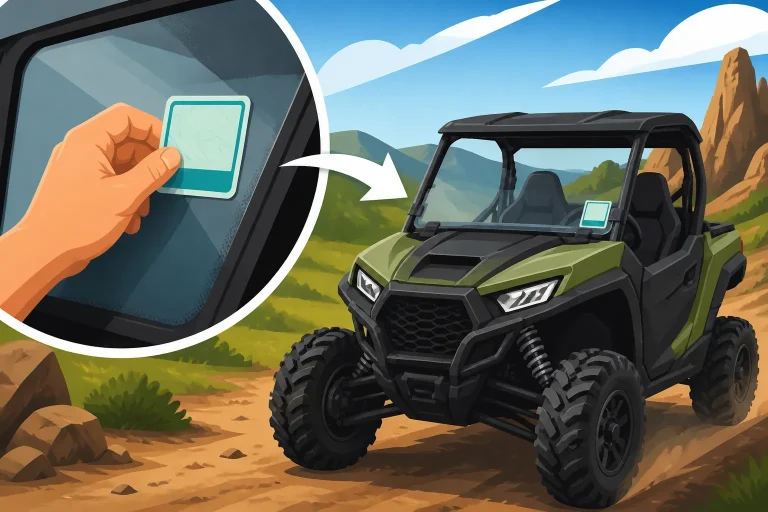
For more detail, see One Permit Per Machine, Not Per Rider. It is also worth confirming how the decal must be displayed. If an official permit is issued as a decal, follow the placement instructions rather than putting it somewhere convenient but hard to see.
Buy through an authorized channel
Use the official seller or an authorized location for the permit. A marketplace listing or a decal offered by an unrelated seller is not a substitute for an issued permit. The permitted sales channels and availability can change, so check the current official instructions before planning to pick one up in person or order it.
This distinction matters if you search online. Amazon can be useful for ordinary ride-planning accessories such as a waterproof document pouch or a phone mount, but it is not a source for an official South Dakota trail permit. Treat the permit as an official access document, not an aftermarket accessory.
If you do purchase a phone mount or storage pouch through Amazon, check that it does not obstruct controls, visibility, or the required display area for a decal. Keep proof of purchase or the permit confirmation separate from loose gear. A permit should be easy to show if a ranger or officer asks, and its display should follow the actual instructions.
A practical checklist before you ride
No resident discount means you can skip a residency comparison, but it does not mean you can skip trip planning. The permit is only one part of being ready. Use this checklist before loading the machine.
Confirm the route and land manager
Write down the trail system, access point, and any roads connecting them. Check that the route is open to your machine and that the permit applies there. A map line is not always proof that a route is currently open or that every vehicle type is allowed.
For the Black Hills, confirm trail openings, seasonal closures, width restrictions, and any temporary restrictions before you leave. Weather, fire danger, maintenance, and other conditions can affect access. Do not rely on an old screenshot or a route someone rode several seasons ago.
Confirm the permit and its display
Check that you have the right permit type for the planned use and that it is valid for the dates of your trip. If you are riding more than one machine, verify each one separately. Follow the official instructions for attaching or displaying the decal. Keep any receipt or confirmation where you can retrieve it, but remember that a receipt may not replace the decal or other required display.
If the decal arrives by mail, allow enough time for delivery and check the instructions before installation. A temporary printout should not be assumed to work unless the official rules say it does. For information about buying and delivery, see Where South Dakota Trail Permits Are Sold.
Amazon may be convenient for a small tool kit, cleaning cloth, or document pouch, but do not wait for ordinary gear delivery to solve an official permit requirement. Buy the permit through an authorized route, and make sure it is in hand before using a trail that requires it.
Check the machine’s separate road status
If your trip includes roads, confirm the machine’s plate, registration, equipment, and operating eligibility for those roads. A trail permit does not make a machine street legal. A plate does not necessarily cover trail access. If you are visiting from another state, check the recognition rules for your home-state registration rather than assuming that every plate is treated the same.
This is particularly important when the route runs from lodging to a trailhead. A legal trail ride can still involve an unlawful road segment if the machine is not permitted on that road or lacks required equipment.
Carry sensible proof and keep the permit readable
Bring the permit information and the vehicle documents relevant to your ride. Store paperwork so it does not get soaked, torn, or lost, but do not hide a decal or place it where it cannot be inspected. A weather-resistant pouch from Amazon can help protect loose paperwork; it cannot replace the required permit display.
Before each ride, do a quick visual check. Make sure the decal remains attached, the machine’s identifying plate is visible where required, and nothing has covered the lights or controls. If you wash the machine after a muddy ride, avoid damaging the permit decal.
Recheck rules when plans change
If you switch from a forest trail to a different recreation area, add a route, or bring another machine, revisit the requirements. A permit bought for one purpose may not satisfy the rules somewhere else. Likewise, if you lend a machine to another rider, the permit’s machine-based nature does not erase the need to follow rider, equipment, and land-use rules.
For a group trip, assign one person to verify the permit status of each vehicle before departure. That simple check can catch a missing decal, an expired permit, or a machine that cannot legally use a planned road.
What the no-discount policy means for your budget
The practical takeaway is uncomplicated: do not build a resident discount into your budget. South Dakota residents and visitors should compare the same relevant permit options. If you ride often, compare the current annual option with the short-term option based on actual qualifying trail use. If you are visiting once, focus on the dates and trails rather than looking for a local-versus-nonresident rate.
Also keep the permit separate in your trip budget from fuel, lodging, rentals, vehicle registration, and any other access charges. A permit cost is only one part of the trip, and different authorities may charge for different kinds of access. Avoid using an old forum post or a past receipt as a current price reference; check the official seller for the current amount and terms.
For residents, the absence of a discount does not mean the permit is a penalty for living locally. It means the permit is not priced by residency. A resident who uses the same covered trail system as a visitor is subject to the same permit structure. For visitors, it means there is no special trail-permit surcharge simply for coming from out of state, although other vehicle or land-access rules may apply.
If you remember just three things, make them these:
- The motorized trail permit does not have a resident discount.
- The permit is separate from plates, titles, and road registration.
- Check the rules for the specific trail, machine, and dates before riding.
That approach keeps the question in perspective. Instead of trying to prove residency for a lower price, identify the riding area, select the permit term that fits, and verify that every machine has what it needs.
Disclaimer
This article is for general informational purposes only and does not constitute professional advice. Laws, prices and regulations vary by location and change over time. Consult a qualified professional for guidance on your specific situation.