Why Twelve and Eighteen Are the Only Ages
South Dakota’s ATV age rules can sound contradictory: one rule uses 12, another uses 18, and neither is a universal age limit for every ride. The key is knowing what each age applies to, where you plan to ride, and whether a helmet, permit, license or adult supervision is also required.
What the ages 12 and 18 actually mean
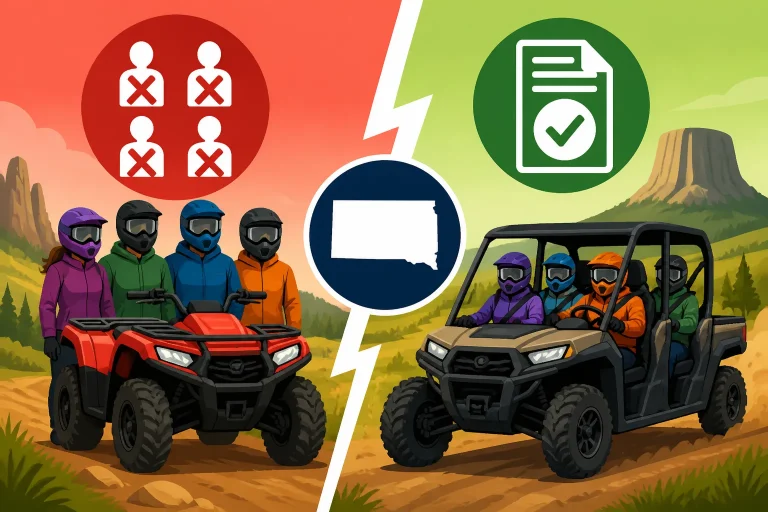
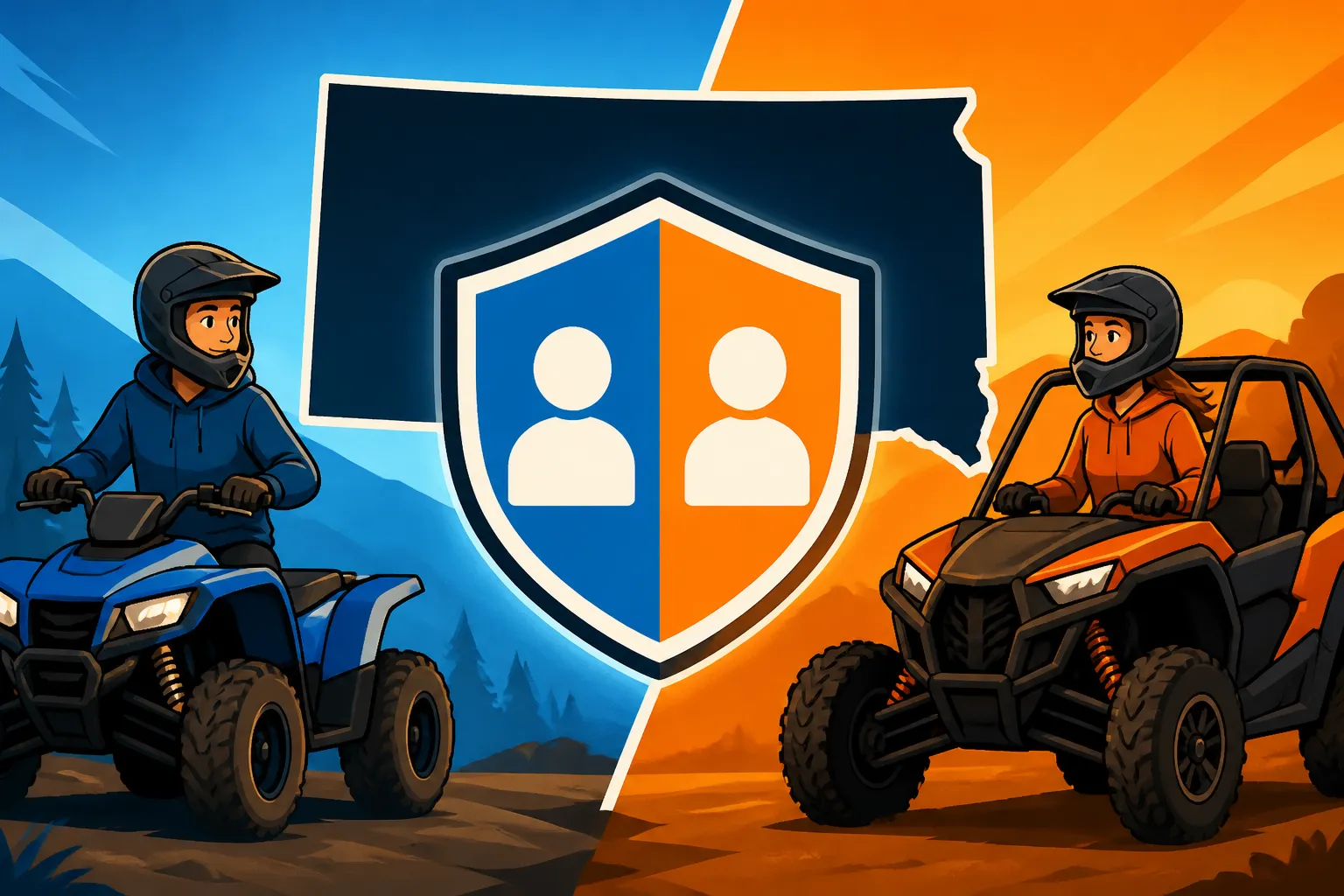
The numbers refer to different rules, not to a single statewide age range for ATV and UTV use. The age of 12 is relevant to riding in certain highway ditches and rights of way. The age of 18 is the point at which South Dakota’s helmet rule for ATV riders no longer applies. Neither number, by itself, answers whether a young person can ride on every trail, road or private property.
That distinction matters because a rule may apply to a particular location or activity rather than to the vehicle everywhere. A 12-year-old may meet the age threshold for a ditch ride but still need to meet any additional conditions that apply. An 18-year-old may no longer be covered by the youth helmet requirement but still needs to follow rules for the route, vehicle and land.
| Age | What the age is associated with | What it does not automatically mean |
|---|---|---|
| 12 | Minimum age relevant to certain ditch or right-of-way riding | Permission to ride every public road, trail or area |
| Under 18 | Helmet requirement for covered ATV riders | A universal ban on riding without an adult |
| 18 and older | No longer covered by the under-18 helmet rule | Exemption from other safety, permit or operating rules |
The most useful way to read South Dakota’s age rules is to ask three questions before a ride:
- Where will the machine operate? A highway ditch, a marked motorized trail, a public road, private ranch ground and a rental route may each have different requirements.
- What kind of machine is it? ATV and UTV rules can depend on the vehicle category, its equipment and whether it is being used as an off-road vehicle or for road use.
- What other rules apply to the rider? A helmet rule, supervision condition, license requirement or permit obligation may apply even when the rider meets an age threshold.
For a closer look at the public-land question, see South Dakota Minimum Age to Ride Public Land. For ditch riding, Twelve Years Old in a South Dakota Ditch focuses on the age threshold and the location where it matters. Those are related topics, but they should not be treated as proof that the same age applies to every kind of riding.
Why the 12-year threshold is not a general permission slip
The age of 12 is most often relevant when a young rider wants to use a highway ditch or other part of a public right of way where ATV riding is allowed. It is not a blanket rule saying that any 12-year-old may ride anywhere in South Dakota.
A ditch is part of a roadway right of way, so riding there is not the same as riding on private land or an off-road trail. The route may be affected by local restrictions, posted signs, roadway conditions and other applicable rules. Some highway rights of way are not open for ditch riding, and local decisions can affect where riding is permitted. Riders should not assume that a ditch is open just because it looks passable or because another person is using it.
Age also does not replace safe operation. A child who is old enough to meet an age threshold may still lack the judgment, strength or experience to control a machine safely in traffic, on uneven ground or near steep ditch banks. The adult responsible for the ride should consider the actual route and the child’s ability, not only the number on the child’s birthday.
Before taking a young rider into a ditch or public right of way:
- Confirm that riding is allowed on that specific stretch.
- Check for regulatory signs and any county restrictions.
- Identify safe places to enter and leave the right of way.
- Avoid assuming that a legal crossing means riding along the roadway is also legal.
- Match the machine’s size and power to the rider’s experience.
- Set clear rules for speed, spacing, stopping and what to do if the adult loses sight of the child.
If the ride will cross a highway, treat that as a separate decision from riding along a ditch. A crossing may be allowed under conditions that do not permit a rider to travel along the roadway itself. Review South Dakota Rules for Crossing a Highway before planning a route around traffic.
Supervision is another separate question. Meeting the age threshold does not necessarily settle whether a young rider must be accompanied or supervised in a particular setting. Requirements can depend on the activity and location, and practical supervision is important even where a specific rule does not require it. South Dakota Supervision Rules for Young Riders covers that issue separately.
For private ground, the property owner’s permission and the conditions of access matter. Permission to ride on a ranch does not automatically authorize using a nearby public ditch, road or trail to reach it. See [South Dakota Rules for Riding Private Property] for the distinction between riding on land with permission and using public routes.
Why 18 is the helmet dividing line
South Dakota’s helmet rule for ATV riders applies to riders under 18. At 18, a rider is no longer covered by that under-18 requirement. That age cutoff is about the helmet rule; it is not a declaration that helmets are unnecessary or that other safety rules stop applying.
Helmets remain a sensible choice for adults and young riders alike. ATV and UTV use can involve rough surfaces, sudden stops, rollovers, rocks, branches and collisions. A helmet that fits properly and is designed for the kind of riding planned is a practical layer of protection, even when the law does not require one for that rider.
For a youth ride, make helmet use part of the preparation rather than a last-minute check. A helmet should fit securely, sit in the intended position and be fastened while riding. A loose helmet can shift or come off in a crash. If a child is using borrowed gear, check the fit rather than relying on the label or assuming a sibling’s helmet will work.
Other protective equipment may matter as well. Eye protection can help with dust, gravel and debris, especially on open routes. Clothing that covers the arms and legs, gloves and sturdy footwear can reduce exposure to scrapes and hot machine parts. Equipment should be suitable for the route and weather, not simply whatever is easiest to pack.
The helmet age rule is also separate from the rules for passengers. A passenger’s age, seating position and ability to hold on safely are not settled by the driver’s age. Do not carry a child on a machine that is not designed to carry a passenger, and follow the applicable vehicle and route rules. For the specific helmet details, see South Dakota Helmet Rules for ATV Riders.
An adult rider should not read the age cutoff as a reason to remove a helmet on a difficult route. A helmet does not prevent every injury, and it does not make a risky route safe, but it can reduce the consequences of some impacts. The choice is particularly important for young riders, who may have less experience reacting to changing terrain or other traffic.
How permits, plates and reciprocity fit into youth riding
Age rules and machine access requirements answer different questions. A rider’s age may determine whether a helmet is required or whether a specific type of riding is allowed. A permit or plate addresses whether the machine may use a particular road or riding area. Having one does not automatically satisfy the other.
For example, a machine may need a trail permit to use a designated motorized trail, even when its rider is old enough to ride there. A plate may be relevant for road use, but it does not necessarily replace a trail permit. The requirements depend on the land and route, so confirm them before setting out. Why a Plate Does Not Replace a Trail Permit explains why those permissions should be checked separately.
For a family bringing a machine from another state, do not assume that an out-of-state plate or registration settles every South Dakota trail requirement. Reciprocity can depend on what the machine is, how it is registered at home and where it will be used. A public road, a Forest Service route and a designated off-road area may have different rules. Confirm the current requirements for the specific destination and machine rather than relying on a general statement that a vehicle is “registered.”
A permit is generally tied to the machine and its authorized use, not to the rider’s age. That means a parent should not assume that a child’s age removes the need for a permit, or that one adult’s permit covers every machine in a group. Check whether each machine needs its own permit and where the permit must be displayed. The details are covered in One Permit Per Machine, Not Per Rider.
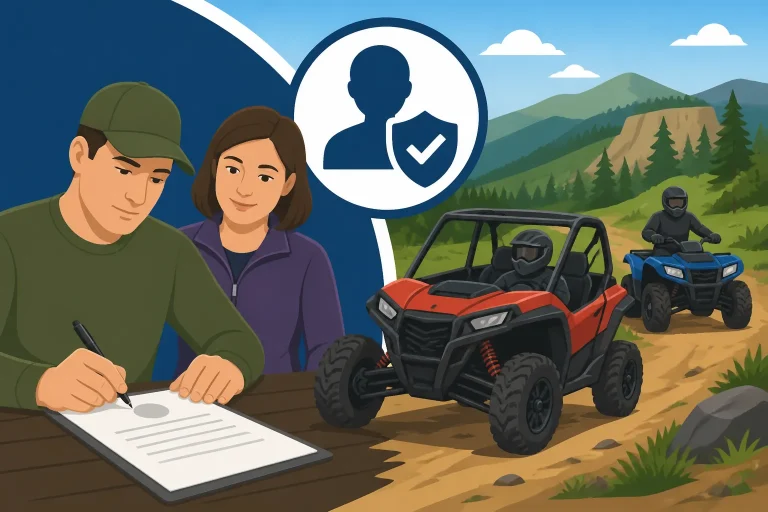
For rented machines, ask the outfitter what is included. A rental may come with a permit or may require the customer to arrange one, depending on the provider and riding plan. Do not assume that a child’s age changes what the rental includes or what the route permits. Before signing, ask whether the machine is approved for the planned area, whether the permit is already in place and what age or supervision conditions the rental company imposes. See [South Dakota Rules for Riding a Rented Machine] for more on rentals.
A simple pre-ride check can prevent the common mistake of treating a child’s age as the only requirement:
- Identify the exact trail, road, right of way or private property.
- Confirm that the machine is allowed there.
- Check the permit, plate or registration requirements for that location.
- Confirm the rider’s age-related rules, including helmet and supervision conditions.
- Ask the land manager, county office or rental provider about any detail that is unclear.
Planning a ride for a child or teenager
The law sets minimum conditions; a responsible ride plan should go further. A child can meet the applicable age rule and still be unprepared for a long route, steep terrain, fast-moving traffic or a powerful machine. Choose the ride around the least experienced person in the group, not the most capable adult.
Start with the machine. A youth-sized ATV should fit the rider’s body and ability, and the controls should be reachable without stretching. The rider should be able to steer, brake and stop reliably. A UTV’s enclosed-feeling cabin does not remove rollover, ejection or passenger risks; occupants still need to use the vehicle as designed and follow its safety instructions. Avoid letting a child operate a machine simply because it is available.
Then choose a route with manageable conditions. A short, familiar ride on suitable terrain is generally easier to supervise than a remote route with steep grades, traffic or limited places to stop. Look at the surface, visibility, weather and distance from help. If the route includes a ditch, confirm that the specific section is open and that the rider can handle its slope, vegetation and proximity to vehicles.
Set expectations before the engine starts. Explain where the child must stay, what signals mean stop, how far to follow behind, and what to do if the group separates. Agree that the rider will stop when asked and will not attempt an obstacle or turn outside the planned route. Adults should keep a position where they can see and communicate with the young rider.
A practical checklist includes:
- A properly fitted helmet for every rider under 18, and a helmet for adults as a prudent safety measure.
- Eye protection and clothing suited to dust, weather and terrain.
- A machine sized to the rider, with controls the rider can use confidently.
- A route that matches the rider’s ability and the group’s experience.
- Confirmation of access, permits, plates and local restrictions.
- A clear supervision plan and a way to communicate.
- A decision about when to turn around if conditions change.
South Dakota does not make an ATV safety course a universal prerequisite for riding, but that does not mean instruction is unnecessary. A young rider should practice starting, stopping, turning and braking in a controlled setting before being taken onto a public route or trail. An adult should demonstrate safe spacing and how to respond to hazards. Does South Dakota Require an ATV Safety Course? explains the legal question; practical instruction remains a separate safety choice.
If the family is considering road use, do not treat a trail-ready machine as automatically road-ready. Equipment, engine size, licensing and the type of road can affect whether it may be used there. A young rider’s age does not override those conditions. Review South Dakota Driver’s License Rules for ATVs and South Dakota Equipment List for Road Use before planning any public-road travel.
Frequently Asked Questions
Can a 12-year-old ride an ATV anywhere in South Dakota?
No. The age of 12 is relevant to certain ditch and right-of-way riding, not a general permission to ride every public road, trail or property. Confirm access and any additional conditions for the specific location.
Does an ATV rider need to wear a helmet at 18?
The under-18 helmet requirement no longer applies once the rider is 18. Adults may still choose to wear a helmet for protection, and other rules can apply to the ride.
Does being 12 or 18 change the trail permit requirement?
Age and permits address different requirements. The rider’s age does not, by itself, establish whether a machine needs a permit or plate. Check the rules for the particular machine and riding area.
Does South Dakota require a safety course before a young person rides?
A safety course is not a universal prerequisite under South Dakota’s ATV rules. Instruction is still a useful way to prepare a young rider, and a property owner, rental provider or riding area may have additional conditions.
Disclaimer
This article is for general informational purposes only and does not constitute professional advice. Laws, prices and regulations vary by location and change over time. Consult a qualified professional for guidance on your specific situation.