Riding the Back-Slope of a Ditch
Many of us who ride ATVs and UTVs in South Dakota know the frustration of navigating state law, especially when it comes to ditch riding. It feels like you're constantly looking over your shoulder, wondering if you're truly on the right side of the law. While the general rule is to stick to the ditch bottom, what happens when that's simply not possible? This guide is going to deep-dive into the specifics of riding the back-slope of a ditch in South Dakota, helping you understand when and how it's permissible, so you can ride with confidence and keep your machine where it belongs.
Understanding South Dakota's Ditch Riding Rules
When you first get into ATV or UTV riding in South Dakota, one of the quickest things you learn (often through word of mouth or a quick chat at the gas station) is that our state allows ditch riding. It's a huge benefit for getting from point A to point B, especially when you're trying to reach a trailhead or simply connect properties without trailering. However, the rules surrounding this privilege can feel a bit like reading a legal textbook written in a foreign language. It's not as simple as "ride the ditch." There are specific limitations, and understanding them is crucial not just for staying legal, but for staying safe.
The Basic Ditch Bottom Rule
The foundational principle for ditch riding in South Dakota is pretty straightforward: you're generally expected to ride in the "bottom" of the ditch. This means staying as far away from the traffic lanes of the highway as possible, nestled down where the ditch itself forms. This rule is designed for safety, keeping you and your machine separated from fast-moving vehicles on the main road. It's about minimizing risk for everyone. When the ground is flat and clear, this isn't a problem at all. You just putter along, enjoying the ride and the open air. This basic rule is covered comprehensively in [South Dakota Ditch Riding Rules Explained], but it's important to reiterate here because it's the baseline from which all exceptions are measured. If the ditch is perfectly rideable, that's where you should be.
The intent behind this rule is pure common sense. The less interaction an off-road vehicle has with highway traffic, the safer it is for everyone involved. Imagine trying to drive your UTV or ATV right alongside cars doing 70 mph; it's a recipe for disaster. The ditch bottom provides a natural barrier and visual separation. It's also where you're least likely to cause damage to adjacent private property, which is another concern for landowners whose fields often abut these ditches. So, when in doubt, default to the lowest point of the ditch that is clear and navigable.
When the Ditch Bottom Becomes Impassable
Now, here's where things get interesting, and where the frustration for many riders truly begins. South Dakota's landscape is diverse, and ditches are not always perfectly graded, flat, and dry. They can be full of water, deep mud, fallen trees, large rocks, or simply be too steep or uneven to safely navigate in the bottom. This is a very common scenario, especially after a heavy rain or during the spring thaw. You're riding along, following the rules, and suddenly, boom! The ditch bottom turns into a bog, a tangled mess of branches, or a small stream. What then? Do you turn around? Do you risk getting stuck or damaging your machine? This is exactly the kind of situation that can lead to confusion and, unfortunately, an unwitting violation of the rules if you don't know your options.
The law acknowledges these real-world obstacles. It's not realistic to expect riders to simply stop or turn back every time a ditch becomes impassable. This is where the allowance for moving up the back-slope comes into play. It's a pragmatic recognition that nature and infrastructure aren't always perfect, and sometimes, you need to deviate from the ideal path to continue your journey safely and legally. The challenge, of course, is understanding the specific circumstances under which this deviation is permitted and how far you can reasonably go. It's not a free pass to ride wherever you want, but a specific allowance for specific situations.
Navigating the Back-Slope: Specifics and Situations
So, you've hit an obstruction in the ditch bottom. This is the moment you've been waiting for: when can you legitimately move up onto the back-slope? This isn't just about common sense; there's legal language that backs it up. It’s important to remember that this isn't about convenience, but necessity. If you can stay in the bottom, you should. But if you truly can't, here are the guidelines.
Legal Justifications for Back-Slope Riding
South Dakota law, in its wisdom, doesn't expect you to put yourself or your machine in harm's way simply to adhere to a rule about ditch bottoms. The key phrase often cited, though not always perfectly clear to every rider, is that you can move out of the ditch bottom when it is "impractical or unsafe" to continue. This is your green light. "Impractical" could mean the ditch is completely waterlogged, turning it into a swamp that your machine can't traverse without getting bogged down or potentially damaged. "Unsafe" could refer to a section filled with large, jagged rocks, a sudden drop-off, or thick brush that could snag your tires or even flip your machine.
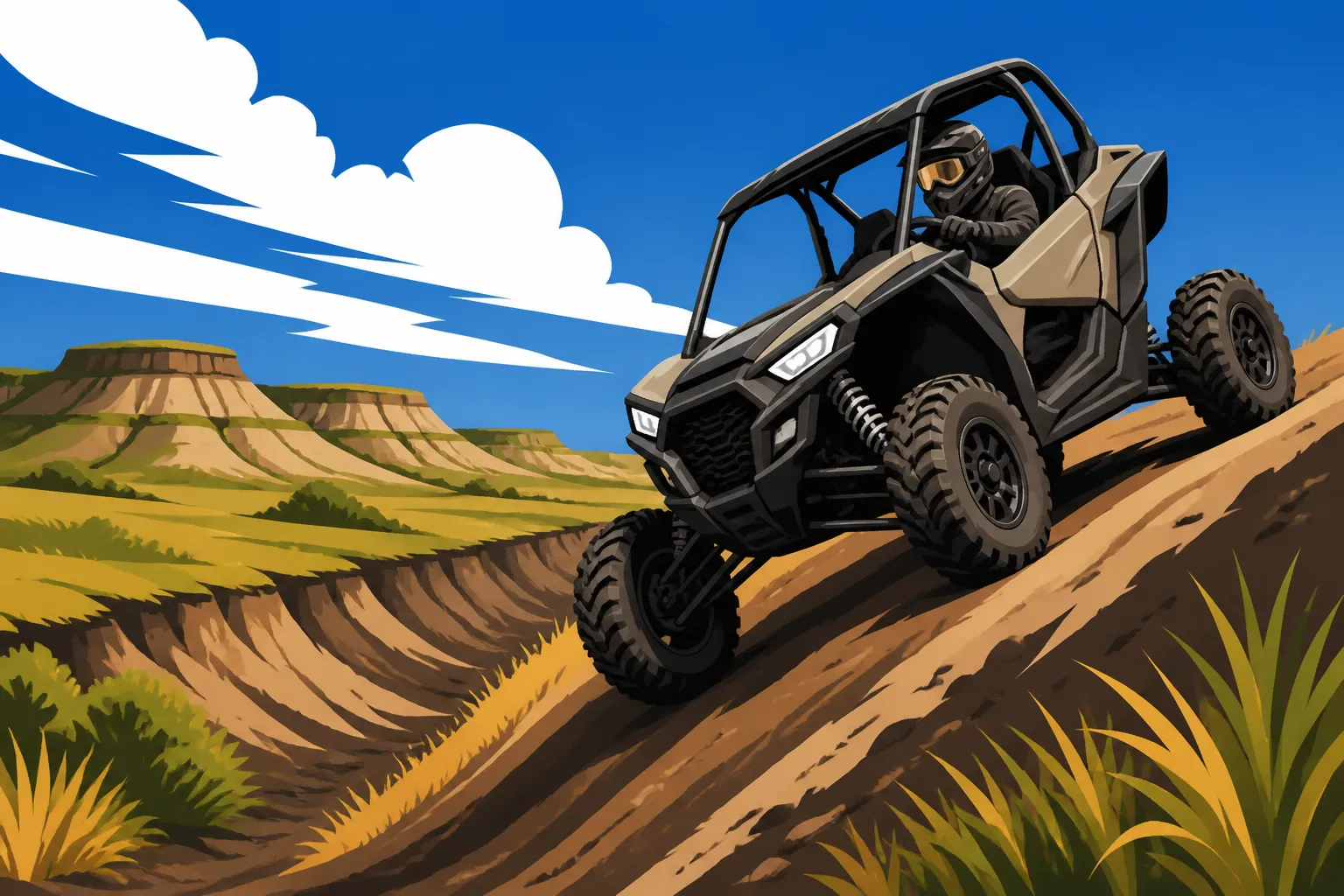
When faced with such an obstruction, the law allows you to move to the "nearest safe and practical point" to bypass the impediment. This usually means moving up the back-slope, which is the side of the ditch furthest from the main highway. It's not an invitation to ride on the shoulder or, heaven forbid, the main traffic lane. It's about finding the path of least resistance within the right-of-way, while still keeping as much distance as possible from moving traffic. You’re essentially skirting the obstacle, using just enough of the back-slope to get past it, and then returning to the ditch bottom as soon as it's safe and practical to do so. Think of it as a temporary detour, not a permanent change of course. This nuance is crucial and often misunderstood. [South Dakota's Outer Edge Rule] helps to clarify where the boundary often lies.
Practical Scenarios and Considerations
Let's talk real-world examples, because that's where the rubber meets the road (or, in this case, the mud in the ditch).
- Water Crossings and Mud Bogs: This is perhaps the most common reason. After a spring melt or a heavy summer rain, many ditch bottoms become flooded. If you encounter a section of water that's too deep, or a mud bog that looks like it could swallow your tires whole, moving up the back-slope to drier ground is a legitimate and often necessary action. You want to gauge the depth and consistency of the impediment carefully. For instance, if you've invested in some serious SuperATV portal gears for extra ground clearance, you might be able to power through a bit more than a stock machine, but even then, discretion is key.
- Heavy Vegetation or Debris: Sometimes ditches are poorly maintained, filling with tall weeds, thick brush, or even construction debris. Trying to force your way through can hide unseen hazards, damage your machine, or even throw you off balance. In these cases, moving up the back-slope to clearer ground is a smart move.
- Erosion and Uneven Terrain: South Dakota's weather can carve out some pretty gnarly ditches. You might encounter deep ruts, sudden drops, or excessively steep banks that make the ditch bottom unrideable. Navigating the back-slope to avoid these hazards is perfectly acceptable, provided you do so cautiously and with the intention of returning to the ditch bottom as soon as it smooths out.
- Temporary Construction or Maintenance: Occasionally, road construction or utility work might temporarily block a section of the ditch. In these instances, you might be forced to move up the back-slope, sometimes even under the direction of workers (though you should always verify their authority to direct ATV traffic). Always be extra vigilant in construction zones.
It's vital that your deviation is minimal and temporary. You're not looking to extend your back-slope ride for miles, but to bypass the specific obstacle. As soon as the hazard is cleared, you should make your way back down to the ditch bottom. This isn't just about legal compliance; it’s about maintaining good relationships with landowners and other road users.
Safety, Equipment, and Local Nuances
Riding on the back-slope, even when legal, demands extra attention to safety and equipment. You're inherently closer to traffic and potentially on less stable ground. Plus, South Dakota has some county-specific rules you absolutely need to be aware of.
Essential Gear for Ditch Riding
Regardless of whether you're in the ditch bottom or temporarily on the back-slope, certain equipment is non-negotiable for safety. First and foremost, always wear a helmet. While adults eighteen and over aren't always mandated to wear one in South Dakota in all riding scenarios, it's just plain smart, especially when you're navigating potentially unstable ground or close to traffic. [South Dakota Helmet Law for ATV Riders] outlines the specifics, but really, it's about protecting your noggin. Eye protection is also crucial; flying dust, gravel, or even low-hanging branches can cause serious injury.
Beyond personal protective gear, ensure your machine is in good working order. This includes proper tire pressure (especially if you're venturing off the ideal path), functioning brakes, and adequate lighting. If you're riding after dusk, or even on a cloudy day, headlights and taillights make you infinitely more visible. [Equipment a South Dakota Road Machine Needs] is a great resource for what your machine should have. Consider a flag for better visibility, especially if the terrain you're traversing might obscure you from larger vehicles. A small shovel and tow strap can also be a lifesaver if you misjudge a soft spot on the back-slope. And, of course, your [South Dakota ATV Plate Requirements] must be in order if you're riding on public roadways or ditches.
County Opt-Outs and Regulatory Signs
Here's a critical piece of information that can make or break your ditch riding experience: not all ditches are created equal in South Dakota. While the state generally allows ditch riding, individual counties have the authority to "opt out" and ban it entirely within their borders. This is a huge point of confusion for many riders, and ignorance of a county ban is not an excuse for breaking the law. Imagine riding happily along, only to find yourself facing a ticket because you crossed an invisible county line into a prohibited zone.
How do you know if a county has opted out? By looking for regulatory signs. Counties that ban ditch riding are required to post clear signage at their borders and at entry points to roads where the ban is in effect. These signs are your absolute guide. Never assume a ditch is open for riding. Always keep an eye out for these crucial markers, especially when you're riding in unfamiliar territory. It's worth checking local county websites or calling the county sheriff's office if you plan a trip to a new area. For more detailed information on this, check out [How a South Dakota County Opts Out of Ditch Riding] and [Reading the Regulatory Sign at a Ditch Entrance]. These resources can save you a lot of headache (and money!).
The Difference Between a Ditch and a Shoulder
This distinction is paramount. When the law speaks of moving to the "nearest safe and practical point" to bypass an obstruction, it's referring to moving within the ditch area, which includes the back-slope. It absolutely does not mean moving onto the paved or graveled shoulder of the highway. The shoulder is considered part of the roadway designed for vehicular traffic, emergency stops, or passing, not for ATV/UTV travel. Riding on the shoulder is generally illegal and incredibly dangerous, as it places you in much closer proximity to high-speed traffic.
Visually, it might seem like a small difference, but legally and safely, it's monumental. The shoulder is typically compacted, often paved or heavily graveled, and immediately adjacent to the traffic lane. The ditch, even its back-slope, retains some degree of natural terrain and is typically lower or further removed from the actual driving surface. Always aim for the natural terrain of the ditch, even when moving up its slope, and avoid the hardened shoulder area unless it's an emergency that forces you to do so (and then, only briefly and with extreme caution). Understanding [South Dakota Rules for Riding a Highway Shoulder] is essential to avoid infractions.
Common Misconceptions and Pro-Tips for South Dakota Riders
Even with all the rules laid out, there are still misunderstandings about ditch riding and the back-slope. Let's clear some of those up and offer some seasoned advice.
Avoiding Common Pitfalls
It's easy to make a mistake when the rules feel complicated. Here are some common pitfalls to avoid:
- Assuming "Safe" Means "Easy": Just because the back-slope is legal to use when necessary doesn't mean it's always easy or free of hazards. Back-slopes can be steep, muddy, eroded, or covered in loose gravel. They can also hide culverts or fence posts. Always approach with caution, scan the terrain, and reduce your speed. Don't mistake a legal option for a risk-free one.
- The "Just a Little Bit" Creep: A common mistake is gradually creeping further and further up the back-slope, or staying on it longer than necessary, even after the original obstruction is gone. Remember, it's a temporary deviation. The moment the ditch bottom becomes safe and practical again, you need to return to it. Troopers are trained to look for sustained riding on the back-slope without clear justification. If you're pulled over, explaining why you're not in the ditch bottom is crucial. [What a South Dakota Trooper Checks Roadside] often includes adherence to these rules.
- Night Riding on the Back-Slope: While ditch riding is generally allowed after dark in South Dakota, doing so on the back-slope adds another layer of risk. Visibility is reduced for both you and oncoming traffic. Headlights and taillights are absolutely essential, and riding slower is paramount. Don't take unnecessary chances; if the ditch bottom is treacherous during the day, it's exponentially more so at night. See [South Dakota Rules for Riding After Dark] for more details.
- Ignoring Local Road Conditions: A freshly graded ditch might be pristine, but a heavily traveled or recently rained-on one can be a mess. The soil composition can vary wildly, from firm clay to loose sand. Pay attention to signs of recent activity – tire tracks, pooled water, or fresh grading. Your machine's capabilities, whether it's a basic ATV or a SuperATV equipped UTV, should match the conditions. Don't overdo it.
Making the Best of Ditch Riding Opportunities
South Dakota offers fantastic opportunities for ATV and UTV enthusiasts, and ditch riding is a big part of that. Here are some tips to make the most of it, while staying legal and safe:
- Plan Your Route (and Your Bailouts): Before heading out, especially on a long journey, review maps and consider potential obstacles. Know which counties permit ditch riding. Identify areas where ditches might be problematic (e.g., near river crossings, in areas prone to flooding, or through dense tree lines). Having a general idea of where you might encounter an "impractical or unsafe" section can help you mentally prepare for a brief back-slope maneuver.
- Ride with a Buddy: This is always good advice for any off-road adventure, but especially so when navigating potentially tricky ditch situations. A second set of eyes can spot hazards you might miss, and a second machine can help pull you out if you get stuck in a particularly soft spot on the back-slope.
- Be a Good Steward: When you do move up the back-slope, do so minimally and respectfully. Avoid cutting across private property unnecessarily. Leave no trace. Our ability to ditch ride depends on maintaining good relationships with landowners and the public. Any damage or disrespectful behavior can jeopardize this privilege for everyone.
- Stay Informed: Laws and regulations can change, even at the county level. Stay up-to-date with local news and ATV/UTV communities. Sometimes, local rider groups share information about specific ditch closures or problematic sections.
- Know Your Machine's Limits: Understand how your ATV or UTV handles different types of terrain, especially steep, loose, or muddy inclines like those you might find on a back-slope. Practice navigating varied terrain in a safe, controlled environment so you're confident when the time comes to make a quick decision in a ditch. Also, remember that a [The Driver's License Exception for South Dakota Riders] exists, but responsible operation is always paramount. Finally, be aware of [South Dakota Fines for Illegal ATV Road Use] if you step outside the rules.
Here's a quick comparison of ditch riding situations:
| Situation | Ditch Bottom Guidance | Back-Slope Guidance | Legal Status (General) | Safety Considerations |
|---|---|---|---|---|
| Clear & Dry Ditch | Ideal. Stay in the lowest point. | Avoid. No justification to ride the back-slope. | Legal | Lowest risk, good separation from traffic. |
| Water/Mud Bog | Assess depth. If unsafe/impractical, move to back-slope. | Move to nearest safe, practical point. Return to bottom ASAP. | Legal (if necessary) | Slippery, potential for getting stuck, increased risk. |
| Heavy Vegetation | If dense & hazardous, move to back-slope. | Bypass impediment minimally. Return to bottom. | Legal (if necessary) | Hidden obstacles, reduced visibility, machine damage. |
| Erosion/Ruts | If unsafe/impractical, move to back-slope. | Navigate cautiously. Return to bottom when clear. | Legal (if necessary) | Unstable ground, risk of rollover, difficult handling. |
| Paved Shoulder | Always avoid. | Never permissible unless extreme emergency. | Generally Illegal | High risk of collision with road traffic. |
| County Opt-Out | Prohibited. | Prohibited. | Illegal | Fines, potential impoundment, increased enforcement. |
By being informed, cautious, and respectful, you can continue to enjoy the extensive ditch riding opportunities South Dakota has to offer, even when those tricky back-slopes come into play. It's all about riding smart.
Disclaimer
This article is for general informational purposes only and does not constitute professional advice. Laws, prices and regulations vary by location and change over time. Consult a qualified professional for guidance on your specific situation.