South Dakota Supervision Rules for Young Riders
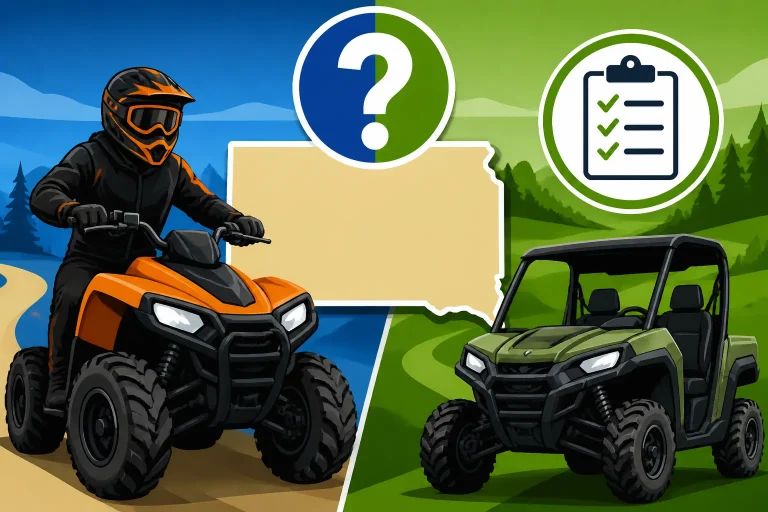
South Dakota does not apply one supervision rule to every young ATV or UTV rider. The answer changes depending on whether a child is riding in a highway right-of-way, on a designated trail, or on private land. Knowing which rule applies helps families choose a legal riding area, plan adult oversight, and avoid assuming that a child’s age alone settles the question.
When South Dakota Requires an Adult to Accompany a Young Rider
The clearest age-and-supervision rule applies to riding an off-road vehicle in a public highway right-of-way, including a ditch where riding is allowed. A rider must be at least 12 to operate in that setting. A rider who is 12 through 15 must be accompanied by a parent or guardian. Riders younger than 12 cannot operate there, even if an adult is present.
This is a location-specific rule, not a general minimum age for every ATV or UTV ride in South Dakota. It also does not mean a young rider can use any ditch or right-of-way: the riding location must be open to ORV use, and the rider must follow the applicable route, crossing, and safety requirements. See South Dakota Ditch Riding Rules Explained for more on where ditch riding is allowed and where it is restricted.
| Rider’s age | Public highway right-of-way where ORV riding is allowed | Practical takeaway |
|---|---|---|
| Under 12 | May not operate an ORV there | Choose another legal riding location |
| 12 through 15 | May operate only when accompanied by a parent or guardian | Keep the required adult present during the ride |
| 16 or 17 | The under-16 accompaniment rule no longer applies | Other riding, equipment, and helmet rules still matter |
| 18 or older | No youth-specific accompaniment rule applies | General ORV rules continue to apply |
The table is a quick guide, not permission to ride every public road or ditch. For example, South Dakota’s rules may allow certain ditch riding while restricting it in particular places, and a county may opt out of ditch riding. Riders also need to use permitted crossings and obey posted signs. Review South Dakota Counties That Ban Ditch Riding before planning a route that crosses county lines.
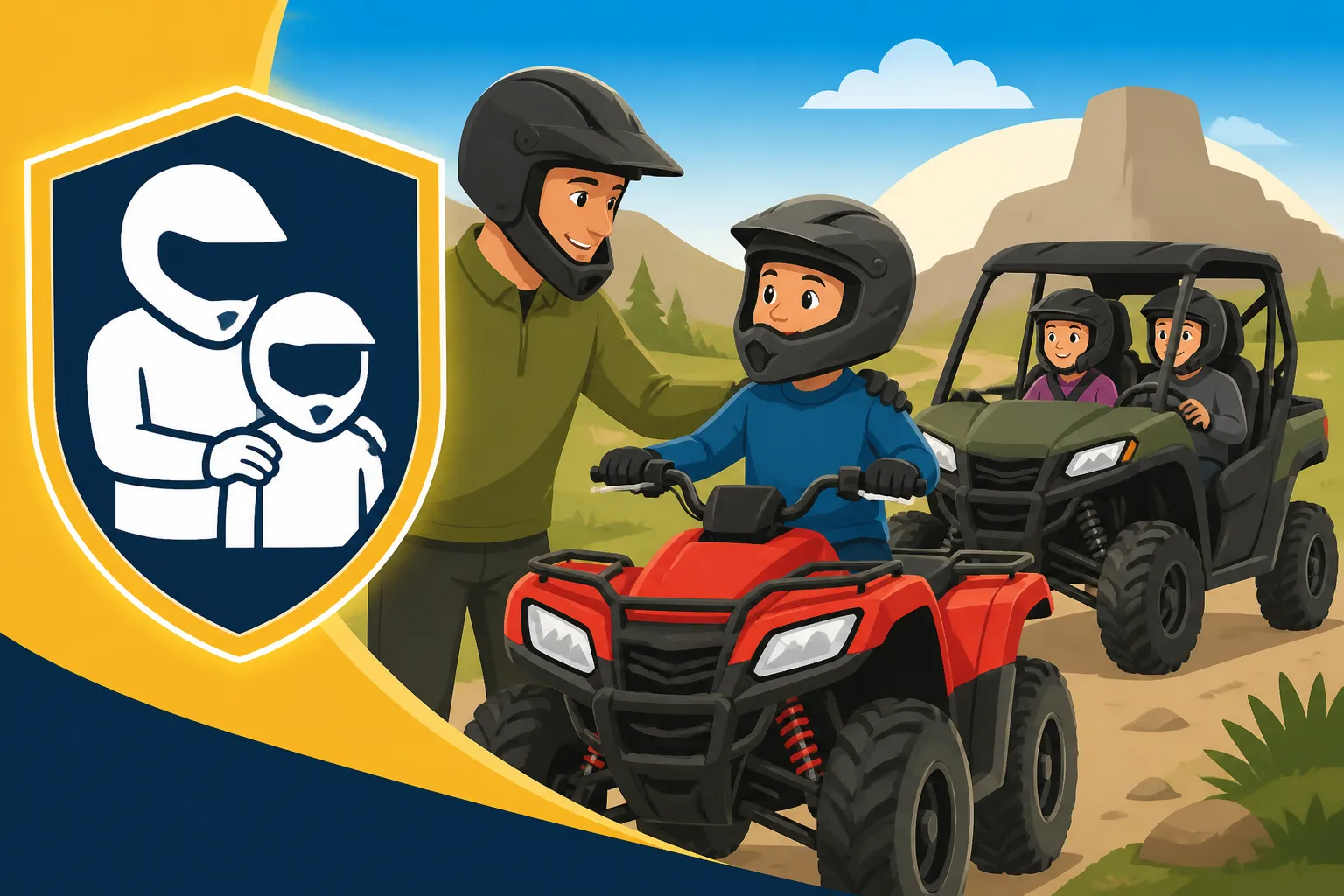
For a child in the 12-to-15 age range, adult supervision should be real and continuous. Do not treat a parent’s availability by phone, or being somewhere else on the trail system, as a substitute for accompanying the rider. Keep the adult close enough to monitor the child and respond if the machine stalls, tips, or reaches a hazard. If the exact meaning of “accompanied” is important to your route, confirm it with the appropriate South Dakota authority before riding.
Rules Differ Between Roads, Public Trails, and Private Property
A family may ride in several different settings on one trip, but the rule that applies in one place does not automatically carry into another. Right-of-way restrictions are not a general rule for every public riding area, and a landowner’s permission does not cancel safety or equipment requirements that apply elsewhere.
Designated public trails and riding areas
Do not assume that the right-of-way age rule automatically applies to a trail. Designated trails and riding areas can have their own access rules, and federal or local managers may set conditions for the land they administer. Check the rules for the specific place, including age restrictions, route closures, and whether a parent or guardian must accompany a child.
South Dakota’s trail permit is a separate question from supervision. A permit may be required for a machine on a trail even when the rider is legally old enough to operate it. Permits generally apply to the machine rather than serving as a rider-age approval. Read South Dakota Trail Permits Explained and confirm site-specific requirements before you travel.
On federal land, a posted closure or route designation matters. A child’s age, adult supervision, and a valid permit do not make a closed route legal to ride. Check current maps and notices for the riding area, and stay on routes open to your machine.
Private land
On private property, get the owner’s permission and follow any conditions the owner sets. The highway-right-of-way age rule does not turn into a blanket age limit for every private yard, ranch, or riding area. But private land is not automatically safe or free of legal requirements. The machine, terrain, other people nearby, and any applicable local rules still matter.
For a younger child, choose a controlled area away from public traffic, steep slopes, water, livestock, and other hazards. An adult should remain nearby and give clear instructions about where the child may ride and when to stop. More on access and permission is covered in [South Dakota Rules for Riding Private Property].
Rental machines and organized rides
A rental company can set age, license, and supervision conditions that are stricter than the state’s general rules. It may also restrict which machine a young rider can operate or require an adult to sign forms. Those are rental terms, not a substitute for state and land-manager rules. Ask the outfitter before booking, and check [South Dakota Rules for Riding a Rented Machine] if the family plans to rent.
Organized rides can have additional participation rules as well. A parent’s presence does not guarantee that a child meets an event’s requirements, and an event’s approval does not authorize riding on a closed route. Confirm age limits, supervision expectations, and route permissions with the organizer.
Safety and Equipment Rules Still Apply to Young Riders
Supervision is only one part of a safe, lawful ride. A child may meet the age rule and still need the right protective equipment, a suitable machine, and a route that matches their ability.
South Dakota requires helmets for riders under 18 in the situations covered by its helmet rules. That makes helmet use especially important for young riders, including teenagers who are no longer subject to the under-16 accompaniment rule on a highway right-of-way. Check South Dakota Helmet Rules for ATV Riders for details, including how the requirement applies to riders and passengers.
A helmet should fit securely and be in good condition. If buying one through Amazon or another retailer, check the product’s safety information, sizing guidance, and return policy; a helmet that does not fit properly is not a useful substitute for one that does. Goggles or other appropriate eye protection can help with dust and debris, too. Do not assume a windscreen automatically satisfies every eye-protection requirement.
The machine itself should be appropriate for the rider. A large, heavy UTV or powerful ATV can be difficult for a child to control, especially on uneven ground or in a group. Consider the child’s ability to reach controls, steer smoothly, use the brakes, and respond calmly to instructions. A parent riding nearby cannot compensate for a machine that is too large or too fast for the child.
Before setting out, review these points:
- Match the machine to the young rider’s size and experience.
- Explain how to start, stop, steer, and shut down the machine.
- Set boundaries for speed, distance, and route choice.
- Use helmets and other required protective equipment.
- Keep the child on open, suitable routes and away from traffic or hazards.
- Agree on a stop signal and what to do if the group becomes separated.
- Check weather, trail conditions, and closures before leaving.
A safety course can be useful even when it is not required for a particular ride. Formal instruction helps a child understand how to control the machine and make safer decisions, while adult coaching reinforces those skills on the actual route. For the state’s course requirements, see South Dakota ATV Safety Course Requirements.
Planning a Ride With a Child
A good plan starts with the place, not just the child’s age. Identify whether the route includes a public highway right-of-way, a designated public trail, private property, or a mix. Then check the rules for each segment. If the route enters a right-of-way where ORV use is allowed, make sure the child meets the age requirement and that a parent or guardian accompanies any rider under 16.
Use this sequence before departure:
- Choose a legal riding area. Confirm that ORVs are allowed there and that the intended routes are open.
- Check the child’s age against the location. The under-12 restriction and the accompaniment rule for riders under 16 apply to public highway right-of-way riding, not automatically to every riding area.
- Confirm permits and land rules. A permit, if required, applies separately from age and supervision requirements.
- Check the machine and gear. Make sure the machine suits the rider and that required protective equipment is available and fits.
- Set an adult supervision plan. Decide which adult will accompany the child, stay within view or reach, and respond if the ride needs to stop.
- Review conditions immediately before riding. Closures, signs, weather, and route conditions can change.
If a planned route is unclear, choose a simpler route or contact the relevant land manager or county office before riding. Do not rely on a map alone to resolve a rule about a particular ditch, road crossing, or trail segment.
The key distinction is straightforward: South Dakota’s accompaniment rule for young riders is tied to public highway right-of-way riding. A child under 12 cannot operate an ORV there; a rider aged 12 through 15 must be accompanied by a parent or guardian. Elsewhere, check the specific land, trail, rental, or event rules, and continue to follow equipment and safety requirements wherever you ride.
Disclaimer
This article is for general informational purposes only and does not constitute professional advice. Laws, prices and regulations vary by location and change over time. Consult a qualified professional for guidance on your specific situation.